Have you ever found yourself scrolling through your phone whilst watching your favourite shows?
With social media and online shopping playing such a large part in our lives, it can be a distracting pull from even the most popular show.
Online, some have suggested that to keep up with what's on our phones and what's on our televisions, plots and scripts have deliberately been made as simple as possible. Is this true, or is it a conspiracy theory?
BBC Bitesize Other Side of the Story took a closer look at what's being called Second Screen Viewing.
What is Second Screen Viewing?
Second Screen Viewing is the name for splitting your attention between multiple devices whilst watching television.
Traditionally, television is made to watch without distractions. Second Screen Viewing takes television from the main form of entertainment to a background activity. Prior to streaming there was less to choose from, which meant purposefully selecting films or shows in advance. Streamers allow users to pick and choose what to watch, whenever they want.
What are viewers saying online?
Many online believe the choice streamers give has made some viewers generally appreciate television less, with one Reddit commenter saying: “Nothing has lasting impact. Shows get binged and forgotten in a weekend and there’s always a new one to replace it.”
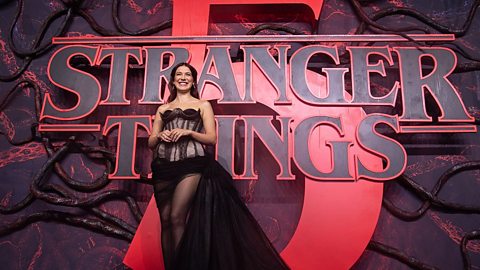
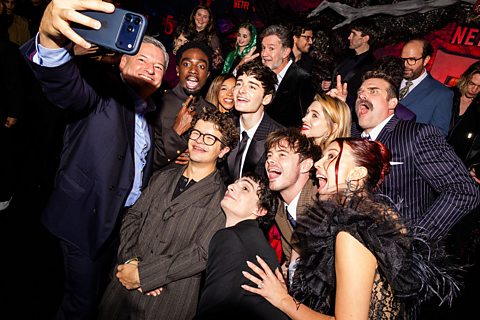
In the case of Second Screen Viewing, some viewers claim characters now repeatedly say how they feel, or what they’re about to do. For some viewers online, the final series of Stranger Things was an example of this simplified form of storytelling.
On TikTok, one user asked their viewers to examine Stranger Things season five for “expository dialogue.” Expository language is lines of script used to explain the story, rather than move it forward. They claimed characters were, “…explaining exactly what they’re doing and exactly what they’re feeling whenever they walk into a room” to 475k views.
In the Stranger Things subreddit, a Reddit page dedicated to discussion regarding the show, one user posted: “I just want these exposition dumps to stop!" to 5,500 upvotes, which are similar to Instagram likes, and 887 comments. One commenter responded: “Absolutely agree and the amount of analogies? Like chill! There are so many more interesting ways to give exposition, rather than literally spelling it out for the audience like we’re six. I blame Netflix.” Whilst another said: “Blame Netflix's second screen policy and prepare for more shows to do this, because consumers have zero attention spans and scroll through TikTok while watching.”
Who else has commented?
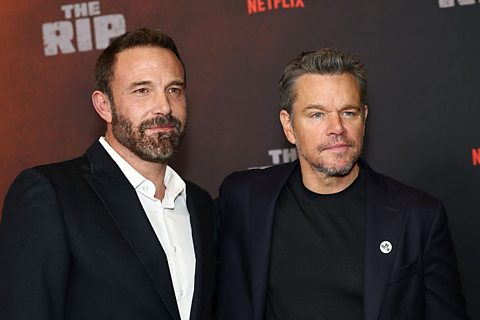
While promoting Netflix film The Rip, actor and producer Matt Damon claimed Netflix tells writers: “…it wouldn’t be bad if you re-iterated the plot three or four times in the dialogue, because people are on their phones while they’re watching.”
While Matt Damon didn’t write The Rip, he understands the writing process. In 1998, he and fellow The Rip actor and producer, Ben Affleck, won the Academy Award Best Original Screenplay for Good Will Hunting.
On The Romesh Ranganathan Show podcast, actress Jameela Jamil also discussed Second Screen Viewing. She claimed streamers are asking actors: “…to acknowledge that people are on their phones the whole time they’re watching telly,” and therefore they must: “…simplify the plot so that they’ll be able to follow along while they browse on their phone.”
Other reports claim streamers have simplified their approach to not only shows, but how users find what to watch next too. American literary magazine, n+1, in their Winter 2025 magazine published an essay titled ‘Casual Viewing’.
They claim Netflix takes user data from subscribers to find words or images matching interests. They then use this info to improve their in-app advertising. Film names and posters show audiences exactly what the film or show is about upfront. In this way, n+1 claim Netflix can tailor large quantities of material simply, to best suit their large and diverse subscriber base.
What have the streamers said?
So far, no streaming services have officially commented on Second Screen Viewing. Whilst there’s been commentary from Netflix viewers and producers who have worked with them, like Matt Damon, there is no definitive answer. We won’t know until we get it from an official source, such as a senior member of a streaming service.
It’s important in cases such as these to apply critical thinking. Ask yourself: is the theory posted online based upon evidence, or upon opinion? What credentials does the speaker or poster have? Without any official word, there is the potential to accidentally spread misinformation.
This article was published in January 2026

Not sure if the news you’re seeing on social media is true or false? Can you always tell if the things you see online are real or fake? Learn how to get the other side of the story with our quizzes, videos and explainers.
Is there going to be another ‘final’ episode of Stranger Things?
Posts on social media teased fans with a theory about a 'mystery' episode 9 of Netflix sci-fi drama Stranger Things