Conspiracy theories about the moon landing, flat earth and Covid-19 are the most talked about by young people in UK schools, according to a new study.
The research, carried out by the Pears Foundation, also found that 11-18-year-olds have less trust in the government than they do in social media influencers.
The foundation surveyed 2,349 young people and 448 school staff in May/June 2024 to find out about the spread of conspiracy theories in schools, and have just released their findings.
A conspiracy theory is defined as a belief that a secret but influential group is controlling events behind the scenes.
What are the most popular conspiracy theories amongst young people?
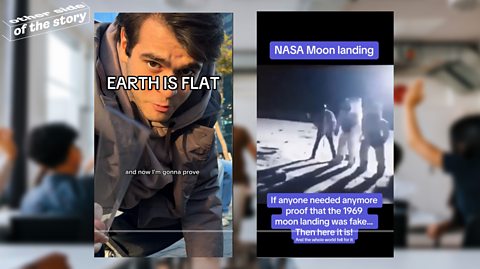
The study found that the most common conspiracy theories that 11-18-year-olds encountered online or in-person were about the moon landing being a hoax and that the earth is flat.
Other popular conspiracy theories were about Covid-19, vaccines and climate change.
Even though the moon landing was the most common conspiracy theory, less than 40% of pupils thought this was a harmful belief, whereas almost 80% thought the conspiracy theory that the Covid vaccine contained microchips was damaging.
It’s important to always question what you see online. Conspiracy theories aren’t necessarily true, with many lacking real evidence, but they can be influential, particularly if they’re being spread by someone you follow on social media.
You should always practice critical thinking and double-check information you find online using reliable and trustworthy sources. This can help to stop the spread of misinformation.
Why do young people spread conspiracy theories?
School staff said they thought over half of pupils (55%) brought up conspiracy theories because they were curious about them, while 32% of pupils talked about them because they wanted to find out more information.
Some also felt that pupils brought up conspiracy theories to cause controversy (44%), while just over a fifth (22%) said they used them to upset their classmates.
More than half of pupils (52%) said that there was at least one conspiracy theory that, if one of their friends believed, they would struggle to stay friends with them. Holocaust denial was the most common conspiracy theory mentioned here (by 21% of pupils), followed by believing the earth is flat (21%).
People sometimes spread conspiracy theories because it makes them feel like they are 'in-the-know' on something that other people won't know about.
Yet many of these theories aren’t based on the finest of logic, so whenever you read something online, it's always important to think critically and check your sources.
Don't believe everything you see, hear or read, and make sure to use reliable sources to help verify the things you've seen on the internet.

Who do young people trust?
When it comes to trust, 88% of 11-18-year-olds have high trust in their parents, while 60% felt the same way about their teachers.
Less than 40% had a high level of trust for mainstream news sources, with just over 10% saying they had complete trust.
The study also found that over a third of pupils (35%) said they do not trust the government ‘at all’, this was less than the 29% who don’t trust social media influencers.
If you’re reading a post that’s been shared by a social media influencer, it’s a good idea to ask yourself if what they’re saying sounds believable. If it appears a bit out of this world or too good to be true, then the chances are that it might well be.
Have a look to see whether they are backing up their story with trustworthy evidence from a reliable source. It’s always a good sign if you can find where the news has come from and clearly see the facts behind the piece.
This article was published in February 2025

Not sure if the news you’re seeing on social media is true or false? Can you always tell if the things you see online are real or fake? Learn how to get the other side of the story with our quizzes, videos and explainers.