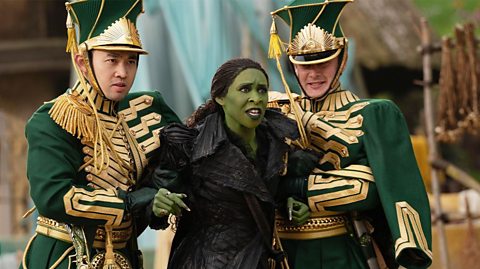
“Are people born wicked or do they have wickedness thrust upon them?” asks Glinda in the opening scene of the film Wicked. Viewers quickly discover that - spoiler alert - the “Wicked Witch of the West” Elphaba, who we all know as the cackling villain in The Wizard of Oz, was not actually evil at all. Instead, the Wizard is the real monster.
In the sequel Wicked: For Good, Elphaba is determined to stop him. Throughout history, women have been accused and punished for practising witchcraft, sometimes through misunderstandings or hysteria but often because of power struggles.
BBC Bitesize looks at five real life women from different eras who were condemned as evil witches.

1: Old Demdike

Witches, or cunning women, were actually a common feature of village life in the 16th century. They were healers who used herbs as medicines as well as spells and charms to help people. In Pendle, Lancashire, Old Demdike had been working as a witch for around 50 years by the time she was accused of being one.
A few different things led to this accusation. The first was a family row that began when Old Demdike’s granddaughter, Alizon Device, argued with a travelling salesman and cursed him. When he died not long after, Alizon was brought before a judge, where she admitted to the curse and accused her grandmother, along with some members of the rival Chattox family, of witchcraft.
At the same time, witch trials were becoming increasingly popular thanks to King James I’s interest in witchcraft. He connected it to the execution of his mother Mary, Queen of Scots and conveniently to catholicism, which was still widely practiced in Lancashire despite all monasteries being shut by King Henry VIII around 80 years before.
Old Demdike died before the case was heard in a dark dungeon in Lancaster Castle. But due to evidence given by nine-year-old Jennet Device at the trial, including against members of her own family, 10 people were hanged.
2: Joan of Arc
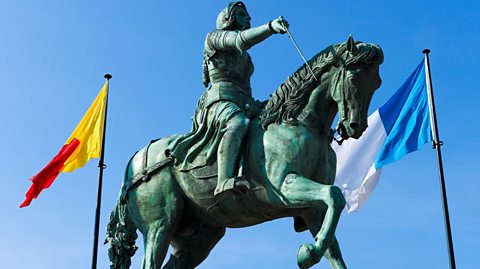
While the The title given to the heir apparent to the throne of France in the 14th to 18th CenturiesCharles of France and King Henry VI of England were fighting over who should rule Northern France, in rode a farmer’s 17-year-old daughter with the staunch belief that she had been sent by (the Christian) God to defeat and chase away the invaders.
In 1429, when Joan of Arc entered the city of Orléans, it had been under siege for six months and was almost completely surrounded by English troops. The French army was waiting for re-enforcements but Joan led them into battle without them, and the English were defeated. She was hailed as a hero and is still remembered today as the Patron Saint of France. But the English very quickly began claiming Joan was in league with the devil and their terrified soldiers began deserting the army.
Then, Joan was captured by troops loyal to the Duke of Burgundy who was working with the English. Charles - by now King of France - who was working towards a truce with the Duke, did nothing to save her. Meanwhile, with its power threatened by the idea that a mere peasant girl could communicate directly with God, the Church demanded Joan was handed over to be tried as a heretic. She was found guilty and sentenced to be burnt at the stake.
3: Eleanor Cobham
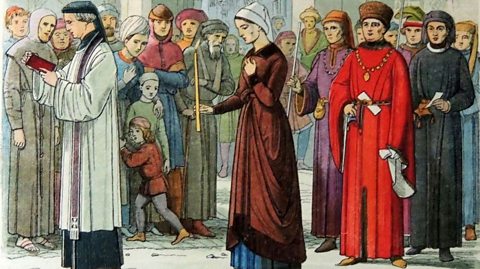
Noblewoman Eleanor Cobham was made the scapegoat in a plot to discredit her husband, the Duke of Gloucester, who was heir to the throne. In 1441, she was found guilty of heresy and sorcery against King Henry VI. Heresy means beliefs or opinions that go against the norm, which in this case meant christianity. Eleanor was accused of hiring an astrologer to predict the king’s death, which in those days was treason, and a woman called Margery Jourdemayne, or “the Witch of Eye”, to help put her husband on the throne.
Eleanor was the Duke of Gloucester’s mistress before they were married, but became his wife after his first marriage was annulled. The younger daughter of a knight, she had no money or land to bring to their union so when she instead claimed that she had hired Margery to work “love magic” it was readily believed.
As magic was considered to be a matter for the church rather than the state, Eleanor was not killed for her ‘crimes’, but did have to spend the rest of her life imprisoned in various castles across England and Wales. The couple were also forcibly divorced and never saw each other again.
4: Tituba
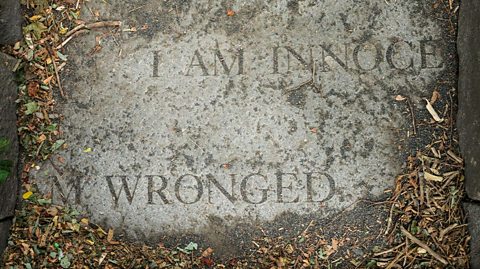
There is very little reliable information about Tituba’s life before she was accused of teaching supernatural practices to two young girls in Salem, New England, in 1692. Some accounts claim she was a Native American woman working as a servant, while others describe her as an enslaved Black woman ‘bought’ in Barbados by one of the girls’ fathers, Reverend Samuel Parris.
After the girls fell ill with spontaneous seizures, Tituba was one of the first three women accused of witchcraft in a hunt that ended with more than 200 people being accused and 20 executed She ended up confessing - although it’s thought she only did this after she was beaten - to signing the Devil’s book, flying in the air upon a pole and pinching or choking some of the afflicted girls.
Tituba spent 13 months in jail before an anonymous person paid the £7 needed for her release. Four years later, one of the judges, 12 jurors and many accusers publicly apologised for their mistakes, but Tituba was not there to hear it. Neither did she receive restitution, unlike many of the other women accused.
Some historians have argued Tituba was a victim of racism both during the trial, when the court recorded her as ‘probably practicing hoodoo’ - referring to West African religious practices, and in later reports of the Salem Witch Trials, many of which don’t mention her.
5: Anna Göldi

The last known person to be executed for witchcraft was Swiss maid Anna Göldi in 1782. At this point the enthusiasm for witch hunting that had been widespread across Europe was waning and her sentence was criticised as barbaric by the public.
Anna had a hard life. She was born into poverty and in 1765 had a baby who died in their sleep. Anna was accused of killing the infant and had to flee her home. Years later, her rich employer sacked her from her job when needles were found in one of his daughter’s drinks. Then another daughter claimed to have vomited metal objects - and Anna was accused of practicing witchcraft on her.
She was tortured until she confessed to the crime of poisoning and was executed. Later it was discovered that she was in a relationship with her employer who risked damage to his reputation if it was discovered. There is now a museum telling her story in Glarus, Switzerland.
This article was published in November 2025
The UK’s most infamous witch trials
Discover the history of Britain’s most notorious witch trials. From Pendle to Essex, explore how fear, folklore and justice shaped the UK’s legacy of witchcraft persecution.
The which witch quiz
Think you know your Hermione from your Winnie? Take this quiz all about different fictional witches.
Macbeth
Shakespeare's play of murder and witchcraft is told in these eight video clips from BBC Teach.