It's witch season.
Perhaps you’re considering going green like Elphaba from Wicked for Halloween this year? Or recreating Wednesday Addams' iconic witchy look.
Witches haven’t always been so popular, in 1542 King Henry VIII declared witchcraft a crime.
Many women were accused of being witches, arrested and tried. BBC Bitesize has taken a look at four of the most notorious witch trials in British history.

The Pendle Witch trials
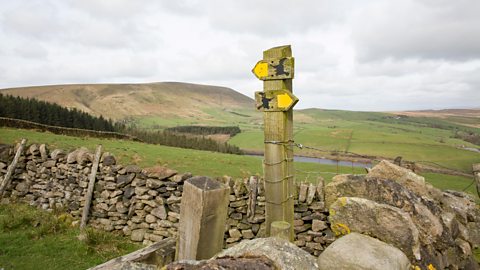
Lancashire’s deadliest witch trial - what happened?
It all started in 1612 when a young woman from Pendle, Alizon Device, was accused of cursing a A person who travelled to different places to sell small goods called John Law. After interacting with Alizon, John was paralysed down one side and left unable to speak. She admitted to meeting and cursing John. This prompted a series of accusations of witchcraft against her and others. 12 people, mostly women related to Alizon Device, had the finger pointed at them. They were blamed for deaths that had previously happened in the community, some dating back 18 years prior. In the end 10 were convicted of witchcraft and were executed at Lancaster Castle Court.
Alizon was the last to face trial. John Law, the man she was accused of cursing, actually appeared in court. Alizon pleaded for forgiveness, and even though the pedlar forgave her, the judge said that unless Alizon could reverse the curse and heal Mr Law, she would be found guilty. Ultimately Alizon couldn’t do this, the judgement stood, and she was executed.
If you want to find out more…
You can visit Lancaster castle where the Pendle witches were jailed. The castle staff offer guided tours showing the dungeons and courtrooms where the infamous trials took place.
There is also a sculpture trail in Pendle, dedicated to the witch trials. Here there’s an opportunity to solve riddles and unearth mythical creatures. There are also special trees along the path which tell the personal stories behind each of the Pendle witches.
Did you know?
Alizon’s youngest sister, Jennet Device, was the key witness to the trial. The nine-year-old provided vital evidence against her own family.
The Witch trials of the East Lothian coast
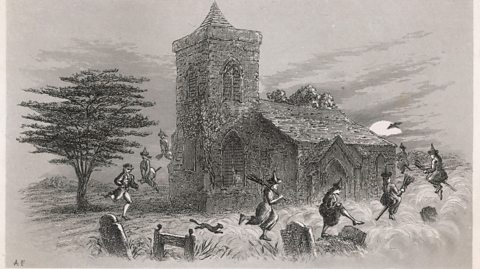
The witches of North Berwick - what happened?
In 1590, King James VI of Scotland became convinced that witches had used magic to create storms in an attempt to sink his ship while he was returning home with his bride, Princess Anne of Denmark.
This led to the infamous North Berwick witch trials. There were at least 70 arrests, most people involved were women, and most were subjected to torture. This led to many confessing, or naming others as fellow witches. It is unknown exactly how many people were then executed, one particularly tragic tale was the case of Agnes Sampson.
Agnes was an older woman, widowed with several children. She was a midwife and a healer. She had been investigated for witchcraft previously, and was known to have enemies in her community. On confessing her part in the storm summoning, Agnes spoke to King James in person. She told him that the Devil had visited her after the death of her husband. She detailed how the Devil persuaded her to take part in the plot, preying on her poverty and eagerness for revenge.
Ultimately Agnes’ confession then linked the other people accused of witchcraft to the plot too. Like many, Agnes was publicly executed and burned.
If you want to know more…
Between 1550 and 1700 almost 4,000 people were accused of witchcraft in Scotland. It is estimated that half of those accused were executed. Many places across the country became prisons for the women and men who were accused. Close to North Berwick you can visit Dirleton castle which was a prison for those accused.
Did you know?
King James VI obsession with witches is believed to have inspired Shakespeare’s Macbeth. This is because in Macbeth one of the witches refers to traveling across the sea in a sieve, which is just what the North Berwick witches were accused of doing.
St Osyth, Essex
The Essex witches - what happened?
In 1582, in the village of St Osyth, 14 women were accused of witchcraft. One of these women was Ursula Kemp.
Ursula was a poor midwife and nursemaid. She was accused of witchcraft by Grace Thurlowe following a disagreement. In the past Ursula had helped Grace’s son when he was ill. However, when Grace found herself needing a nursemaid for her new-born daughter she didn't give Ursula the role, much to Ursula’s annoyance. When Grace’s daughter soon died under strange circumstances, Ursula was blamed.
During the trial, judge Bryan Darcy persuaded Ursula’s eight-year-old son to testify against her. The judge also persuaded Ursula to confess, promising he would show mercy in return. Despite her confession, the judge ultimately showed no leniency and sentenced Ursula to death.
If you want to know more…
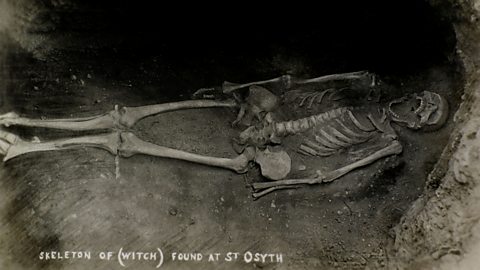
Today you can visit 'The Cage' where Ursula Kemp spent her final days. Located in St Osyth village, it’s a place known for its paranormal activity. Also in the area is St Osyth’s museum. Here you can delve into the stories of the many other witches that were accused alongside Ursula. You can also learn about a skeleton thought to belong to one of the Essex witches
Did you know?
In the trial, Ursula confessed to having four familiars - animal demons that obey witches. She claimed to have two cats, a toad and a lamb. It was the lamb that was blamed for the death of Grace's daughter.
The last witch trial in Ireland
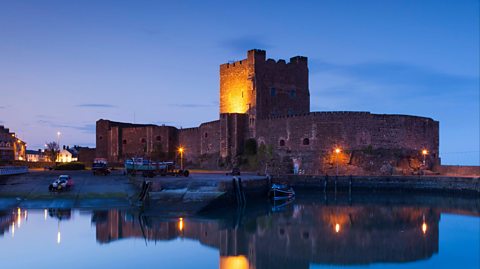
Islandmagee in Northern Island - what happened?
On the Irish coast of County Antrim lies the Islandmagee peninsula, which in 1711, was the location of the last recorded witch trial in Ireland.
Eight local women and a man were charged with witchcraft. They were accused of possessing a woman called Mary Dunbar. Mary had left Belfast to visit her family on the peninsula. Once she arrived in Islandmagee she started showing what were described as signs of possession. This included vomiting, fits, and being Showing disrespect for God or a religion.
Mary named eight women from the area who she believed had cursed her with these afflictions.
The women were tried and maintained their innocence. Nevertheless all were found guilty at Carrickfergus, a large town close to Islandmagee. The defendants did however avoid execution and instead received a one year prison sentence and time in the A punishment for people who would have to sit or stand at a wooden frame and the local people would throw rotten food or even stones at them..
If you want to know more…
You can head to the town where the trials took place and visit Carrickfergus Castle museum. Here you can learn about the trials and the impacts they had on the local community. If you want to imagine the feeling of being in the public stocks for yourself, you can visit the Carrickfergus Witches’ Pillory. Here there is a replica of the stocks exactly where the originals once stood.
Did you know?
Over 400 years before the case of Mary Dunbar, the first person to be condemned of witchcraft in Ireland was Dame Alice Kyteler in 1324. Her crime? Outliving four of her husbands!
Caught up in the conspiracy was her maid Petronella de Meath who was also charged with witchcraft, unlike Dame Alice she had no wealth or power. Alice escaped execution. Petronella was burned at the stake - the first woman in Ireland to meet such a fate.
This article was published in October 2025
The spooktacular history of the haunted house
When did ghosts start moving in? Investigate the spooky origins of the haunted house.
Eco-friendly ideas for a very green Halloween
From sustainable party ideas to zero-waste pumpkin recipes, an environmentally friendly holiday is easily achieved now more than ever.