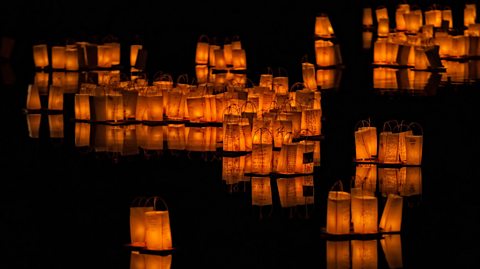
Every August in Japan there is a day of the dead celebration called the Obon festival. It is a Buddhist holiday celebrating and honouring those who have passed away. This is one of many festivals to honour the dead that take place at different times around the world. BBC Bitesize has looked into what happens during Obon in Japan and five other festivals of the dead for you.
Japan: Obon festival
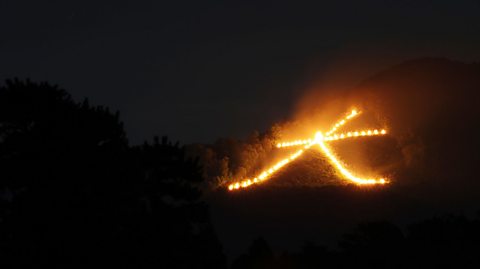
The festival grew out of a Buddhist story where a disciple discovered that his mother was suffering in the afterlife. He asked the Buddha for help, and was told to give offerings to the monks on the 15th day on the 7th month (when following the lunar calendar this falls in August).
The start of the festival begins with a tradition called mukae bon which calls deceased relatives back home. Families light lanterns or small fires to guide the spirits to them, as well as going to graves to make offerings. It ends with okuribi when families send their relatives back to the spirit world. They do this by lighting floating lanterns and releasing them onto rivers and seas.
Today the event isn’t strictly religious, more a widespread cultural practice. It’s an important holiday in the Japanese calendar, a time for families to honour their ancestors.
Guatemala: Festival de Barriletes Gigantes
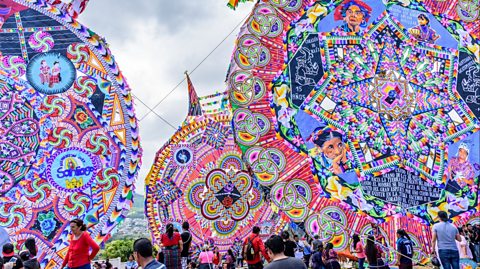
Guatemala celebrates Festival de Barriletes Gigantes (giant kite festival) in conjunction with Día de los Muertos (Day of the Dead) and A Christian feast day celebrated on 1 November to honour all the saints of the Church. celebrations to honour the deceased. The autumn brings strong winds to Guatemala, so it’s the perfect conditions to fly colourful kites of up to 60 feet (just over 18 metres) across! While this festival is relatively young, kite flying is an ancient tradition, possibly started 3,000 years ago with the Maya.
The kites are constructed over several weeks, and the final products are then showcased between 31 October and 2 November. Kites can be decorated with personal and historical symbols as well as contemporary mantras, for example relating to social issues such as climate change.
Italy: Ognissanti and Commemorazione dei defunti
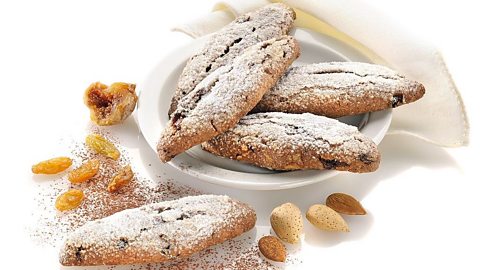
Italy has its own historical traditions for Ognissanti or Tutti i Santi (All Saints’ Day) and All Souls’ Day, known in Italian as Commemorazione dei defunti. Masses and graveside vigils are often held up and down the country. Tombs are decorated with chrysanthemums, an autumn flower, as well as candles which are left burning overnight.
In Sardinia there is a custom similar to trick-or-treating, with children going house to house on All Souls’ Day and are gifted cakes, nuts or dried fruit in exchange for a prayer. In Sicily, children who’ve been good might even receive a gift or sweets from a loved one who’s passed on.
Nepal: Gai Jatra
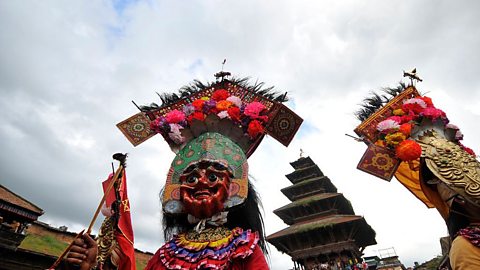
Gai Jatra (Cow Procession) is a festival celebrated for eight days every year in Nepal, historically by the Newar people of Kathmandu Valley. It takes place at the end of the summer in the sixth month of the Hindu calendar (known as Badhra) and is celebrated with drum music, costumed dances and comedy.
It started as a festival to honour the untimely death of a prince in the 1600s, but with the intention of being a positive event to cheer the queen and those who had experienced a loss in the previous year. As part of the festival, loved ones of the deceased lead a cow through the street, and if a cow is not available, they dress a child up instead.
China: Zhongyuan Festival
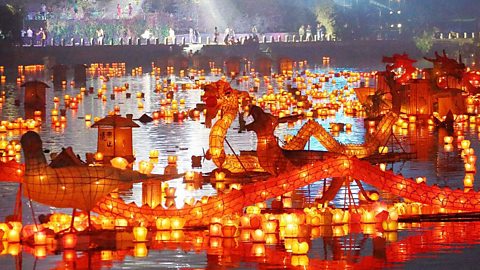
The Zhongyuan Festival (Hungry Ghost Festival) has different variations that are celebrated in many countries across Asia, including Malaysia, Singapore and Taiwan. It originated in China as both a Taoist and a Buddhist festival (known as Yulanpen or Yu Lan Festival).
The celebrations start on the 15th day of the seventh month in the Lunar Calendar, just like the Obon festival in Japan. Both festivals are similar, as both provide offerings to help their ancestors in the afterlife.
However in the Zhongyuan festival, they have different rituals for their Ghost Day. They burn money (which is not real money but something that resembles it) for the hungry ghosts as an offering to ease their financial problems. Families write their ancestors’ names on wooden lanterns and paper boats before placing them in a river, so their spirits will follow the lanterns as they float away. They also put on elaborate Chinese operas where the first row is reserved for spirits only.
UK and Ireland: Samhain
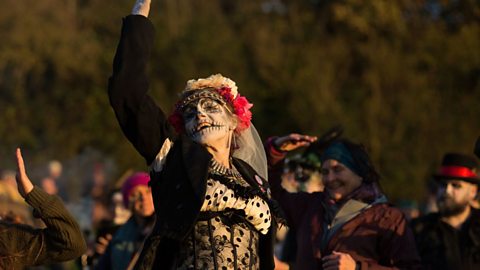
Many of the customs we practise for Halloween evolved from this Pagan festival. Pronounced ‘sow-en’, Samhain is a Gaelic holiday beckoning the ‘darker half’ of the year. It takes place on the evening of 31 October through to 1 November as the Celtic day begins and ends at sunset. According to Pagan tradition, in these hours the threshold between the living and the dead was at its thinnest, and Pagan gods were offered food and drink to ensure a blessed winter. Several end-of-year traditions including wassailing (carolling), mumming (folk plays), guising (trick-or-treating) and burning bonfires are also thought to have roots in Samhain.
A 19th-Century Irish legend that coincides with this holiday is that of Stingy Jack, who bested the devil but was consequently doomed to wander between Heaven and Hell with a flame in a turnip to light his way – hence why we have Jack-o’-Lanterns!
This article was published in October 2022 and updated in August 2025
Five comic book heroes from around the world
In a move Avenger assembler Nick Fury would be proud of, BBC Bitesize have scoured planet earth to put together a list of the finest superheroes out there who reflect particular aspects of their countries’ history and culture.
Six ghost towns around the world
From Japanese islands to the lost villages of the UK, BBC Bitesize explores the history of six mysterious ghost towns.
Six beauty hacks that rocked the ancient world
From seaweed to saffron, thanaka to aloe vera, BBC Bitesize looks at six beauty secrets from the ancient world.