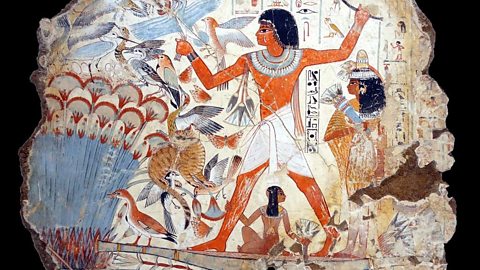
Have you ever looked carefully at the ingredients in skincare products and make-up?
Some of them - like seaweed and cactus oil - may surprise you.
Many of the components of treatments we use today date back thousands of years, although some beauty secrets are perhaps best left in the past.
Remember, it's best to ask a medical professional before trying any new treatments, especially if you have existing skin conditions or allergies.
BBC Bitesize steps back in time to find out more.
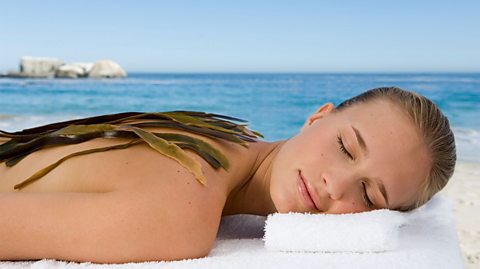
The soothing properties of seaweed
Has this slippery, often smelly plant really earned its place in the history of beauty? Well yes, as it contains anti-inflammatory and anti-microbial properties, which reduce swelling and prevent the growth of bacteria.
Romans used seaweed to treat burns, rashes and wounds, but in Ancient Greece it had a more aesthetic purpose where it was used to colour red lip paint along with other ingredients such as mulberries and - get the sick bucket ready - sheep sweat.
Seaweed also forms a part of thalassotherapy - skincare and healing treatments based around the sea, using salt water, mud and algae. It gets its name from the Greek word for ‘sea’ - thalassa. Thalassotherapy was practiced by ancient civilisations, although they didn’t call it that, and is now a common spa treatment.
The bright dye of saffron
Egyptian queen Cleopatra is as well known for her physical appearance as for her ability to raise an army, so it’s no surprise that some of her beauty secrets have gone down in history. She is believed to have bathed in milk infused with saffron, the deep yellow spice made by harvesting the stigma of the sativus variety of crocus. The stigma are the little red strands you find within the six purple petals, and they can either be used whole or dried, ground into powder.
Saffron, which has a slightly sweet, floral scent that you might have tasted in a tagine or a Cornish fruited bun, was also used by the Minoan people who lived on the Greek Island of Crete during the Bronze Age. An ancient system of writing which was created using sticks with wedged ends. symbols on stone tablets found in the Middle East show how it was used along with turmeric and sumac as a dye to decorate hands. It is also thought to have been an ingredient in perfume.
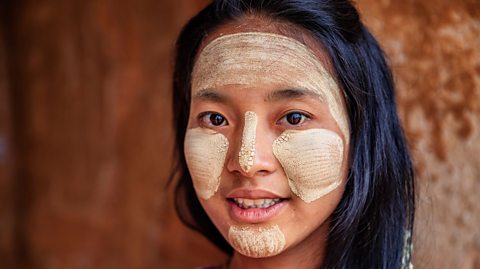
The protective nature of thanaka
This is a paste made from ground bark that people in Myanmar, particularly women and girls, traditionally apply to their faces in pale yellow patterns. As well as being decorative, thanaka protects the skin from the sun’s UV rays and is believed to be an antioxidant, protecting cells from damage.
A 14th-Century poem written by King Razadarit's Mon-speaking consort is the earliest literary reference that has been found to mention thanaka, but Myanmar people claim the practice goes much further back to at least the 11th Century.
To make thanaka, you moisten a small log of wood from a thanaka tree with water then scrape it against a circular slate slab until it forms a thin paste.
The distinctive smell of rose petals
If you’ve ever eaten a piece of Turkish Delight then you will recognise the smell of rose water. As well as being used to flavour food, it was a popular ingredient of perfumes and beauty products in many ancient cultures.
Mesopotamian clay tablets, dating back to 3500 BC, show that Sumerians and Assyrians extracted fragrances from the petals by dunking them in boiling water before draining them and adding oil. This was then gradually heated.
Rose oil is still used in perfumes, as a body oil and in skin cream today.
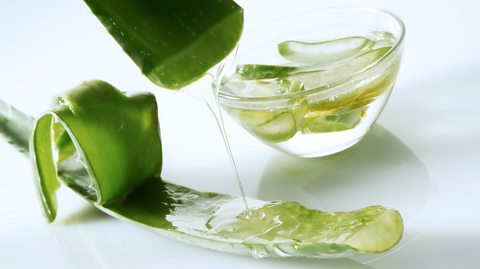
The multi-purpose aloe vera
You may know the sap of the aloe vera plant as a modern day treatment for sunburn, acne and other skin complaints, but people have been using it as a cure for a large variety of ailments for more than 1,000 years.
Many ancient cultures used this cactus-like plant in medicine, including the Egyptians, Chinese, Indian and Japanese. The Ebers Papyrus, an Egyptian medical text dating from 1550BC, mentions aloe in a list of plant medicines.
Greek medical books said the leaves could be used to tackle hair loss, and aloe vera has also been credited as being part of Cleopatra’s extensive beauty regime.
The strengthening qualities of sesame and coconut oil
If you want strong, shiny, damage-free hair then you might like to try 5,000-year-old ayurvedic oiling, which is claimed to result in all three. Ancient Indian texts recommend using a different oil depending on the season - warming sesame oil in the cooler months and cooling coconut in spring and summer. Sometimes herbs believed to improve hair strength, such as hibiscus or amalaki, are added.
The practice involves applying the oil to the full length of your hair as well as lightly massaging your head, temples and neck, which improves blood flow in the scalp, believed to encourage hair growth and strength.
It continues to be done today, with many families passing the ritual down generations.
This article was published in December 2024
Looking for quizzes, amazing stories and fun facts?
Bitesize Topical has it all!

Glow Up: How well do you know your make-up techniques?
Take our quiz and test your MUA knowledge

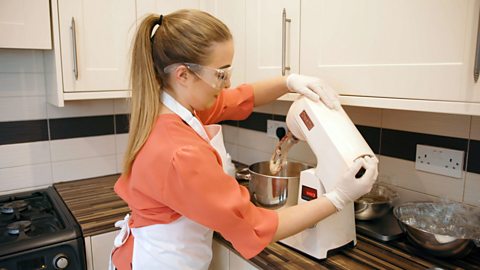
Rose: cosmetics creator. video
Rose makes cruelty-free cosmetics from home.
Three incredible ancient frescoes that aren’t in Pompeii
From Egypt to Italy to India, join BBC Bitesize as we explore three stunning ancient frescoes that aren't in Pompeii.