Lip care is big business in the UK, worth an estimated £80m and promoted by celebs like Charli XCX. But how can you really find out the facts about which products are worth it and which are the ones to avoid?
Turning to your socials doesn’t always help. There are more than three million Instagram posts with #lipbalm and reviews of luxury balms, recommendations of more affordable alternatives and unboxing of the newest item on the market account for the army of videos about lip balms on TikTok. YouTube offers videos where dozens of balms are tested in one go - with an honest opinion at the end - and Reddit threads on luxury lip balms include comments from users unimpressed with the pricier versions, preferring the cheaper, more established products.
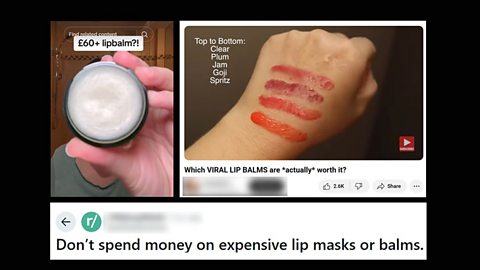
So, how can you separate the facts from the fake claims when it comes to lip care? Does lip balm really help to keep chapped lips at bay? Are natural ingredients better for our lips? And is it true that the more you use lip balm, the more you need to use? Bitesize Other Side of the Story’s teamed up with BBC Sounds podcast Sliced Bread to try and get you the answers.
Greg Foot, presenter of the Sliced Bread podcast, talks lip balms
Greg: So when our lips get cracked or chapped, is it simply them drying out?
Dr Emma Craythorne: It's exactly them drying out. So if you go to the Arctic where the humidity is really low, loads of water will leave the skin on your face and it will get all dry and cracked. But because the lips are even more sensitive, even in just normal cold conditions, our lips will dry out much more readily.
What is lip balm?
When we apply lip balm, it creates an protective layer on the lip’s surface. This seals moisture in and guards against outside elements such as the wind or low temperatures, or irritating foods like chilli peppers. It can also protect us from ourselves! When we lick our lips, the enzymes in our saliva can break down the natural protective barrier our lips already possess - known as lipids - and the ingredients in lip balm mimic those lipids, to rebuild the barrier.
What are the ingredients in lip balm?
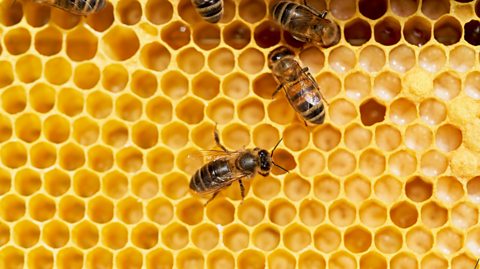
Some lip balm ingredients are manufactured, such as petroleum jelly. Others are natural, such as beeswax. There has been some debate over which is better for you.
Dr Emma Craythorne, a consultant A doctor who specialises in diseases and conditions of the skin. and surgeon, who uses petroleum jelly as a lip balm, told the Sliced Bread podcast: “Sometimes if you’re creating something A substance manufactured by humans rather than one which is made naturally. A synthetic substance can also mimic a natural substance., you’re making it in a more pure form, whereas if you have it from a natural source, it may be contaminated with other things. Natural ingredients are wonderful, but some natural ingredients are really, really harmful, so I wouldn’t say natural was better.”
Pharmaceutical and medicinal chemistry lecturer at the University of Sunderland, Dr Teresa Borello, said on the same episode that she prefers some elements of her lip balm to be natural, as they are biodegradable and better for the environment, but agreed with Dr Craythorne that natural ingredients are not always the best ones.
Everyone is different and we all have different skin types. Water and moisture will leave different people’s bodies at different rates, so there is no single lip balm that works for everyone. We each have different ways we want our lips to look and feel as well.
Expensive lip balm - is it worth the price tag?
The difference in price between lip balms can be significant, with some costing less than £2, to others with a price tag of £20 or more. But do you have to spend that much to make your lips feel better?
Lip balms with a petroleum jelly base are among the cheapest in the market while ones that contain beeswax, for example, can be pricier. If we do pay more, are we getting a better product that really benefits our lips?
Dr Borello believes this can be true - but not always. She said: “In some cases, I must say, I think the prices reflect the real value. Expensive products might contain high quality ingredients… a much cheaper product might have a similar base… but without the glossy marketing and the prestige packaging.”
On the other hand, Dr Craythorne doesn’t agree in paying more: “I fully believe that a lot of the expensive price tag is paying for the celebrity to endorse it… and I’m sure there are some formulations that are spending a lot more on these ingredients than others but I know what the mark-ups [the cost added to products to make a profit] are on these products, they are pretty high.”
Does lip balm protect from the sun?
Not all lip balms come with sun protection. Those that do can be pricier than those without - but are they worth the extra cost?
Dr Craythorne said it’s a good idea to have protection on your lips, but to make sure the SPF (sun protection factor) on the balm is at least 50. It’s also worth considering that, unlike some sun creams and lotions, lip balms do not last as long on the skin - they often need re-applying after a couple of hours, so one application won’t last the day in the sunshine.
And is it true that the more lip balm you use, the more you need to keep using?
Dr Craythorne is doubtful: “I think there’s probably an element of truth to it, because if you seek out to use lip balm in the first place, it must be because you normally feel that your lips are a little bit dry.
“If you then are somebody who wants to have that feeling on your lips where they’re feeling a little bit moist, then that in itself is quite an addictive feeling because it just feels nicer to you. I don’t think that you have to keep using it for a physical reason but it’s just more for probably a pleasurable reason, it’s something that you like.”
You've read about lip balms, but what about the differences between the ear plugs, fitness trackers and cycle helmets on the market? You can find out about these and more from Sliced Bread on BBC Sounds.
This article was published in July 2025

The latest food trend taking over social media
The Japanese-style strawberries and creme sandwich has got thousands talking
Do cows really love jazz?
Is the TikTok trend proof that cows enjoy laid-back beats - or is there more to it?