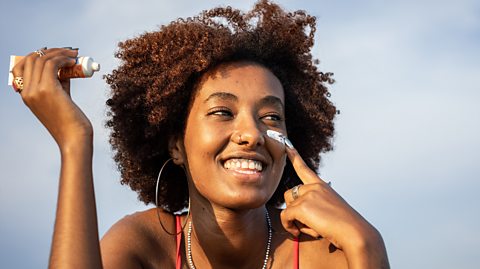
Sunscreen is a popular topic, especially on TikTok where skincare routines and beauty trends are all the rage and where the hashtag with the same name has been used more than 2.5 million times.
With vast numbers of influencers sharing their recommendations, tips, and advice, how do you know what to believe?
Let’s bust some myths and share the facts about sunscreen.
Is sunscreen bad for you?
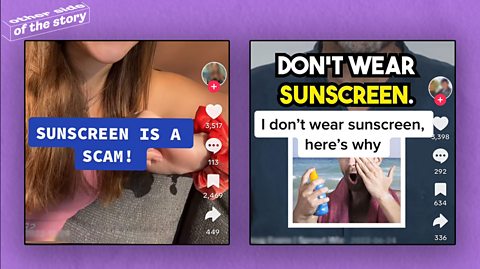
A quick search on TikTok for sunscreen will bring up posts, some of which have had millions of views, offering advice on everything from the best products, how and when to use them, and more worryingly, reasons as to why people should avoid wearing sunscreen.
Anti-sunscreen videos have had hundreds of thousands of views on TikTok, with the movement questioning its effectiveness, including claims that the ingredients used are often toxic. However, evidence suggests that the ingredients used in UK, EU or US-approved suncreams are safe and effective, and any potential harm is outweighed by their benefits in protecting people from UV (ultraviolet radiation) - a form of energy the sun emits.
Strict safety laws and regulations cover all cosmetic products in the UK – this includes sunscreens. The NHS says one of the best ways to protect yourself against skin cancer is by wearing sunscreen.
Anti-sunscreen posts may spark your interest and be tempting to share, which is why they often spread so quickly. However, you may unknowingly be sharing misinformation – inaccurate or false information spread by people who think it's true.
The myths and the facts
1. Sunscreen can be beneficial in winter - TRUE
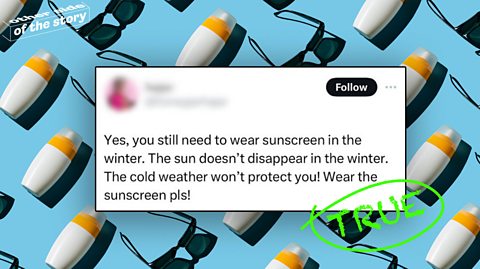
The World Health Organization (WHO) states that UV levels are at their highest on clear, cloudless days. While cloud cover can decrease exposure, light clouds and prolonged time spent in open shade can still cause sunburn for sensitive individuals, especially on days with high UV levels.
2. Black people don’t need SPF - FALSE
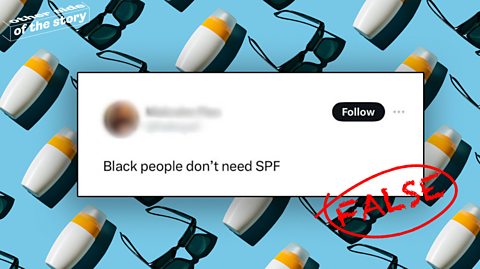
Darker skin has some protection against UV rays, but as Cancer Research UK highlights, anyone can get sunburnt including people with darker skin. The NHS recommends that people should still avoid burning and take care in the sun as people of all skin tones can get skin cancer.
3. You need to reapply sunscreen - TRUE
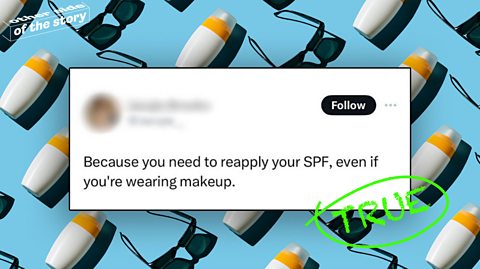
According to the British Skin Foundation, 67% of people are under applying their sunscreen. Sunscreen can wear off over time, especially after swimming or sweating. The NHS recommends reapplying sunscreen every two hours. The SPF number on a bottle of sunscreen refers to how much UVB it allows in. A sunscreen with SPF 15 allows about 7% of the sun's rays to reach your skin.
As with all advice on social media, check that it comes from trusted sources. Develop a critical mindset, do your own research, and consider more than one point of view.
Brush up on your fact and fake spotting skills by challenging yourself to get full marks on our fake news quiz.
This article was updated in April 2025

Not sure if the news you’re seeing on social media is true or false? Can you always tell if the things you see online are real or fake? Learn how to get the other side of the story with our quizzes, videos and explainers.