Steeped in tradition and heritage, Wimbledon has been an iconic part of the British summer since 1877. But what’s it like to be the person whose job it is to bring the history of the world’s oldest tennis tournament to life?
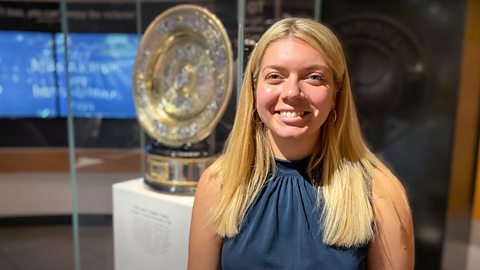
From a tennis ball-shaped teapot to a felt doll of Sir Andy Murray, Eleanor has seen it all.
As a collections officer, she is part of a team responsible for processing thousands of items that tell the history of the world’s oldest tennis tournament. It’s particularly important this year, as Eleanor sifts through dozens of boxes, cupboards and cabinets in search of the best items to tell the story of 145 years of The Championships and 100 years of Centre Court.
In a collection that contains over 40,000 objects, it’s certainly a busy role, and you need a discerning eye. Old match programmes are some of Eleanor’s favourite finds: “In the early ones, the schedule of play used to be left blank and visitors would write in the details of the matches. I love looking through them and seeing who people saw, and their thoughts on the match, even just seeing their handwriting, it feels very personal.”
It’s not unusual to come across some rather bizarre items either. Speaking about “miscellaneous boxes” of memorabilia, Eleanor recalls: “Sometimes the items are just so random. Things like tennis racket-shaped pasta.”
Whilst the action is taking place on court, Eleanor mainly works behind the scenes; the museum is one floor underground, with its vast store of intriguing trinkets and hidden history a further level below.
“A lot of our work is subterranean,” Eleanor says. “The stores have to be kept at a regulated temperature and at low light levels. We spend most of our day underground and then come out for lunch and see the light.”
Tucked away in the store, you can find all sorts of Wimbledon miscellanea from over the years, dating back to the first book written about tennis, published in Venice in 1555, and the amazing racket store.
Around 1,000 tennis rackets are stored here, organised by decade from the 1870s to present day, and maintained in a room that’s kept strictly under 18 degrees for preservation. As the decades pass, wooden ash rackets change to lightweight materials such as boron, graphite and titanium that we see on court today.
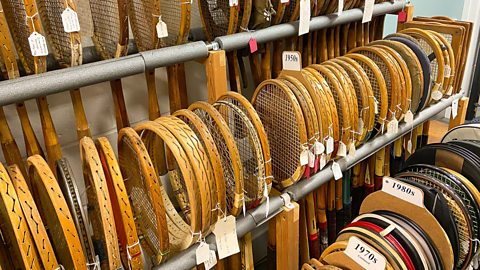
Some of the early rackets are surprisingly heavy – it’s hard to understand how players could even play a full match holding them!
100 years of Centre Court
Centre Court celebrating its 100th birthday has thrown up a menagerie of memories related to the most glorious moments on grass, but it’s Eleanor’s job to look through its history for examples that show how the wider world has changed in that time too.
To mark the occasion, Eleanor and the team at the museum have created an exhibit, ‘Centre Court: 100 Years of Change’, which documents the social and cultural changes over the last century, reflected through iconic figures who have frequented the Wimbledon Championships.
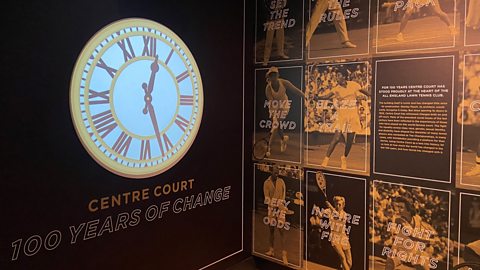
“We’ve used Centre Court as a lens to look at how society has changed over that time,” Eleanor says. “We picked out players who advocated for those causes or were particularly significant at pioneering those roles in tennis.”
The exhibit features sections on racial prejudice, LGBTQ+ rights, gender equality and celebrating all abilities in tennis, highlighting players who broke barriers and fought adversity.
“We hadn’t done an exhibition like this before,” Eleanor says. “They aren’t always easy topics to discuss, but it’s important to think about them and get people engaged in those conversations.”
Battle of the sexes
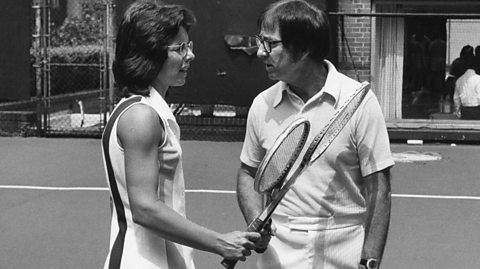
Working with the exhibition’s lead curator, Eleanor and the team helped to locate items and artefacts to bring their stories to life, including a 1975 ‘Battle of the Sexes’ mechanical money box, representing Billie Jean King’s iconic match against Bobby Riggs at the Houston Astrodome.
In 1973, 55-year-old former men’s Grand Slam champion Riggs had bragged about the inferiority of the women’s game, challenging the then women’s world number one, and reigning Wimbledon Ladies’ champion, King, to battle it out in a match. King would go on to beat him in straight sets.
“The exhibition has been really well-received by the visitors,” Eleanor says. “The feedback that we’ve had is that we’ve introduced topics to people who hadn’t considered them before. It shows how Wimbledon is forward-thinking and particularly engages younger audiences, who are very invested in those conversations and really value them.”
It’s not just Centre Court that is reflecting societal changes over the years. Started in 1977, the way the museum presents its exhibits has changed over the years too, moving with the times. There are several interactive elements around the museum now, allowing visitors to get involved with displays.
Exhibits for the 21st Century
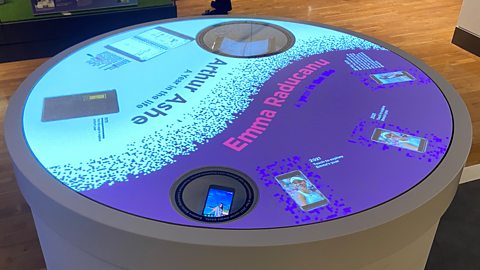
Visitors also have the opportunity to compare how players have shared their experiences of the game through different eras at the A Year in the Life of a Tennis Player exhibit, in the new interactive gallery. They can contrast the personal diary written by Arthur Ashe, the first and only black player to win the men's singles title at Wimbledon in 1975, with the social media posts from Britain’s Emma Raducanu during her epic run to the fourth round of Wimbledon in 2021, and her US Open win the following autumn.
“We try and engage with younger audiences, by comparing past players experiences of how The Championships unfolded, to how players experience them nowadays,” Eleanor says. “Visitors can compare Arthur’s more traditional, personal diary to the sponsorship deals of the 21st Century. What you put on social media, your brand and how you present yourself online can be seen as just as important as playing in the present day.”
Fashion on display
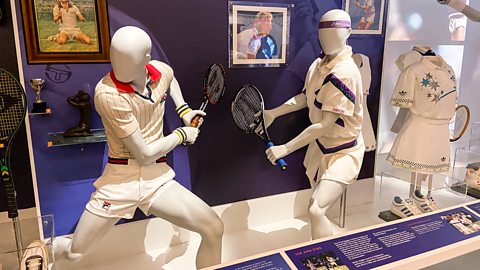
Fashion is a key ingredient at the museum too, engaging young and more mature fans alike; everyone wants to see the iconic outfits worn by the stars of their generation, from Steffi Graf’s bold prints from the early 90s to the Williams sisters’ eye-catching designs of more recent times. Last year, the museum refreshed the more traditional ways of displaying outfits, introducing 3D printed models, based on images of players in action.
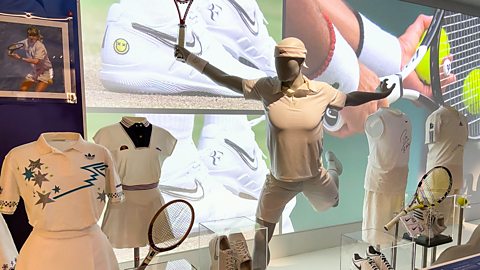
“Compared to the older ones, these new in-motion mannequins have really brought the items to life,” Eleanor says. “We had a great conservator come in, who positioned the clothing to be ruffled, making it look even more realistic.”
Collections online
Perhaps the most obvious example of the modernisation is the decision to make the entire collection available online: “We’ve created a platform where people can search our collection, including items that are currently only housed in the store,” Eleanor says. “The aim is to get the entire collection online. We’re collecting for everyone, so everyone can see the items, not just people who work here. It’s about opening that history to a variety of audiences. The more people that can engage with it, the more stories can be shared.”
Since The Championships in 2021, the museum has been accessible to anyone with a ticket to the Grounds, which resulted in there being over 10,000 visitors during the fortnight last year.
Contemporary collecting
During The Championships themselves, Eleanor is fully embedded in the event, documenting history as it happens: “The Championships are quite consistent, that’s why they are so well-loved as part of the British summer, but at the same time, there’s always something new each year.”
Eleanor and the team engage in ‘contemporary collecting’, gathering items of significance from that year’s proceedings, whether that be iconic outfits worn by players, or homemade signs created by fans: “We collect items so we can present them year-round. If people aren’t able to come for the fortnight, they can come and experience it throughout the year. It’s so future generations can enjoy them too, and revisit historic moments of The Championships for years to come.”
If you’d like to find out more about Eleanor and the team working behind the scenes at Wimbledon, visit Bitesize Careers where you can watch a short film featuring Eleanor and four other 'unsung heroes' working in behind the scenes roles at The Championships, helping to bring the sporting event to life.
Where next?
Jobs in sport: Working at Wimbledon. video
Five young people talk about their roles at Wimbledon, showing just how many people takes – working across job sectors – to host a major sporting event.
Quiz: Can you ace our Wimbledon quiz? quiz
Do you know why the players wear white, or how long the grass has to be before each match? Test your niche knowledge!
More from Bitesize Careers
Hear from young people about the world of work.