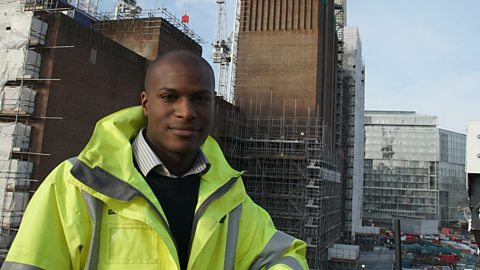
Have you ever considered doing a T-level?
Offering 80% classroom learning and 20% practical experience in an industry placement, this technical qualification has a lot to offer.
Get the full lowdown on what T-levels involve.
We spoke to three students who are in their final year of their T-level, to find out what it’s really like to study one at college.
Millie's story
T-level in Health (Nursing)
It’s the best decision I’ve ever made!
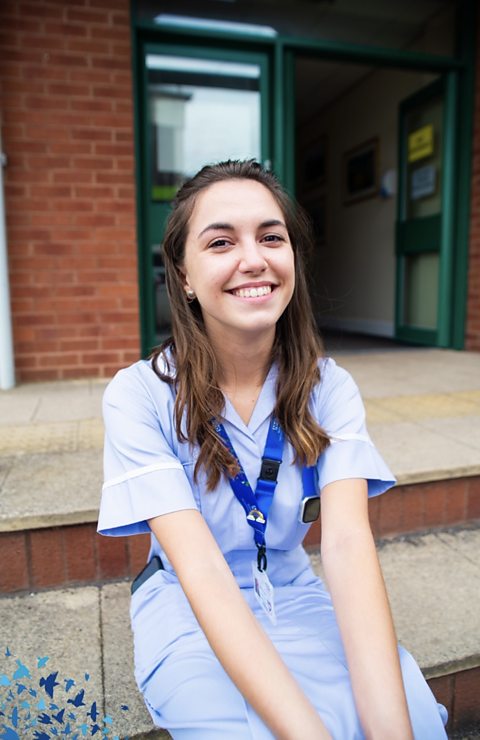
When I left secondary school, I actually started doing a BTEC in ‘Health and Social Care’ but after a year, I knew it wasn’t for me. I wanted a course that was more practical, which is when I came across an advert for the Health (Nursing) T-level on my college website. As it was my ambition after college to do a nursing apprenticeship at degree level, the T-level really appealed to me, as I could build valuable industry experience that would stand out when it came to applying.
Now in my second year, I’m pleased to say that it’s the best decision I’ve ever made! The course is broken up into classroom-based learning, clinical lab skills and then a hospital placement, which I’ve been attending once a week during term time. I’ve had the opportunity to work in multiple wards so far, which has helped me to figure out what speciality I enjoy the most. The clinical skills training at college has also helped to build my confidence and make me feel ready for the placement, as I’ve been able to test out the healthcare skills on my peers, before doing it for real.
It’s very much a process of learning on the job
On the placement, I act as a healthcare assistant, using the theory I learn at college to ensure the care I provide to patients is as personalised as possible. Even though the course doesn’t involve working with children or babies, there is always the option to specialise down this line at degree level. That’s the beauty of a T-level course, it helps you to develop relevant skills that are both transferrable and highly sought after, no matter which career path you take in the healthcare industry.
The support I’ve had on the T-level, from both my teacher and line manager at the hospital, has been invaluable. If I’m ever concerned about anything or just have a question, they have always been there to resolve the issue or fill that gap in my knowledge. For example, being asked specific questions by patients when you first start can be a little intimidating because you won’t necessarily know all the answers, however, your team on the ward are there for that reason and it’s very much a process of learning on the job. It’s normal to feel a bit of self-doubt initially but you quickly settle into the flow of things. Just remember not to put too much pressure on yourself and have fun!

I’ve made friends for life
The variety of practical and theoretical assessment has really suited me too. It’s fair to say I’m certainly a fan of the T-level but for anyone considering one, I’d recommend finding out as much as you can about the content of the course before making your decision. Even though I have no regrets, I didn’t realise the science element to the course was going to be as difficult as it was, so just make sure you check the details on the specifications. In hindsight, I would have done a lot more preparation in this area before starting the course.
I feel like the T-level has helped me to grow as a person, both personally and academically. I’ve made friends for life and being around professionals who are so passionate about their jobs is really inspiring. To know that you’re improving the welfare of patients’ lives is hugely rewarding. Having chosen to do this T-level, I now know for certain that I want to get onto a nursing apprenticeship after the course. But right now, I can’t wait to start my next placement on a cardiac ward in September!
Rares' story
T-level in Design, Surveying and Planning for Construction
It has re-affirmed that this is the career path I want to take
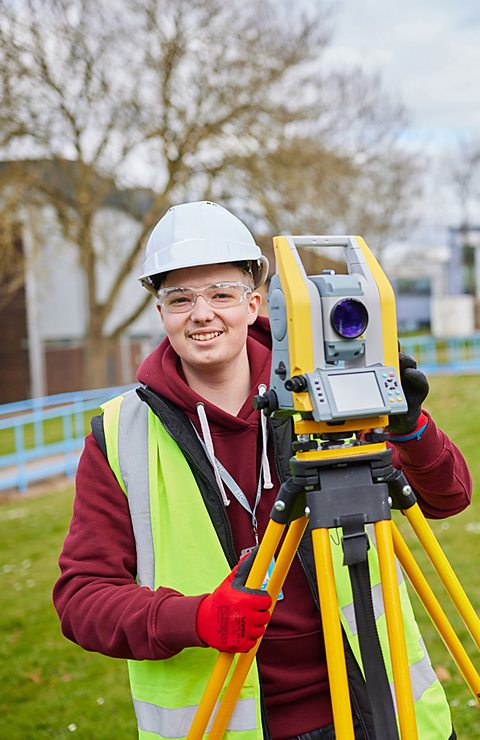
After my first year of A-levels, I really wasn’t enjoying it and needed a change. Thankfully the college was advertising T-levels on their website at the time, which appealed to me because they seemed tailored towards pursuing a more vocational career route. My dad was a surveyor and so having been brought up having some insight into the world of construction, I knew this was a field of work that I wanted to explore further. I applied, had a phone interview and started a few days later. I couldn’t believe my luck!
Having completed my first year, I can definitely say that the 80% theory and 20% practical is a perfect balance for me. Having approximately 45 days out of college and in a place of work is really exciting, as each day is different, you get to meet new people and it enables you to figure out if you’d want to do that role on a full-time basis after education. I’m pleased to say that my current work placement with the construction company Wilmott Dixon has been a really fulfilling experience. Taking an active role on site and learning what it’s like to be an assistant site manager has re-affirmed that this is the career path I want to take in the future.
The amount of support I received when it came to preparing for my exams was brilliant
Having one day a week on site has been great, as I’ve been able to apply all the theoretical learning. For example, learning about types of foundations and then going on site to see how these are built in real life, has given me a greater understanding of how the industry works. I have particularly enjoyed learning about the crucial aspects of health and safety on site and how these are implemented.
Another positive from doing this T-level is that the teachers are from construction-related backgrounds, which has meant they’ve been able to share a great amount of expertise and advice with me. If you have the time, it’s also worth considering getting a part-time job in a related sector, which can add another string to your bow when it comes to applying for a degree or job after the course. As the modules are spread over two years, I have found this to be a feasible option and you never know what the work might lead to later down the line.

There’s always something to look forward to when you’re doing a T-level
The T-level has certainly prepared me for future employment. I now know what I’ll be walking into and have people around me to support this process. For instance, my teachers invited companies from the construction industry into the college to give a talk, in which they shared their valuable insight into the industry with us. There’s always something to look forward to when you’re doing a T-level.
If you have an interest in architecture, civil engineering or surveying, then this T level is for you! After my T-level, I’m hoping to do an apprenticeship in Site Management and I think it has definitely increased my prospects of this. In my eyes, doing a T-Level is a no brainer!
Alex's story
T-level in Digital: Software Development
I haven’t looked back since

After a year of doing A-levels, it became clear to me that my heart wasn’t in it and I had made the wrong decision. All I knew is that I loved IT so when I came across this digital T-level on the college website, it felt like I had struck gold. I’ve always been interested in programming and this course offered exactly that!
I haven’t looked back since. My first year has been really fun, giving me the opportunity to build new skills, including how to plan a project, test software and add new features. As well as the classroom-based lectures, I’m currently doing a placement for a contractor who is responsible for delivering the mechanical, electrical, heating and ventilation works at Hinkley Point C, a nuclear power station that is currently under construction.
It has also made a real difference to my social skills
The practical experience was a big selling point for me, as I’m much better at learning by doing the skill, as opposed to just reading about it. A lot of the job involves problem solving, which is particularly rewarding. I was a bit nervous at first because I wasn’t used to the reactive work environment but now I love it and because I’m being set real-life tasks that can contribute to the company, it’s even more motivating. I’m really pleased to have gained this experience. Not only will it look good on my CV going forward but I’ve also been able to build strong working relationships with industry professionals, who one day might be able to provide a reference that will secure me full-time work.
The support I have received on the course has been second to none. Before I even started, the contractor and my tutor asked me what I wanted to get out of the experience, which was really reassuring and helped me to settle into the placement, as everyone was on board with trying to help me achieve my objectives from day one. The placement has not only improved my programming skills but it has also made a real difference to my social skills too.

If you go with what you enjoy, you’ve got nothing to lose
I would say to anyone thinking of doing a T-level, if you’re passionate about a particular subject and enjoy doing it in your spare time, then this option is perfect. If you go with what you enjoy, you’ve got nothing to lose. It’s brilliant to be able to put your knowledge into practice in person and have that direct feedback from the employer. To have that real world experience in a role that is what you’re looking to do as a career is very rare, so make the most of it!
Surprisingly, I wanted to be a physio when I did my first year of A-levels. How wrong I was. I didn’t even realise being a software developer was really possible but thanks to the T-level, I’m now doing what I’m truly passionate about and heading for a career in an industry that is right up my street. The second year of my T-level comes with the challenge of building my very own software programme from scratch, which I can’t wait to get stuck into. After that, my goal is to do an apprenticeship degree in Software Development, which would allow me to do what I love doing on a daily basis! This T-level has turned things around for me. I’d highly recommend doing one if you have the chance.
5 reasons to consider a T-level...
1. Practical experience
Practical experience is a big plus, especially if you’re looking to pursue a vocational career such as nursing, construction or software development.
2. Insight into the real world of work
If you want to know what it’s like to be in the real world of work, this is a perfect opportunity! After your first year of placement, you might realise it’s definitely not for you, in which case there are always other options to fall back on. As we heard from Millie, Rares and Alex, it’s never too late to change your mind if that’s what makes you happy.
3. Opportunities
There can be some brilliant opportunities that come with doing a T-level, such as work experience placements abroad. For example, Rares went on a two-week erasmus trip to the US, which was all accounted for by his college. This experience was eye opening and made him realise the amount of different opportunities available in the construction industry.
4. Spare time
Depending on how your T-level is structured and how you manage your time, if you can get a part-time job that relates to the course you’re doing, it can be really beneficial. For example, Millie has a part-time job in a local A&E, which has boosted her nursing skills and allowed her to build a good reputation with professionals in the industry.
5. Life skills
Gaining experience of professional work also prepares you for what shift patterns are like, teaches you how to manage handovers effectively and allows you to find a healthy work-life balance. Learning from the very best in the industry gives you that head-start after education, knowing how to behave and communicate in a professional setting.
What are T-levels?
Want to mix studying and hands-on experience? Find out about T-levels, a new type of qualification.

T-Levels: A teacher guide
We asked teachers of the new T-Level courses to explain what they are, how to offer them, and which students might be best suited.

Explore careers by job sectors
Looking for job inspiration? Check out BBC Bitesize Careers job profiles to help you get started.