Welcome to The Regenerators.
Introduction
Shapes are everywhere. If you look around, you may be able to see circles, squares and even triangles in the furniture or the flooring.
If you step outside, into a garden, park or even the grounds at your school, you can find shapes in nature too.
What shapes can you find in nature?
Join Ibrahim and Rui as they meet up with Angela at Backwell Lake in Somerset to go on a shapes hunt.
Ibrahim: I am Ibrahim. And this is Rui. And we have come to Backwell Lake in North Somerset.
Rui: We are here to meet Angela who's going to teach us all about shapes in nature.
Angela: This is an awesome place to meet because it's great to learn outdoors. This lake is home to rare species of animals like otters and dragonflies. But today we're going to look for shapes.
Ibrahim: We want to ask Angela to explain to us the difference between 2D and 3D shapes.
Angela: A flat shape, like the circle on this piece of wood is 2D, but it's completely flat, so you can't pick it up. Now, what about this tree trunk? Is it 2D?
Rui: No, it's 3D as it's not flat.
Angela: A 3D shape is a shape with three dimensions. Its height, its width and its depth. So you can pick it up or wrap your arms around it. Do you think you can wrap your arms around this tree?
Rui: We can try.
Angela: Are we all joined up? I think. Boys come back here. Can you think of a 3D shape?
Rui: Yes I can. A sphere.
Angela: Yes, and where have you seen one of those before?
Rui and Ibrahim: Football!
Angela: Yes! Brilliant answer. Now look, I have got a mission for you.
Rui: Can you walk around the lake and go on a shape hunt?
Angela: You're going to need this and this.
Ibrahim: Look a circle.
Rui: It's on the tree.
Found another rectangle.
Angela: Here's a square.
Rui: I'll tick that off.
Ibrahim: Look there's a rectangle.
Rui: Yep, that's definitely a sphere.
There's a cylinder.
Angela: Wow.
Rui and Ibrahim: And a cube!
Angela: Rui and Ibrahim, you are the best shape hunters. I've got one last challenge for you. I collected some different shaped things in that basket. Do you think you could work together and make a picture of a face?
Ibrahim: Yes!
Angela: What could you use a cylinder for?
Rui: An eye.
Ibrahim: I was going to say that.
Angela: Yeah two eyes.
Rui: We could use this as the nose.
Angela: Oh, what shape is this?
Ibrahim: A triangle.
Angela: A triangle. Excellent. Have we got any more spheres for the smile?
Rui: I've got several.
Angela: And what are you using these rectangles for?
Ibrahim: The head.
Angela: Well done, boys. Your nature art is amazing. Can I take a picture of it for my wall?
Ibrahim: It's time to say goodbye to Angela now, but we have learned so much about shapes.
Rui: Yes, we have learned that shapes are everywhere.
(PHOTO CLICKING)
(UPBEAT MUSIC)
2D shapes
2D shapes have two dimensions - height and width. This means they are completely flat, so you can’t pick them up.
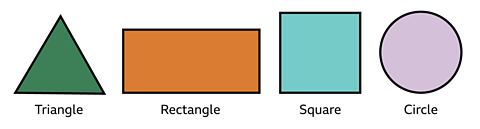
By counting the number of sides or corners on shapes, you can tell what type they are.
For example, triangles have three sides and three corners. Squares have four sides and four corners.

3D shapes
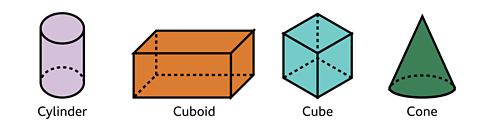
3D shapes have three dimensions – width, height and depth.
These shapes can be picked up.
Shapes in nature
When you draw shapes, or use them in school, they are often smooth and simple.
When you look for shapes in nature, they may not be smooth and you may need to look carefully and use your imagination
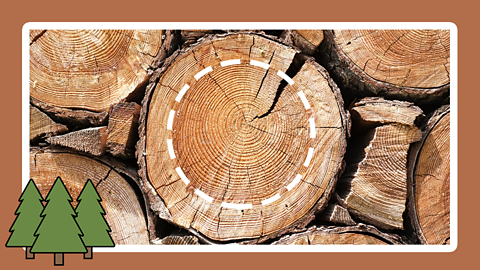
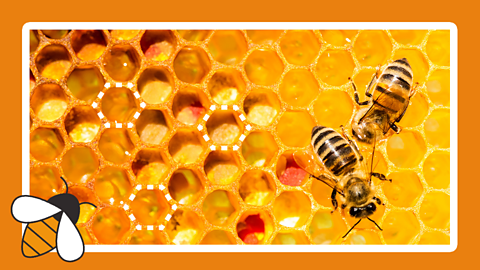
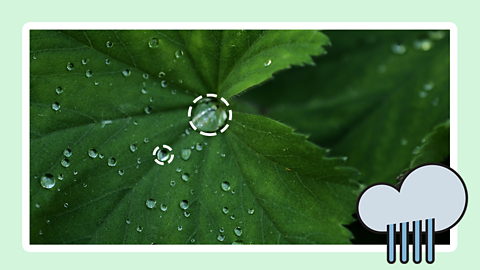
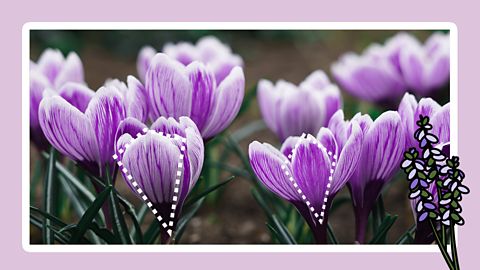
Image caption, Circle
1 of 4
Sometimes you can find shapes you know, like a circle in the centre of a flower. Other times you can see shapes, but you might not know the names.
If you don’t know the name of a shape, you can use words to describe their properties.
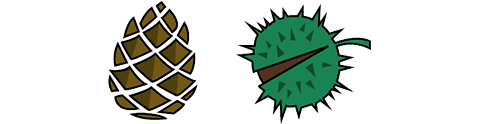
Look at this pine cone and conker. They are both round in shape, but they are not perfect!
You can use words like ‘stretched’, ‘spiky’ or ‘smooth’ to describe the shapes you find in nature. For example, 'the conker is a spiky sphere'.
Shapes in leaves
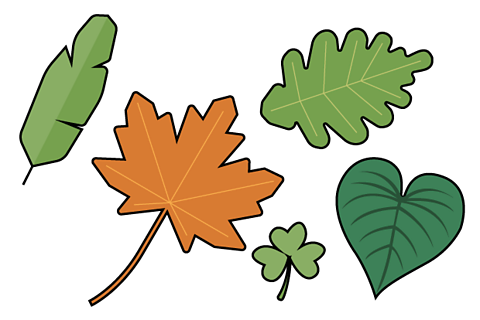
Leaves are very interesting to explore. there are many different kinds of leaf and they come in all shapes and sizes.
Some leaves are long and thin and some are wide. Some are shaped like stars or hearts. Others have spiky or zig-zag edges.
Lesson complete!
Well done Regenerator, you've completed this lesson. Now let's see what you can remember.
Sticky shapes
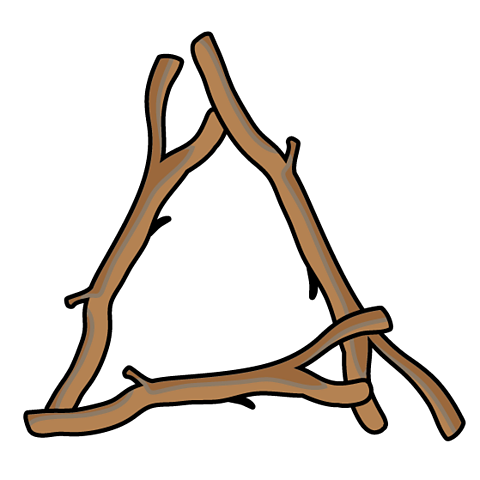
Ask an adult to help you collect some sticks. Remember, never break them from a living tree and be careful of thorns!
You’re going to use your sticks to make different shapes on the ground, so think about how many you will need.
Try to make these shapes using the sticks:
- triangle
- square
- rectangle
- pentagon
You should think about the length of your sticks too. You will need different length ones to make a good rectangle.
2D shape flashcards
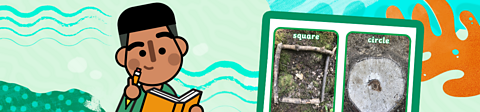
Use these 2D shape flashcards from Twinkl to inspire your own outdoor shapes challenge. Can you create each of the different shapes using natural objects?
There's more to learn
Explore more lessons and content from around the BBC.
Let's visit a national park
GREEN CLASSROOM
What living things can I find near me?
GREEN CLASSROOM
Year 1 - 2 and P2 - P3
GREEN CLASSROOM
More from The Regenerators
BBC BITESIZE