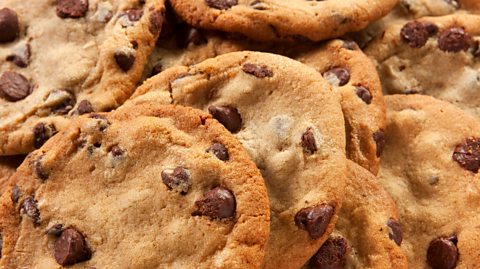
According to Twitter and Instagram feeds up and down the country, everyone and their dog is becoming a baking aficionado.
But while more people than ever wanting to become the next Mary Berry seemed great at first, in time it started eating into yeast supplies, as demand outran stock. But there’s one type of bread you don’t need shop-bought yeast for, and that’s sourdough.
One myth that’s peddled about sourdough is that you don't use yeast to make it. This isn’t true - all bread needs yeast. But in sourdough, it’s wild yeasts found in flour that do the work, as opposed to the instant stuff you’d find in a normal white loaf.
You may not realise it, but there’s a whole host of science that goes into your delicious artisanal bread. But before we delve into that, Trove bakery in Manchester filmed the process for us.
WATCH: Bakers go through the process of making a white sourdough loaf
Starting at the start…er
Sourdough breads are made with what’s known as a starter, which gives the dough what it needs to rise. But how is it made, what’s it made of, and how does it work?
Well, put simply, it’s just flour and water mixed together. It’s left to ferment, which means bacteria and yeast multiply in it as they feed on the flour. This sounds gross, but they’re harmless, and they’re what gives sourdough its unique taste.
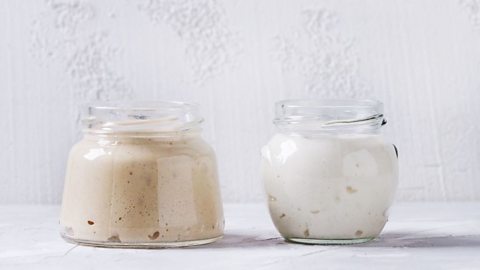
The starter is key to why different sourdough breads taste different from place to place. You’d think if you used the same type and quantity of flour and water as another bakery, it would taste the same. But lots of naturally occurring yeasts and bacteria around us change the flavour and the texture of a sourdough.
Molecular physics professor and food scientist Professor Peter Barham explains: “There are yeast and bacteria in the environment, all the time, everywhere. You’ve got them on your skin.”
But although there are some in your environment, it’s mainly down to what you use to make the starter - yeasts and bacteria in different types of flour have the biggest part to play. Once the flour and water is mixed, yeasts and bacteria feed on the flour and start to multiply. After a while, there’s enough of them to be used in the bread.
All this means that your starter, and therefore your bread, will likely be unique: “It’s random chance with the sourdough really, to get your starter going in the first place”, Prof Barham says.
“No two will be the same. What you’ve got will take either a short time or a long time to rise depending upon the mix of yeasts and bacteria you’ve got in it. So it’s a much less precise process [than most commercial breads].”
A rising star
You need the bread to rise before you bake it, as otherwise it will be incredibly dense and stodgy. This part of the process is called proving. Ever wonder why people on Bake Off get so worried about bread week? Well, it’s because proving can take a while, and as Prof Barham said earlier, the timing can really vary depending on what’s in your starter.
Here’s how it works: “The way that any bread is made, first you have to get the carbon dioxide in. That’s produced by the metabolism of the yeast cells."
In order to metabolise, the yeast turns sugars (in this case the flour, as flour is made up of long strings of sugar molecules) into alcohol and CO2. You can see this is happening when your starter starts to bubble, and this is a sign that it’s ready for you to use.
When the starter is added to the dough, the CO2 gas that’s produced pushes the dough and forms bubbles, which makes the loaf get bigger. Because the yeast that develops in a starter metabolises sugars more slowly than instant baking yeast used in mass produced bread, sourdoughs are typically left to prove for a long time, often overnight.
It's what bread kneads
You might think that with gas forming inside, it would just push its way out and the bread would collapse. It doesn’t because of the gluten that’s formed in the bread.
Prof Barham says that the “key to everything about making bread” is all in the two proteins found in wheat flour - gliadin and glutenin.
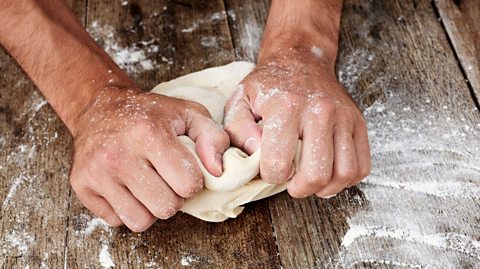
He explains: “When you wet the flour, the proteins absorb the water and that’s the glue that holds it all together as a mass.
“But when you then stretch that dough, you put a force on it that makes it longer or thinner.”
When this happens, gliaden and glutenin bind together to form - you guessed it - gluten. Gluten is an elastic substance, and it holds the sheets of dough together. You need the yeast to get in these sheets so they can continue to metabolise and start to form bubbles (like those you saw in the starter) in the dough.
And the longer you leave something to prove, the larger and less uniform they become: “If you leave it longer, some of the bubbles will burst, and if you leave it overnight, as you do with a sourdough, then what happens is lots of CO2 starts to rise… so you get lots of bubbles near the top and lots of them burst, so you get quite an open textured bread.
“This is nothing to do with making it with a particular yeast, it’s to do with the time you leave it to rise for, and the amount of kneading you do to it.”
You may now be thinking that while all of this explains the increased amount of time a sourdough takes to make, and why it has more holes in it than your typical white loaf, it doesn’t account for its distinct flavour. Well, that’s pretty simple. All the different yeasts and bacteria present in the starter produce different chemicals during the fermentation – then on cooking these break down into even smaller molecules we can taste and smell – it is the wide diversity of these flavour compounds that gives every sourdough loaf its individual flavour.
Because the yeasts take longer to activate than in a commercial bread, the bacteria found in the starter has longer to ferment. They produce lactic acid (among other things), and the longer you leave them, the more of it they will produce. The lactic acid is what makes the mixture taste sour.
Finally, you have to actually bake it. As it stands, the dough isn’t really that edible, and that’s because raw starch (in the flour) is hard to digest. The heat from the oven allows starch in the flour to absorb the water and gelatinise, which means it changes its texture, and this new structure is far more edible. It also adds a tiny bit more rise as the gases expand further when they’re heated, but its main job is to hydrate the bread. The crust becomes glassy and hard because the outside of the loaf gets a lot hotter than the inside, so more water is removed from that area.
And voila! A delicious sourdough loaf, with a hearty side of food science to go with it. If you want to make your own, head to BBC Food for a great step-by-step guide on how to get going with your own starter.
A rotating model of a starch molecule.
The takeaway treats that have become national treasures
How poutine, kebab pizza and more found their way into a country's heart
Myth-busting food origin stories
Chocolate chip cookies, crisps and Caesar salad all have legendary histories, but are they true?