What role and powers does the UK Prime Minister have?
Quick version
The leader of the UK Government is known as the Prime Minister.
Responsibilities of the Prime Minister include:
- leading UK Government
- choosing members of government
- chairing the cabinet
- deploying armed forces
- overseeing civil service
- representing the UK
- leading their political party
In terms of Scotland, the Prime Minister has power over reserved matters.
They are accountable to their cabinet, political party, the UK Parliament and, ultimately, the people of the UK.
Video - The role of the Prime Minister.
Watch this video explaining the role of the Prime Minister.
The Prime Minister is the leader of the UK government appointed by the monarch.
They are the leader of the largest political party in parliament, so effectively they're chosen by the members of the party.
The Prime Minister is responsible for the policy and decisions of the government.
They select the MPs and the members from the House of Lords who will work in government, including the cabinet ministers who will lead each department.
Every week, the Prime Minister chairs a meeting with the cabinet to discuss the government's priorities. Where departments disagree, the Prime Minister has the final say.
The UK government is in charge of reserved matters that impact Scotland, including defence, foreign policy and employment law, and they also decide how much funding the Scottish Government gets.
As the leader of the UK government, the Prime Minister not only works with the leaders of Scotland, Wales and Northern Ireland, but regularly speaks with world leaders on global matters and attends meetings like NATO and the G7.
The Prime Minister also gets the final say on whether the armed forces are ever needed in a conflict.
There are, however, limits to a Prime Minister's power.
Any new legislation proposed by the government needs to be agreed by Parliament, so they need a majority of MPs to support them to get it through the House of Commons.
Every Wednesday, the Prime Minister stands here at this despatch box and answers questions from across the House, from all political parties.
The session lasts around 30 minutes, and the leader of the largest opposition party stands across from the Prime Minister here at this despatch box and get six questions to ask as well.
And then opposition MPs from around the House also ask questions that are important to them.
The Prime Minister can also be called to answer questions by Parliament's liaison committee and also, if given the chance, journalists like to also ask their own questions.
A Prime Minister needs the support of their party to stay in power.
If they lose that support, that can be replaced as party leader and Prime Minister, as we've seen a few times in recent history.
Ultimately, the Prime Minister is held to account by the voters. If the party loses its majority in a general election, the Prime Minister will resign and another government will take over.
The Prime Minister resides here in Downing Street, and on leaving office they have one final power.
They can put together a resignation honours list, selecting people who they think have done good work for damehoods, knighthoods, other honours and also potentially a seat in the House of Lords.
Learn in more depth
How is the Prime Minister chosen?
The Prime Minister is officially appointed by the Monarch.
Officially, the Prime Minister could be anyone 'who is best placed to be able to command the confidence of the House of Commons'.
In practice, this is the leader of the party with the most MPs.
A new Prime Minister is appointed when the previous Prime Minister resigns. Most usually, this is when an existing Prime Minister's party is defeated at a general election.
Prime Minister and First Minister
Just as decisions about Scotland are shared between the UK Parliament and the Scottish Parliament, Scotland is partly governed by the UK Government led by the Prime Minister, and partly by the Scottish Government led by the First Minister for Scotland.
The role of Prime Minister and First Minister have a number of similarities:
| Prime Minister | First Minister |
|---|---|
| leads UK Government | leads Scottish Government |
| elected by members of own political party | elected by majority of all MSPs |
| appointed by King or Queen. | appointed by monarch |
How does the Prime Minister lead the UK Government?
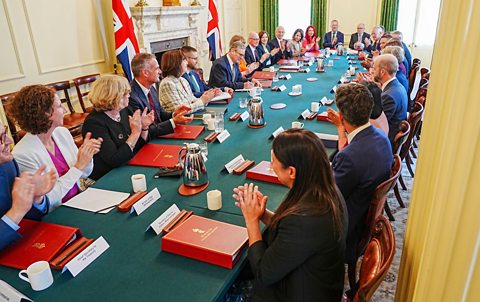 Image source, PA Images / Alamy
 The Prime Minister leads the UK Government by deciding on government strategy and the policies it will introduce.
These depend on:
- what issues the Prime Minister and the government decide are most important
- what priorities their political party campaigned on during an election
- if promises are not met the electorate will lose trust in the Prime Minister and government
- what actions are practical and possible
- there needs to be enough time, money and people to make change happen
- what policies they can have approved by parliament
- a majority of MPs must vote through new legislation
Image source, PA Images / Alamy Limits and challenges
The UK Government can propose bills to the UK Parliament but it does not have the power to make them into laws.
This can only happen when a bill is approved in both the House of Commons and the House of Lords. Only once a majority of MPs and Lords have voted in favour of a bill can it be made an Act of Parliament and become law.
In terms of governing Scotland and other devolved governments, the UK Government can only make decisions on reserved matters.
How does the Prime Minister choose their ministers?
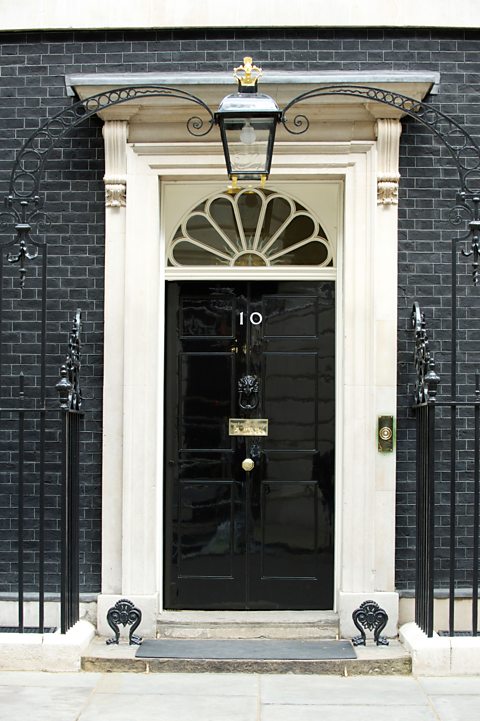 Image source, Johnny Greig / Alamy
 The Prime Minister decides which MPs or Members of the House of Lords will join the government and serve as Depute Prime Minister, cabinet secretaries and other ministers.
The cabinet is made up of cabinet secretaries who lead government departments eg
- Chancellor of the Exchequer
- Secretary of State for Foreign, Commonwealth and Development Affairs
- Secretary of State for the Home Department
Each cabinet secretary is supported by a number of junior ministers who, in turn, are supported byThose who work in government departments or related agencies alongside elected officials. or government employees.
The Prime Minister and their cabinet are collectively accountable for their policies and actions to the UK Parliament.
They are expected to appear before parliament each week and answer questions from MPs.
The Prime Minister needs to consider carefully who to appoint to each role:
- who will be capable of doing the job well?
- who can the PM trust to support their leadership?
- how to balance the cabinet to please different groups in their political party
- what will the electorate think of the appointment?
Usually the Prime Minister will appoint a new cabinet after a general election, but they can preform a 'cabinet reshuffle' at any time.
Limits and challenges
Although cabinet secretaries and ministers lead each department, the Prime Minister has overall responsibility for how government is run, and is judged on the performance of their ministers.
If ministers are seen to not be doing a good job, the Prime Minister must decide whether to support them or remove them from their position. Both choices can affect how the PM looks to their government colleagues, their political party and the country.
Image source, Johnny Greig / Alamy How does the Prime Minister lead the UK Cabinet?
The Prime Minister chairs the Cabinet, the main decision-making body of the UK Government.
As chair, the Prime Minister leads discussion and decision making.
Cabinet (and the wider Government) works on a basis of collective responsibility:
- all decisions reached by Cabinet or individual ministers are binding to all members of the Government
- while members can disagree privately, they must support decisions publicly
Limits and challenges
This can present challenges:
- all members of the cabinet will have their own opinions
- sometimes cabinet members will disagree
- some decisions will prioritise resources and spending on some departments more than others
The Prime Minister needs to overcome these differences to run cabinet effectively. If this doesn't happen, the government will not work together effectively, and the PM's leadership could appear weak.
Members of the cabinet share collective responsibility for their decisions. Members must publicly support decisions, even those they may not individually agree with. If they feel they cannot do this, they ae expected to resign. This in itself can challenge the PM's authority.
The PM and cabinet secretaries must discuss and defend their decisions and the work of government to the UK Parliament, for example by appearing in front of committees and answering questions in the House of Commons. The Prime Minister normally only gives evidence to the Liaison Committee, which oversees the select committee system in the House of Commons.
The PM must be ready to answer questions on all aspects of how the government is run at Prime Minister's Questions. This takes place in the House of Commons every Wednesday at noon.
How does the Prime Minister oversee the civil service?
The Prime Minister holds the role of Minister for the Civil Service, and has overall control of the civil service - the people and departments that carry out government's decisions. This includes appointing the most senior civil servants, for example the cabinet secretary.
The PM has overall responsibility for ensuring the civil service supports the government in delivering the policies they were elected on.
The Prime Minister also approves the appointment of the heads of non-ministerial departments, for example His Majesty's Revenue and Customs and executive agencies.
Limits and challenges
The civil service is independent of party politics and officially works for the Crown rather than the Government or Parliament.
Any appointment process must be ‘on merit on the basis of fair and open competition’ according to the 2010 Constitutional Reform and Governance Act, so the Prime Minister cannot choose anyone they want for a civil service role.
In theory, the Prime Minister can remove senior civil servants from their roles, however they are generally held to following a due process. This aims to prevent people being removed from their job for political reasons.
How does the Prime Minister oversee the armed forces?
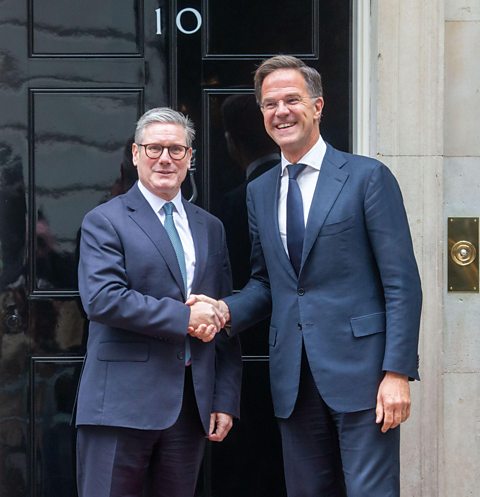 Image source, ZUMA Press, Inc. / Alamy
The Prime Minister works with the Defence Secretary to decide on senior appointments to the armed forces.
While the monarch is Commander-in-Chief of the armed forces, the Prime Minister has prerogative power to authorise the deployment of forces to war or to intervene in another country. This power is normally carried out with the Defence Secretary.
The Cabinet works together to decide on military action, working on advice from the Chief of Defence Staff and National Security Council.
Limits and challenges
While Parliament does not hold any legal role in the deployment of armed forces, since 2011 there has been a convention that Government will consult and inform Parliament about any deployment, except in emergencies.
As the UK is a member of NATO, many decisions on defence and the armed forces are made in consensus with the other members. This means that the Prime Minister's decisions about use of the armed forces may involve persuading other leaders into agreement.
Image source, ZUMA Press, Inc. / AlamyHow does the Prime Minister represent the UK at home and abroad?
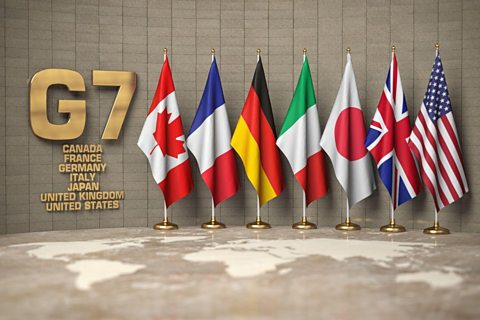 Image source, Maksym Yemelyanov / Alamy
 As leader of the UK Government, the Prime Minister is seen as leader of the country and is expected to represent the UK's interests at home and on the world stage.
- taking part in international events and meetings, for example, as Prime Minister, Rishi Sunak attended King Charles’ coronation on 6th May 2023
- negotiating with leaders of devolved governments, including the First Minister of Scotland and Scottish Government on funding for Scotland, reserved matters that affect Scotland and differences on policy
- commenting on international issues that affect UK citizens
- meeting with leaders from other countries (some of whom may have very different political views)
- attending international meetings, including meetings of the UN, the UN Security Council, NATO, G7, G20 and Commonwealth Heads of Government
- meeting community leaders from across the UK
- visiting communities affected by major events, for example flooding
- holding press conferences on major events and issues, for example Boris Johnson held regular briefings for the media and public during Covid lockdown
Limits and challenges
The Prime Minister's influence and negotiating powers are limited to the UK's relationship with other world leaders, and the UK's influence on the wider world.
As of November 2024, the UK is the sixth biggest economy in the world. However the Prime Minister cannot exert as much economic influence as the leaders of the USA or China.
After Brexit, the Prime Minister cannot directly affect policy or direction of the European Union, and can only try and influence this.
The Prime Minister needs to choose carefully what to say about international events and other leaders - balancing global influence as well as how their international actions will be seen by voters in the UK.
They need to consider how these decisions will affect the UK and its reputation, as well as their own reputation and popularity with the UK electorate.
Image source, Maksym Yemelyanov / Alamy How does the Prime Minister lead their political party?
The Prime Minister is the leader of the political party with the most MPs.
They and their Government will find it easier to pursue their policies and make new legislation when they have a majority of MPs who support their decisions. This is more likely when their political party holds a majority.
They are elected as party leader by party members and MPs, and need to maintain the support of their party to stay in charge. They are more likely to do this if they can maintain party unity, successfully carry out their policies and continue to have the support of the electorate.
Limits and challenges
The Prime Minister cannot take any MPs support for granted, even MPs in their own party:
- some decisions may not be popular in some constituencies - this can affect an MP's chance of re-election
- policies may be at odds with individual MPs opinions or beliefs
- different groups in a political party may push for different policies or priorities
As party leader, the Prime Minister must keep enough party unity to keep as many MPs supporting and voting with the Government as possible. This is more likely when they successfully carry out their policies and continue to have the support of the electorate. It becomes more difficult with a small majority, or a minority government.
When MPs go against the Government, the Prime Minister must decide on how to react, for example by removing the party whip. The PM needs to consider how this looks to other party members and the electorate, and what long term impact this will have.
Without party support, a Prime Minister can be challenged to a leadership contest. If they lose this contest they would be expected to resign.
Confidence in the Prime Minister
The Prime Minister is answerable to the UK Parliament
They must maintain the support of the majority of MSPs, or risks a vote of no confidence.
Any MP can propose a no-confidence motion but there is no guarantee their request will be granted. However, if the leader of the opposition introduces the motion, convention means the government must provide parliamentary time for a debate.
The motion only needs a simple majority to pass: one more MP needs to vote in favour than the number voting against.
If the government wins, it carries on as before. If the government loses, in normal circumstances Parliament would be dissolved and a general election called.
There is no clear law on what the Prime Minister should do but if an alternative government is ready to take over, convention suggests that the PM should resign.
Who is the current Prime Minister?
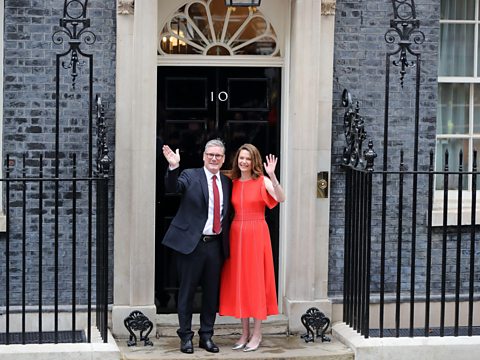 Image source, Uwe Deffner / Alamy
 In July 2024, the UK General Election resulted in a clear majority for Labour.
As leader of the Labour Party, Keir Starmer was appointed Prime Minister by the King.
Keir Starmer is the UK's first Labour Prime Minister for 14 years, taking over from Conservative Rishi Sunak.
Rishi Sunak became Prime Minister after the resignation of Liz Truss in October 2022.
Although Rishi Sunak was not appointed as Prime Minister following a general election with public voting, as leader of the Conservative Party, which held a majority of seats in the House of Commons, he took on the role of Prime Minister.
Image source, Uwe Deffner / Alamy Quiz
Recap what you have learned
The Prime Minister is the leader of the UK Government.
The position of PM covers a number of roles, each with their own responsibilities and limits.
| Role | Responsibility | Limits |
|---|---|---|
| Leader of the UK Government | Deciding direction and policies | Requires cabinet support |
| Appoints members of government | Chooses best people for job | Is held to account by Parliament and committees |
| Chairs cabinet | Leads decision making | Needs to balance differing priorities |
| Chooses law officers | Picks key legal advisers | Applies to England and Wales |
| Represents UK | Shows leadership at home and abroad | Limited time and limited influence |
| Armed forces | PM makes key decisions on deploying the armed forces | Parliamentary approval is not necessary but in many cases is deemed favourable |
| Party leader | Balances priorities of UK with those of party and individual MPs | Accountable to the people of the UK |
The Prime Minister is held to account by Parliament at Prime Minister’s Questions (PMQs), which takes place every Wednesday at midday.
A new Prime Minister is appointed when the previous Prime Minister resigns. Most usually, this is when an existing Prime Minister's party is defeated at a general election.
In terms of Scotland, the Prime Minister only has power over reserved matters.
More on Democracy in the UK
Find out more by working through a topic
- count5 of 18