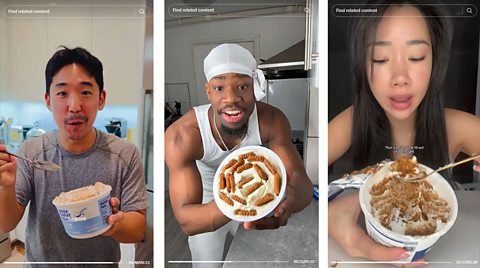
It’s all over TikTok, Instagram and YouTube, with dozens of people posting videos of themselves trying the new trending treat.
With thousands of likes and views in the space of a few days, you might have spotted some of your favourite influencers digging into their new trending snack, the Japanese cheesecake yoghurt. First going viral in Japan, giving it its name, it’s not actually a cheesecake at all, but rather a combination of biscuits and yoghurt!
But why is it suddenly trending? BBC Bitesize Other Side of the Story have taken a closer look at this new sweet treat.
What is the Japanese cheesecake yogurt?
Japanese social media has been overflowing with users combining Greek yoghurt and French sable cookies, which are similar to shortbread. It’s grown from then onwards, with users worldwide (tending to opt for other biscuits) filming themselves dunking their biscuits into yoghurt.
They then leave the combination in their fridge overnight. Users claim that during this cooling down period, the biscuits and yoghurt blend, creating a cheesecake-like taste.
Where has this trend come from?
This biscuit-yoghurt combination has thousands of users online trying it out, with one post gaining 11.2 million views in days. Many recipe websites have also added the Japanese cheesecake yoghurt since it became popular.
Gaining popularity through its An unusual method that makes managing daily tasks easier or more efficient. like status, its seen as an easy way to have cheesecake, removing time spent baking or buying them. The Japanese cheesecake yoghurt takes minutes to assemble, with the longest part of the process the time it spends in the fridge.
Likewise, the treat has been promoted by some as the “healthy, low calorie” alternative, as mentioned by one user in a post with 3.3 million views. While biscuits aren’t particularly healthy, Greek yoghurt is considered good for you, as it can contain twice as much protein as other yoghurts.
Another appeal to this treat is that it's popular. In psychology, Social proof is the name for why we are drawn to following trends - coined by psychologist Robert Cialdini in 1984. In his theory, when we see people we admire trying out new pairs of shoes, or appealing snacks, the urge to do the same is social proof in action.
In this case, images of alluring tubs of yoghurt with perfectly placed biscuits have popped up online. In a response to the phenomenon going viral, users are drawn to join the trend and be part of it.
Why did this snack in particular go viral?
There is no definitive answer as to why some snacks and drinks go viral, like strawberry sandwiches, Dubai chocolate bars, to Dua Lipa’s mix of pop, pickle juice and peppers. Once a trend begins to gain some traction however, the likelihood of it continuing until it gains viral status increases.
Influencers with large followings have a lot of sway over how well a product will do, with some companies even paying influencers to post ads onto their timelines promoting their product.
In other examples, products gain popularity with influencers and social media users because they seem fun and easy to do. This doesn’t just apply to food, drink or other products - we can see this reflected in another current trend, where users are posting photos of themselves taken ten years ago in 2016.
Familiarity and ease play a large role in how many times a trend will be shared or recreated. If the trend seems relatable - you like yoghurt, you like biscuits - you’re more likely to stop and pause on the video, then try it out for yourself. If the video also looks visually or audibly appealing, you’re more likely to try it out yourself.
It's also worth remembering that algorithms will suggest content to you based on your previous likes and site visits. What seems like a viral post may just be an echo chamber based on experience.
You can find out more about food and drinks trends that have got people talking on social media in this Other Side of the Story collection.
This article was published in January 2026

Not sure if the news you’re seeing on social media is true or false? Can you always tell if the things you see online are real or fake? Learn how to get the other side of the story with our quizzes, videos and explainers.

Is my phone listening to me?
Are we really fed adverts based on our most recent conversations?