Introduction
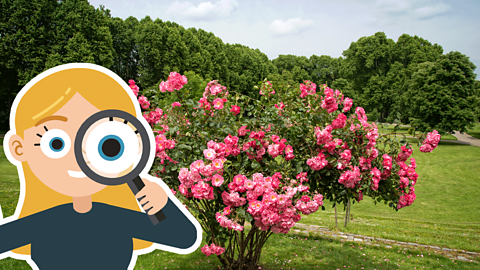
Plants are all around us, from trees to flowers, to fruits and vegetables and even weeds.
Most animal life relies on plants for either oxygen, habitat, shelter or food.
This makes plants vital for our planet.
Next time you are outside, take a look around you.
How many different types of plants can you see?
Science

Plants come in all shapes and sizes.
They can grow in all sorts of places, such as cacti in hot, dry deserts, seagrasses in the sea and mosses in the Arctic tundra.
Why not have a look at the information, videos and activities below to find out more?
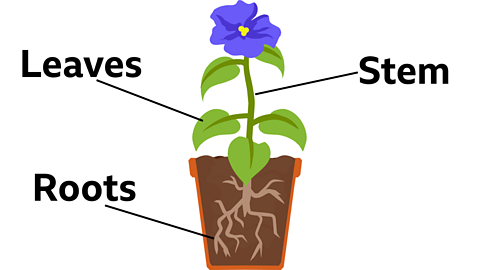
How is water transported in plants?
Water is absorbed by the roots and moves up through the stem to the leaves.
It is transported through the plant by special tubes inside the plant.
This process is vital for the plant’s survival and helps it to grow and stay healthy.
How do plants make food?
Plants make their food through a process called photosynthesis.
The water needed for photosynthesis is absorbed through the roots and transported through tubes to the leaves.
Learn how the roots and stem carry water.
From trees to dandelions, most plants have roots and a stem.
Roots act like an anchor in the soil. They keep the plant in place and make sure it doesn’t fall over.
The bigger the plant, the deeper the roots go in the soil.
Soil is packed with all sorts of nutrients; the good stuff that a plant needs to survive like water and minerals.
Tiny hairs on the roots act like straws, sucking up all of the nutrients.
The roots can either store nutrients for later, or these goodies will be sent around the plant through thin tubes in the stem.
The plant’s leaves make food in a process called photosynthesis.
More tubes in the stem carry this food around the rest of the plant. All stems give a plant support.
A tree’s stem is made of wood while a dandelion’s is soft and bendy, but both help a plant grow up and towards the sunlight.
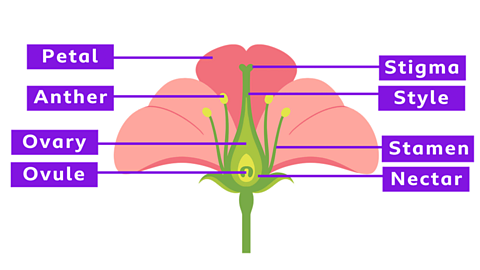
How do flowering plants reproduce?
Pollen is moved from one flower to another by the wind or by insects like bees. This is pollination.
When pollen reaches the new flower, it grows a pollen tube down to the ovary, where it joins with egg cells (ovules) to make seeds. This is fertilisation.
The seeds are scattered by animals or the wind. This process is called dispersal.
Some of the seeds will germinate and grow into new plants.
Why are plants important?
Plants are an important part of our environment for lots of different reasons.
Have a look at this slideshow to learn some interesting facts.
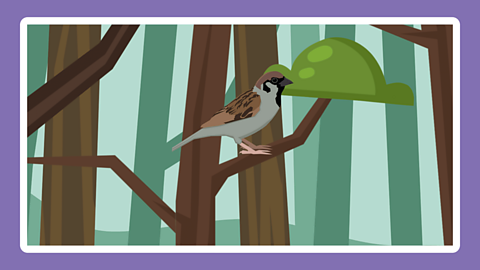
Image caption, Plants provide habitats for wildlife
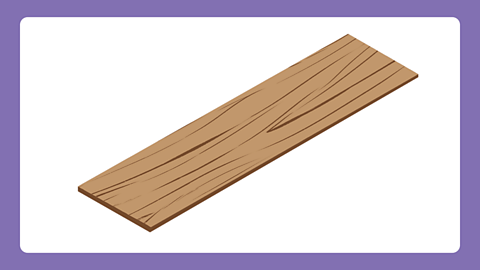
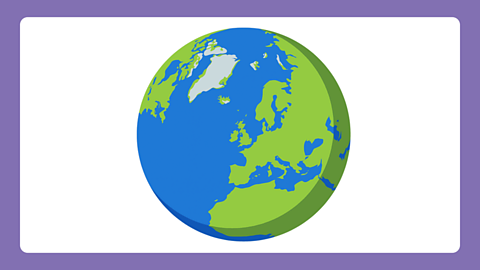
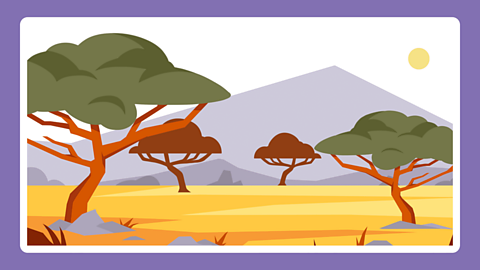
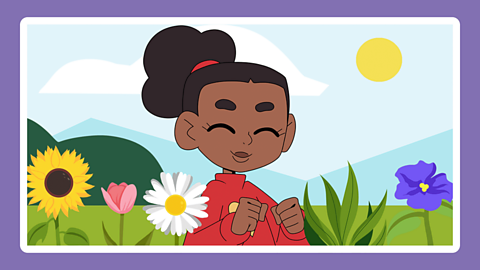
In many habitats, animals live in the trees. Birds and squirrels build their nests in trees, a squirrel’s nest is known as a drey. Owls and bats roost inside hollow tree trunks. In a rainforest habitat boa constrictors live in trees and wrap themselves around the branches. Ants make their nests at the base of the trees. Underneath the logs of fallen trees there are microhabitats for insects such as woodlice, slugs and worms.

1 of 6
Discover more on KS2 Science
You can learn more about why plants in these articles.
Why are plants important?
KS2 Science
How to classify plants and animals
KS2 Science
Pollination and seed spreading
KS2 Science
Maths

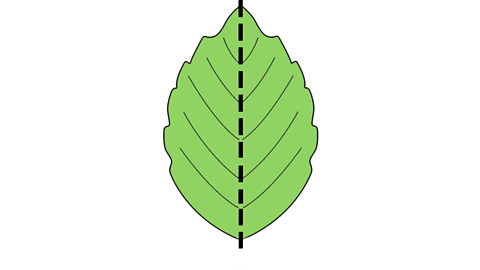
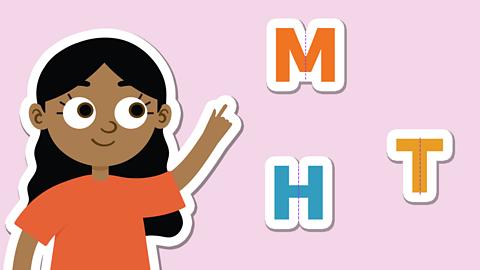
Symmetry is when one side of a shape is a mirror image of the other side.
You can find lines of symmetry everywhere, even in nature.
Here is some more information, along with some activities you could try.
Lines of symmetry in plants
Plants can often have lines of symmetry.
If you can fold a shape in half and if it fits into itself perfectly with no overlaps, you have found a line of symmetry.
Some shapes have more than one line of symmetry, such as flower heads.
Watch: Maths in the wild
Join the Regenerators to explore symmetry in nature with this video.
Hannah: I'm Hannah and this is Maya. And we have come to Backwell Lake in North Somerset. We are here to meet Angela, who is going to teach us all about symmetry.
Angela: Hi girls, great to meet you. It's brilliant to meet you outdoors, because we can learn absolutely anywhere. And it's so good to be in all this nature because it's so good for us.
Hannah: We want to find out more about what symmetrical means. So we are off to find somewhere comfortable to sit.
Angela: There are different types of symmetry, but we're going to talk about reflective symmetry. If you draw a line down something and the two sides are a reflection of each other, you have found the line of symmetry, or the mirror line.
Can you see the two sides of this shape? They're just flipped, or a mirror image. Can you find me something else on this board that's symmetrical? What do you think? You think that leaf might be symmetrical?
Hannah and Maya: Yeah.
Angela: Can we use the mirror to double check? So if we put it there and is it the same on both sides?
Hannah: Yeah
Angela: So you found the line of symmetry.
Maya: I think this leaf is also symmetrical. I think a line of symmetry would be there. I don't think this feather is, though.
Angela: Does it look as if it's the same on both sides?
Hannah and Maya: No.
Angela: Girls, I have a mission for you. Who wants to open it?
Hannah: I'll open it, and Maya, you can read it.
Maya: "Hannah and Maya, make some nature in a pattern using reflective symmetry." We could do a butterfly.
Hannah: Yeah, butterfly.
Angela: Brilliant idea. Let's make ourselves a line of symmetry. What should we start with?
Maya: Umm. Sticks?
Angela: Sticks. Let's get some sticks then.
Hannah: Is that gonna be the wing?
Maya: Now, we need one here.
Hannah: Shall we just use loads of these for them?
Maya: Maybe make it join up?
Hannah: Should I get some flowers to decorate?
Maya: Yeah, you grab the flowers.
Yeah, daisies are good. See? They're symmetrical.
(CHEERFUL MUSIC)
Hannah: Angela, we finished.
Angela: Wow, girls, this looks amazing! That's a perfect example of reflective symmetry. I'm going to take a photograph of it.
Activity - Lines of symmetry
Why not try out your new skills on symmetry and have a go at this activity sheet?
Discover more on KS2 Maths
Why not have a look at these articles to learn more about symmetry and shapes?

English

Plants and trees have featured in stories for centuries.
Stories can be fictional, set in fantasy woodlands and creepy forests, or can be the basis for legends, such as Robin Hood and Sherwood Forest.
Here is some more information and activities for you to learn more.
How do plants and trees feature in stories?
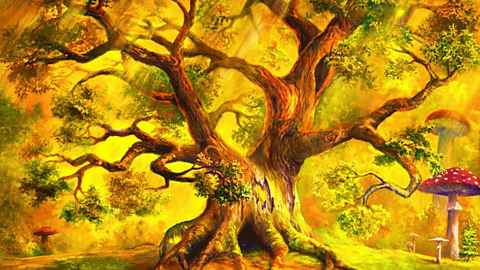
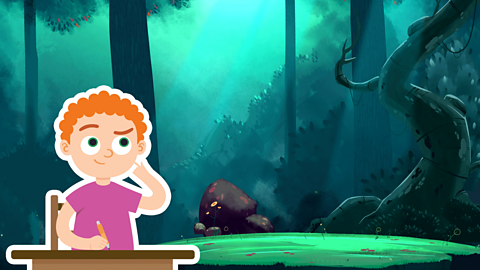
From enchanted forests in fairy tales to the great Tree of Life in myths, plants and trees are important parts in many stories.
They can help to make the setting more magical or meaningful.
One famous example is Enid Blyton's story, 'The Magic Faraway Tree', which featured lots of magical and interesting characters.
Activity - Write your own story
Why not have a go at writing your own story about a tree, plant or forest?
Things to think about before you start your story:
Who will your characters be?
Will your forest be scary or mysterious?
Will your trees have magical powers?
Discover more on KS2 English
Check out these links to help you make your story even better!
What is a setting?
KS2 English
How to invent a new character
KS2 English
How to plan your story
KS2 English

Art and Design

Plants have been an important subject of many famous artworks, both in painting and sculpture.
There are many famous artists who have been inspired by plants and nature around them.
You can learn more by looking at the information and activities below.
Famous artists
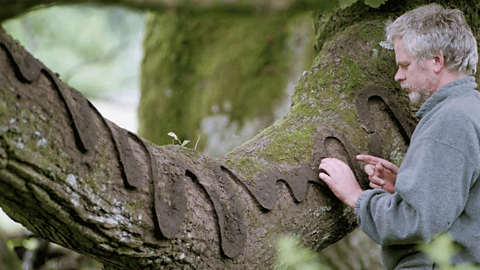
Vincent van Gogh and Andy Goldsworthy are two examples of artists who have used plants and nature in their art.
Have a look at this slideshow to learn more about them.
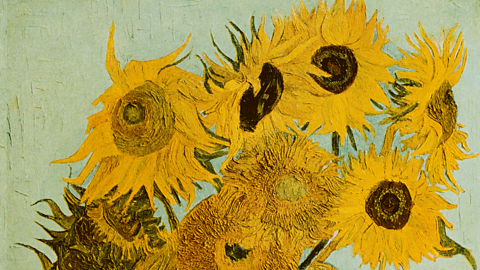
Image caption, Vincent van Gogh
Vincent van Gogh was a Dutch painter. He created many paintings inspired by nature and plants. He often used thick strokes of paint to add lots of texture to the surface.
1 of 2
Activity - Create your own plant sculpture
Why not have a go at making your own sculpture inspired by nature?
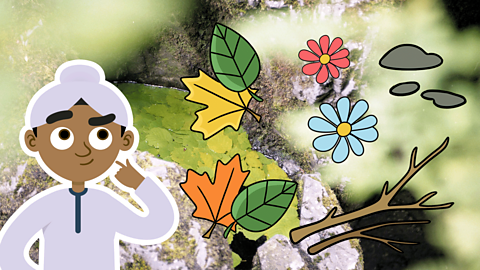
You could use natural materials such as leaves, sticks, stones, or even clay to design your sculpture.
Think about the shapes, textures and patterns that you see in nature. How do leaves, branches, or flowers grow?
Andy Goldsworthy's sculptures change over time as nature takes its course, so your sculpture might change too!
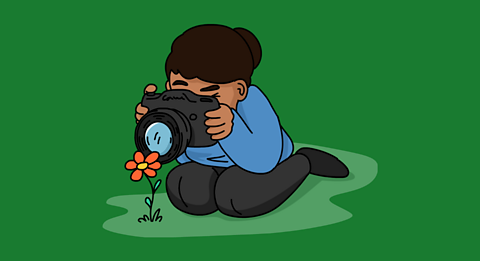
Try taking pictures of your sculpture at different stages to show how it changes over time.
Discover more on KS2 Art and Design
You can learn more about artists and different art techniques by following these links.
Who was Frida Kahlo?
KS2 Art and Design

Who was Rachel Whiteread?
KS2 Art and Design

What is close-up photography?
KS2 Art and Design
Plants quiz
Activity - Earth Squad, Go!
Learn more about the living world with this fun game. Discover different habitats and find out about animals, plants and their ecosystems.
Earth Squad, Go! game
KS2 Science game

Where next?
Play BBC Bitesize educational games! game
Fun, interactive games for children aged 4-11, with maths, English, science, history and many more subjects.