Feliz Navidad, Joyeux Noël, 聖誕快樂, Frohe Weihnachten. Just some of the many ways to wish someone a Merry Christmas from around the globe.
The UK has many traditions that are highly debated, from deciding the best time to have Christmas dinner, to listening to the King's speech. But how does the rest of the world celebrate Christmas?
BBC Bitesize takes a look at the ways that the festive season is celebrated across the world.

Poland
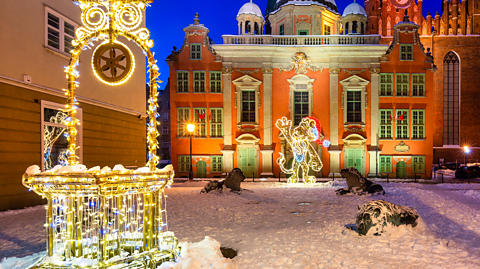
The traditional celebration of Christmas in Poland begins on 24 December, a day called Wigilia, where a Christmas Eve vigil supper is held.
Before sitting down to eat, some Poles wait until the first star appears in the sky to commemorate the Star of Bethlehem.
One main meal staple of a Wigilia supper is carp. For some households, the fish is first purchased alive a few days before Christmas and then kept in the bathtub full of water until it is time to make the dish. This forms around one of 12 courses which constitutes the feast.
An Bread, or similar food, made without yeast or other raising agent. wafer called opłatek is made from flour and water, stamped with a religious image and shared amongst each person attending the celebration.
To top things off, there are an abundance of Polish Christmas carols. According to a survey from Polish National Radio, nearly 80% of Poles sing carols at the Christmas dinner table. In fact, they’re so popular that one, entitled Bóg się rodzi, meaning 'God is Born', almost became the national anthem.
Greenland
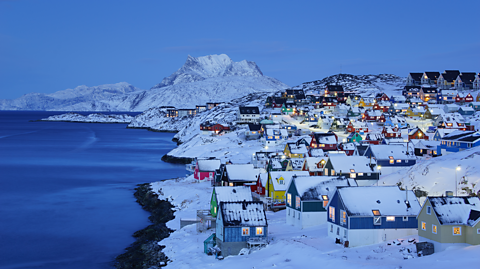
Unsurprisingly, it’s almost always a white Christmas in Greenland. Talk about a winter wonderland!
Common Christmas tree species can’t grow due to the country’s climate, so tend to get ordered in advanced and sent from Europe. These are lit up on the first Sunday of Advent and many households decorate their homes, with orange Christmas stars visible from outside most people’s windows.
On 13 December, a festival called St. Lucia’s Day takes place and a parade is typically performed at schools. Students typically dress in white robes, while carefully carrying a light in their hands, similar to a Christingle service.
Christmas in Greenland also consists of a kaffemik, a social occasion where you share the merriment of an event with those closest to you.
It is during this period that you can expect to hear calls of Juullimi Pilluarit, an expression which translates to Merry Christmas, until the decorations are removed on 6 January, The Twelfth Night.
Philippines
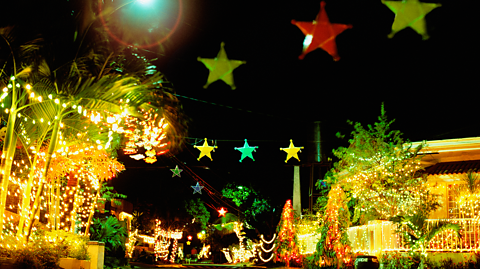
Ever wished that holidays would last forever? A Christmas in the Philippines may be the answer.
While Filipinos don’t celebrate every day, they do have the world’s longest festive period, which can be started in as early as September and spans across five months, all the way until the first week of January.
These are referred to as the 'ber months', the months that end in 'ber', during which it isn’t unusual to see Christmas décor starting to emerge.
Many Filipino Catholics traditionally attend Simbang Gabi, a series of nine dawn masses on the days leading up to Christmas. The masses were originally held in the early hours of the morning, ranging from around 3.00am to 5.00am, when the roosters announced the dawn of a new day.
Families then partake in noche buena, a feast that occurs on Christmas eve with strong cultural and religious significance. On this day, Filipino families typically serve foods like edam cheese, sweet Christmas ham and fruit salad.
Greece
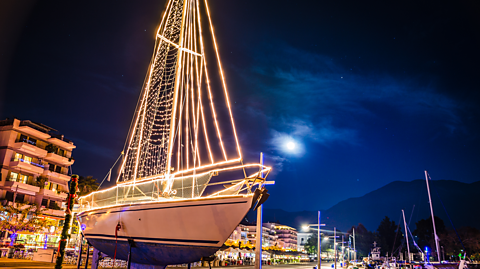
Greece’s Christmas spirit can be felt from the 24 December, where celebrations are typically held until Epiphany on 6 January.
Christmas Eve is often reserved for baking christopsomo, a traditional festive bread, with each region adding their own twist to the loaf.
Similar to how some Western countries celebrate Saint Nicolas, many Greeks hand out their presents on New Year’s for the feast day of the Agios Vasilis. In English, Agios Vasilis translates to Saint Basil, who was a 3rd Century bishop known for caring for the weak and dedicating his inheritance to the poor.
While Christmas trees have increased in popularity, the country also has a more traditional decorative custom. Karavaki, meaning little ship, is a term that refers to decorating a Christmas boat and is an old festive tradition that still occurs in Greece to this day. During the holiday period, families will decorate their boats with lights the same way you would with a tree.
If the family doesn’t own a boat, they could use a small model to decorate. In Greece, boats are said to be a powerful symbol representative of the country moving towards a new life.
This article was published in November 2022, and updated in November 2025.
7 amazing toilets from around the world you have to see
Explore the 7 best toilets worldwide from NASA to robot restaurants.
Five mystical UK lakes that are not Loch Ness
We dip our toes in the waters of ponds, lakes and lochs with tales linked to mythical creatures and happenings of the past.