Parents often worry about what their child eats. At primary school, there’s usually adult supervision at lunch and breaktimes. But as young people transition to secondary school, they’re often left to make their own choices about what and when to eat, especially when it comes to snacks. So what can parents do to help them make the best choices?
“Snacks are an important part of young people’s culture,” Says Helena Gibson-Moore, who’s a Nutrition Scientist at the British Nutrition Foundation. “They’re a big part of their social life, and it’s generally when children start secondary school that they start buying their own snacks, when they have more autonomy and a bit more spending money and might be travelling to and from school without parents or carers for the first time.”
What’s problematic about popular snacks?
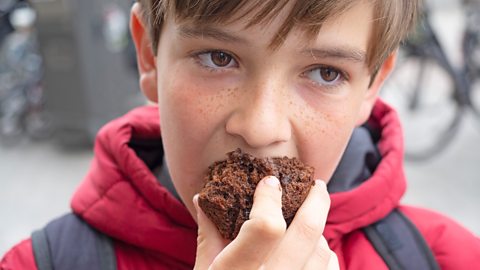
New research into snacking by the British Nutrition Foundation has found that most students (79%) usually have at least two snacks on a school day. “There’s not a problem with having snacks, if they are healthier options,” says Helena, “But our research showed that 4 of the 5 most popular snack choices were crisps, biscuits, chocolate and sweets, which are high in fat, free sugars and/or salt, and low in fibre and essential micronutrients.”
“If children are having lots of these kinds of snacks every day and not eating a balanced diet it may be harder to get the nutrients they need for healthy growth and development which may lead to health problems in the future like obesity, type 2 diabetes and heart disease.”
Why more fibre is key to better health
“Recent survey data found that only 4% of young people aged 11-18 are getting enough fibre in their diet. Fibre is important for gut health and we know that those who have a high fibre diet will generally have better health outcomes – eating a varied, fibre-rich diet can help to reduce the risk of heart disease, type 2 diabetes and some cancers. Foods that are fibre-rich are usually nutrient dense too, so they also provide essential vitamins and minerals that are needed for good health.”
“If we can encourage preteens to replace those snacks high in fat, sugars and/or salt with higher fibre options such as fruit and vegetables or wholegrain snacks, this will help contribute to nutrient intakes that they need to stay healthy. Fibre also helps them feel fuller for longer, so it can help with maintaining a healthy weight.”
Some ideas for healthier snack choices
To help young people improve their diet and health, the British Nutrition Foundation has launched a whole month dedicated to better snacking. Snack-tember aims to provide students, parents and schools with recipes and information about how to make healthy snack choices.
Claire Theobald is an Education Services Manager at the charity. She explains, “I used to work in a middle school with children from Year 5 to Year 8 and it was striking to see how the younger students would be influenced by what the older kids chose to buy as a snack in the canteen – often pizza or a doughnut. Primary schools are generally good at encouraging healthy snacking and might have quite strict policies about what kinds of snacks are available, like fruit, vegetables and water but when they move up to secondary school students often have more freedom to choose less healthy snacks on the way to or from school.”
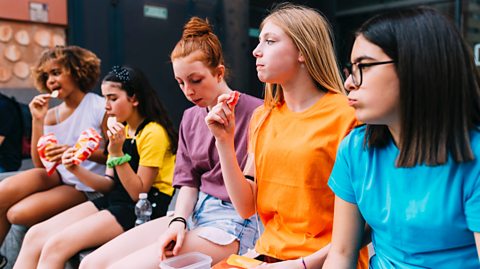
“We know snacking makes up a significant part of teenagers’ diets, so we aim to give students, families and teachers the resources to encourage everyone to choose snacks that contain:
• More vegetables and fruit
• More wholegrains (like oats, brown rice and wholemeal bread) and pulses (beans, lentils and chickpeas)
• Less saturated fat (found in e.g. butter, fatty meats, cheese, pastries and cakes), salt and sugars
“A group of students tested the recipes for us and rated the snacks they made, so we know they do appeal to young people." You can find the recipes and videos of how to make their 5 “hero” snacks including popcorn, pizza muffins, and tortilla chips here.
How can parents help kids to make healthier snack choices?
1. Explore, Try, Make
“We know that if young people are informed and involved, they are more likely to make positive choices,” says Claire. “It’s part of the curriculum to learn about each of the food groups – but people are often confused about exactly what makes a balanced diet and why certain foods are important for health. If students understand why getting the balance is important, they’re more likely to give value to healthy choices.”
One of the best ways to get kids engaged with trying new foods is to get them involved in cooking. “Some of our recipes - like the beany dip and crunchy veg don’t require actual cooking, so they’re really easy for kids to prepare.”
2. Batch-cook, freeze, prepare ahead
Nutrition Scientist Helena says, “I’m a mum to two teenagers and I know how hard it can be for busy parents when their teenagers seem to be constantly hungry and searching for snacks. A handy hack is to batch cook lots of healthier snack options and freeze them, so they can be easily grabbed to take to school or left in the fridge to defrost for when they get home. The recipe for pizza muffins freezes really well and was popular with our teenaged testers.”
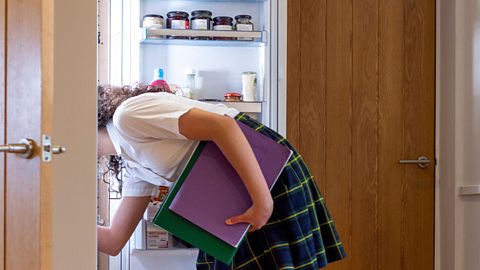
Leaving pre-prepared snacks in the fridge for your child to snack on when they get home can stop them looking for the high-sugar, high-fat alternatives like biscuits and chocolate. “Snacks often fill a gap when children are really hungry – such as when they first get in from school,” says Claire. “When they say they’re starving and they can’t wait for the meal to be ready, it helps to have a snack pre-prepared in the fridge. Carrots or cucumber can be chopped into sticks and left in a covered mug in the fridge for an affordable instant snack that gives a satisfying crunch. If you have time to pre-make a dip to go with them, it will also keep for a couple of days in the fridge.”
3. Adapt snack recipes to what’s available and what your child likes
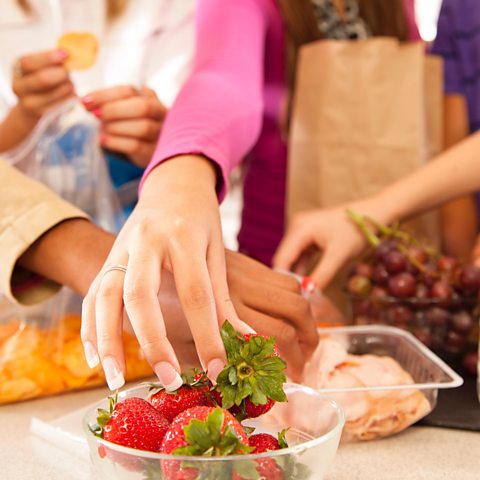
While there are lots of ideas for snacks in the Snack-tember recipe area, they can be adapted to what your child likes and for different dietary requirements. The Bitesize team used gluten-free bread flour for the pizza muffins, which worked well, and we substituted different dried and tinned fruits in the fruit and oat bites according to what was in the cupboard at home.
“All our Snack-tember recipes are nut-free,” says Claire, “because so many schools have a nut-free policy, and we have analysed the recipes to make sure they are a healthy choice - each one displays a traffic light label. All the recipes are pretty versatile and can be tweaked for different dietary requirements. For example, you can make the fruit and oat bites vegan by replacing the yogurt with plain soya yogurt, and the egg with 3 x 15ml spoons of the liquid from a can of chickpeas in water. The homemade popcorn avoids some of the common allergens and also provides fibre, so it’s a good snack to share with friends, and was popular with the teenage testers.”
4. Encourage kids to eat breakfast or to take a “breakfast snack”
Research has shown that students who skip breakfast often find it harder to get enough of the nutrients they need for good physical and mental health and learning, including nutrients such as calcium and iron. As teenagers are rapidly growing and have higher nutrient requirements it’s important that they get the right nutrition at this age.
Research has also found a link between students arriving at school feeling hungry and finding it harder to concentrate. There are so many reasons students might not eat breakfast – difficulty getting up on time, a busy household with adults rushing out to work, stretched household budgets or just not feeling hungry first thing. Recognising this, many schools provide breakfast, with free or subsidised food.
“If a child hasn’t had breakfast at home, they may pick up a snack on the way to school or have one at morning break, and we know there is a lack of healthier snack options available that are appealing, cheap and easy to eat on the go,” says Claire. “That’s why we’ve created some recipes for snacks that can be a good breakfast-on-the-move, like the fruit and oat bites, which are a bit like overnight oats, but really portable. These can be cooked in batches and frozen – they defrost in a couple of hours so can be left in the fridge overnight to be grabbed for breakfast on the bus, or put in a lunchbox frozen, and will be ready to eat by morning break.”
5. Make good choices yourself
While eating well is essential for growing teenagers, it’s important for all of us, so try to create a balanced food environment at home and have lots of healthier options for everyone in the cupboard and fridge to choose from like fruits, vegetables, and whole grains (e.g. bread, wraps, crackers, plain popcorn) – involve your teenager in what you buy as they are more likely to eat what they have chosen themselves. Being a positive role model - for example choosing fruit over biscuits and packing the same healthy snacks for work that they take to school, means they’re more likely to think it’s normal and hopefully they’ll take these good habits into their adult lives.

Find out more:
Snack-tember: a whole month of recipes, posters, activity ideas and educational materials to help young people try new, healthier snack options, from the British Nutrition Foundation.
BBC Food has these easy recipes for kids.
The NHS have a guide to healthier snacks for kids
More from BBC Bitesize Parenting:
Snacks for kids: How many, when, and what portion size is right?
How to make quick and fun snacks for kids, even when you are busy!
More from BBC Bitesize Parenting…
Bitesize Parenting
Fun activities, real-life stories, wellbeing support and loads of helpful advice - we're here for you and your child.
Five tips for helping your kids to eat healthily all year round
Healthy eating hacks for parents from dietitian Priya Tew.
Happy Family Eating... a fun guide for parents
An overview of our detailed resources and guides to helping your child enjoy and understand their food