Sign up to the BBC Bitesize newsletter! External Link
For home education news and stories plus updates on the latest Bitesize content, register for our newsletter today.

‘Do children have to take exams?’ and ‘How do they take exams when they’re home educated?’ are two questions that come up a lot. Technically, home educated children don’t have to sit exams, but many do.
Follow the guidelines on this page for tips on how to prepare your child, register them and enable them to sit exams such as GCSEs and A-levels, should they choose to.
How do home educated children do their exams?
Exams and qualifications for home educated children work however you and your child want them to. Your child is under no legal obligation to take any exams or get any qualifications. Your duties are to provide a ‘suitable’ and ‘effective’ full-time education. Read more in our guide, 'How to home educate in the UK'.
As a parent you may see the benefit of your child having some form of qualifications, such as GCSEs or National Vocational Qualifications (NVQs), especially if there's a particular job area or training they wish to apply to, or if they want to study something specific at college, university or as an apprentice.
But how your child prepares for sitting these exams, or pursuing other vocational qualifications, is up to you. They don’t need to follow the school curriculum, so they could choose to study for a few subjects at a time, stagger exams over several years, or cram one or two into a year, and so on.
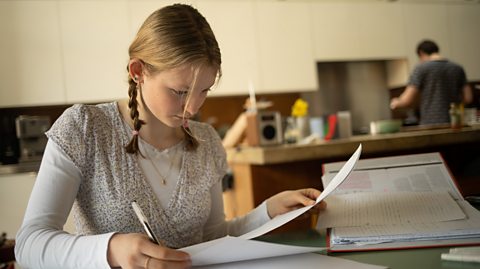
GCSE exams for home educated children
First of all, you and your child need to decide what subjects they want to sit GCSE exams in. They may wish to study subjects they’re interested in or those that meet the entry requirements for the next stage of education, training or employment.
Some home educating families opt to study for iGCSEs as these are purely exam-based, unlike some other GCSEs which have a coursework element.
You’ll then need to do some research into exam boards, the different organisations that set and mark exams, and their requirements for each subject, including their syllabus and exam style.
The exams boards across the UK are:
Signing your child up for exams when home educating
Once you’ve decided on the subjects and exam board:
Check where the nearest exam centre is for you and how much it will cost. You can search online to find this information on useful websites like the Joint Council for Qualifications. Exam centres usually include some schools and private centres.
Register via your chosen exam centre website, with your child’s personal information and entry codes for the subjects they’re taking. You’ll find these codes on the exam board’s website.
Usually on the day of the exam your child will need to bring proof of ID as well as the relevant codes.
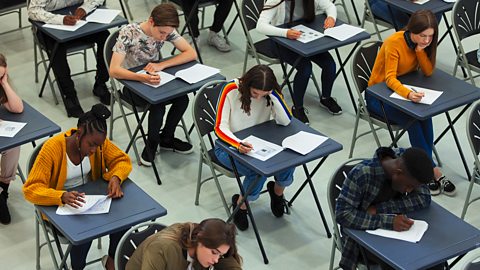
Do home educated children have to pay for exams?
Yes, home educated children have to pay for exams. As a very rough guide, you could pay between £60-£300 per subject.
In some instances, you may be able to apply for funding in the UK, depending on your individual child.
GCSE exam entry deadlines
It’s worth getting booked in early. Most people recommend at least six months before your child needs to sit the exam. Exam boards may set a deadline of January if your child is sitting an exam at a centre in June.
But school deadlines may be earlier than that, and you may be charged extra if you submit late.
What else do I need to do?
As well as making sure you’re registered on time and with the correct details, you just need to do what you’d be doing anyway: encouraging your child to plan their time effectively, learn independently, break tasks down into manageable chunks and use resources such as BBC Bitesize for learning and revising. Regular breaks and snacks can also help!
Where can I find out more about exams?
BBC Bitesize has lots of useful content about exams and careers, including What GCSEs should I take to become a…?
You can also find out about Functional Skills, Core Skills and Essential Skills, our guide to college, apprenticeships and uni or switching to a vocational pathway. If you’re in Scotland, you can read about Highers.
If your child still doesn’t know what to do, read The Ultimate Options Guide.
Curious about exam dates? Check out this year's exam timetables:
This article describes a project to offer home-educated children entry to GCSE exams free of charge.
Where can I find more support for home education and parenting?
The BBC Bitesize home education collection is designed to support you and your child’s learning at home with free downloadable resources, advice articles and videos for children aged two-to-five years old, five-to-11 years old and 11-to-16+ years old.
Bitesize Parenting is the go-to place for the whole parenting community to find stories, expert advice and fun activities.
If your child has special educational needs or disabilities, be sure to check out the Parenting SEND collection. Bitesize has a collection of Sensory Stories, an immersive video series of unique sensory adventures for children with additional needs.
For more information about home education, this BBC News article covers the rise in families deciding to educate their children at home.
