Sign up to the BBC Bitesize newsletter! External Link
For home education news and stories plus updates on the latest Bitesize content, register for our newsletter today.

Empathy is a life skill our children can use throughout their childhood and adult life, giving them the ability to relate to and better understand other people, including those they may perceive as ‘different’ to them.
You may think empathy comes naturally, but studies have shown empathy is something that can be taught, whether your child is home educated or attends a school, and inclusive of their individual needs.
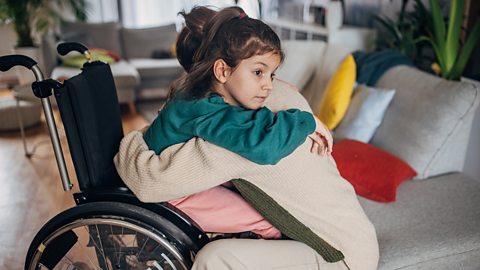
"Empathy is choosing to see ourselves in another despite our differences." – former Surgeon General of the United States, Vivek Murthy
What is empathy?
The Cambridge English dictionary describes empathy as, “the ability to share someone else's feelings or experiences by imagining what it would be like to be in that person's situation”.
So, empathy is a bit like the well-known phrase ‘putting yourself in someone else’s shoes’.
To be able to feel empathy, you need to be able to understand your own feelings too, so fostering self-awareness and creating a language for emotions, tailored to your child’s individual needs, is the first building block.
What’s the difference between sympathy and empathy?
“Sympathy is a feeling you have towards someone else’s position, a feeling of kindness or sorrow or pity, whereas empathy is an attempt at understanding what it’s like to be in that person’s position,” explains parenting coach, consultant and former headteacher Michael Whitworth.
What does empathy mean?
As well as imagining what someone else may be going through, a developed sense of empathy can also mean picking up on someone else’s feelings. In the same way your child may sense your pet dog is in pain, your child may sense their friend is upset with them, or that someone is feeling awkward about something.
Developing empathy helps your child experience positive relationships and better navigate social interactions.
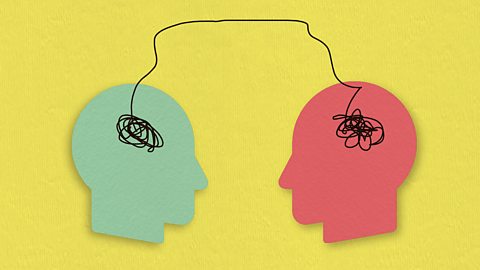
“Sympathy is being able to recognise someone’s situation and commiserate with them, but not necessarily fully immerse yourself in how that person is feeling," says Professor Vivian Hill, chartered member of the British Psychological Society. "It’s an external phenomenon.”
“Empathy is putting yourself in that person’s situation and thinking, ‘how is that making that person behave?’" Professor Hill elaborates. "If you’re coming from a position of empathy you’ll have a more nuanced and supportive approach to that person, rather than saying, ‘I’m sorry – now get on with it.’”
How to show empathy
As a parent, you’ll likely already show empathy to your child. Whether that’s trying to understand what it feels like to be left out in the playground, or when they’re overwhelmed by a task they need to complete.
If you’ve ever felt upset when your child is upset, that’s a form of empathy too.
You can show empathy to your child by sitting alongside them, listening attentively, being curious about their experience of a situation and reflecting back to them what they’ve communicated to you.
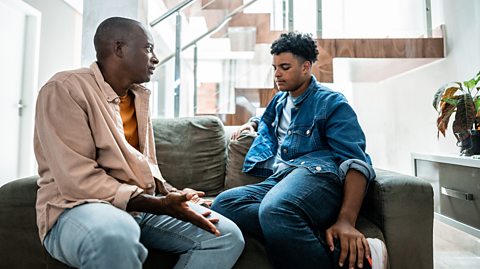
However, Michael Whitworth cautions that empathy is a work in progress for you, and your child, and that we can never “fully be in someone else’s footsteps”. Rather, it’s something that we’re continually striving towards and adapting to.
How to teach empathy
It will be no surprise to hear that role modelling and acting in the way you would wish your child to act can have a big impact on teaching your child empathy.
If you respond to your child and others with empathy, they’re more likely to do the same. Don’t be hard on yourself if you don’t always get this right: it’s a continual work in progress.
There are many ways you can teach and practise empathy with your child:
Use the characters in books and television, or pictures of people and faces, to discuss why a person or character is thinking a certain way.
Use your child’s everyday interactions with others to discuss how someone else is feeling, whether that’s in a shop, cafe, on the bus or in the playground.
Where appropriate, talk about people in the news and what your child thinks their life might be like.
Michael Whitworth suggests asking your child: “‘What does Nan feel like if she gives you a chocolate egg? I bet she feels great.’ Or ‘How did that person feel when they sold you that car?’ Get your kids out of the habit of making assumptions that people aren’t thinking things. For example, if they’re served, ask them to think ‘I wonder how long that guy has been working on that ticket machine? What does eight hours feel like?’”
You could also try an activity that Professor Vivian Hill uses with autistic children she works with: sit your child down in a chair and ask them their perception of a scenario that has played out, whether that’s falling out with a friend or any kind of social situation that’s become difficult for them.
Then ask the child to move and sit in another seat which represents the other person involved. Ask the child how that other person may have experienced the scenario and what that person was saying at the time. In some cases you can add in a third chair and ask the child to think how the teacher or a third person may have perceived the situation too.
This role play helps a child to think about the impact of their words or actions. It’s also great at improving communication skills.
Where can I find more on empathy?
Use these BBC Bitesize resources for more on encouraging and practising empathy with your child.
Where can I find more support for home education and parenting?
The BBC Bitesize home education collection is designed to support you and your child’s learning at home with free downloadable resources, advice articles and videos for children aged two-to-five years old, five-to-11 years old and 11-to-16+ years old.
Bitesize Parenting is the go-to place for the whole parenting community to find stories, expert advice and fun activities.
If your child has special educational needs or disabilities, be sure to check out the Parenting SEND collection. Bitesize has a collection of Sensory Stories, an immersive video series of unique sensory adventures for children with additional needs.
For more information about home education, this BBC News article covers the rise in families deciding to educate their children at home.
