What were dinosaurs?
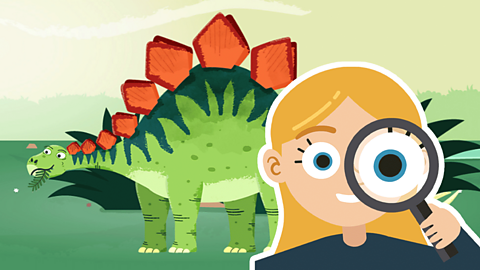
Dinosaurs were a group of reptiles that lived on Earth millions of years ago.
Some dinosaurs were very big, while others were small. Some ate plants and others ate meat.
Most dinosaurs died out when a big asteroid hit the Earth. This caused huge changes to the planet, making it hard for dinosaurs to survive. When a whole group of animals dies out, you say they have become extinct.
However, not all dinosaurs disappeared. One group survived and became the birds we see all around us today. Birds are actually modern dinosaurs!
Watch:
Watch this video to learn some amazing facts about dinosaurs!
What would it look like if dinosaurs were alive today?
Can you imagine if dinosaurs were alive today?
You might be riding the bus to school and see one racing alongside.
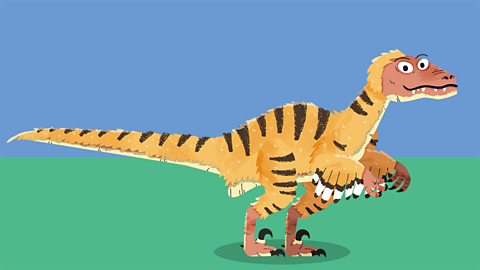
This Velociraptor could run faster than a bus.
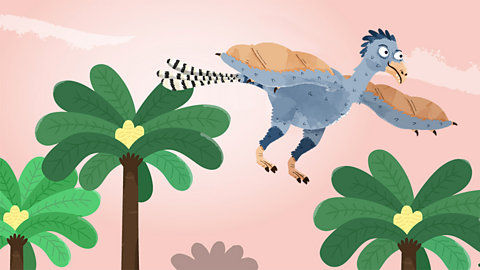
Some dinosaurs were so small they could fit on the back seat. Like this Microraptor.
Some dinosaurs were huge. This Argentinosaurus is longer than three buses.
It loved eating plants, while other dinosaurs like the Tyrannosaurus rex ate meat with giant, terrifying teeth.
Long ago, from 245 million years ago to 66 million years ago, dinosaurs ruled the world.
They lived all over our planet, from deserts to forests to places where your local park is today.
Even at the beach. Just without the ice cream van.
Then something big happened.
A huge asteroid landed from outer space and crashed into Earth, bringing dust and darkness.
Most of the dinosaurs died out but not all of them.
Look up on your street. The birds in the trees and in the park, they are the dinosaurs that didn't die out.
Today you can see dinosaur fossil bones in museums, and hunt for ancient sea creatures in rocks on the beach.
So which one would you want to see on your way to school?
Science

Dinosaurs lived on Earth well before humans did.
They came in many different shapes and sizes.
Scientists are still discovering new species of dinosaurs to this day.
You can learn more by looking at the information and activities below.
Different types of dinosaurs
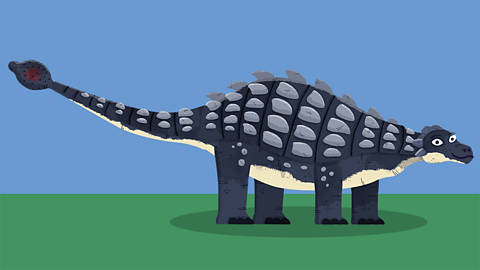
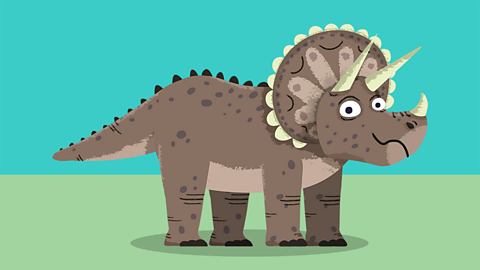
There a lots of different types of dinosaurs. Have a look at this slideshow to learn about some of them.
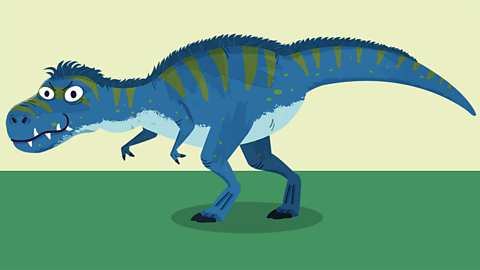
Image caption, Tyrannosaurus
Some dinosaurs were as tall as buildings and had sharp teeth, like the Tyrannosaurus rex.
1 of 5
Activity - Dinosaur Discovery
Work scientifically and become a dinosaur expert in this fun Science game.
You can learn about dinosaurs in:
- The Cretaceous period
- The Jurassic period
Dinosaur Discovery. game
KS1 Science game
Discover more on KS1 Science
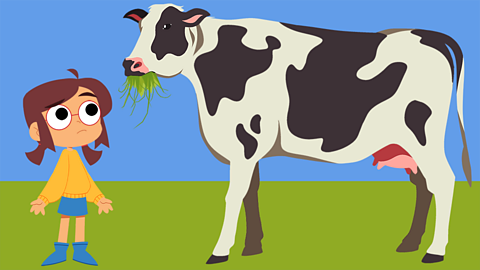
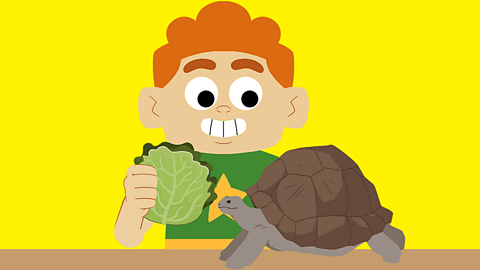
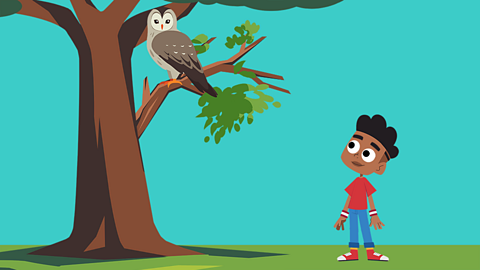
Have a look at these articles to learn more about different animals and what they eat.
History

Dinosaurs died out around 66 million years ago.
Scientists think this may have happened because a huge asteroid hit the Earth, causing massive changes to the climate and environment that many animals, including dinosaurs, could not survive.
Have a look at the information and activities below to find out how scientists learn about dinosaurs.
How do we know about dinosaurs?
Dinosaurs are extinct, which means that they no longer exist today.
Because of this, we can't watch them alive like we do with animals today.
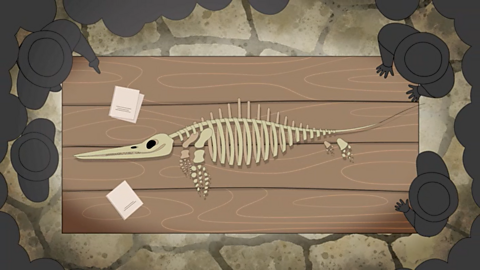
Instead, scientists find out about dinosaurs by studying fossils.
A fossil is something that was once part of a living thing, like bones, teeth, eggs, skin and even footprints.
By studying these fossils, scientists called palaeontologists can learn what dinosaurs looked like and how they lived.
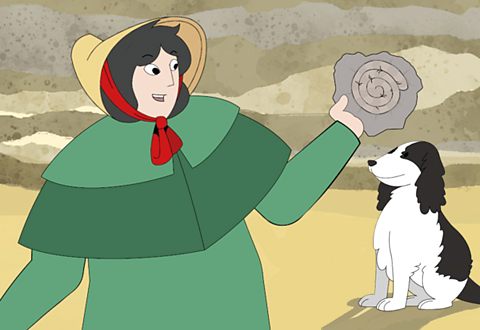
Who was Mary Anning?
Mary Anning was born in 1799 in Lyme Regis, a town in Dorset, England
She discovered many important fossils on the beaches and cliffs near her home.
Her discoveries helped scientists learn more about life on Earth during the time of the dinosaurs.
Even though Mary wasn’t very famous when she was alive, and often didn’t get proper credit for her discoveries, today we remember her as one of the most important fossil hunters ever.
Activity - Dinosaur dot-to-dot
Have a go at this dot-to-dot activity sheet. Can you complete the dinosaurs?
Dinosaur activity sheet. activity
Topic packs
Discover more on KS1 History
You can learn about more significant people from history with these articles.
Who was Caroline Haslett?
KS1 History
Who was Isambard Kingdom Brunel?
KS1 History
Who was Professor Stephen Hawking?
KS1 History
Geography

By finding and studying fossils, scientists know that dinosaur remains have been discovered on every continent, which means dinosaurs lived all over the world.
Have a look at the information and activities below to learn more about fossils and where dinosaurs lived.
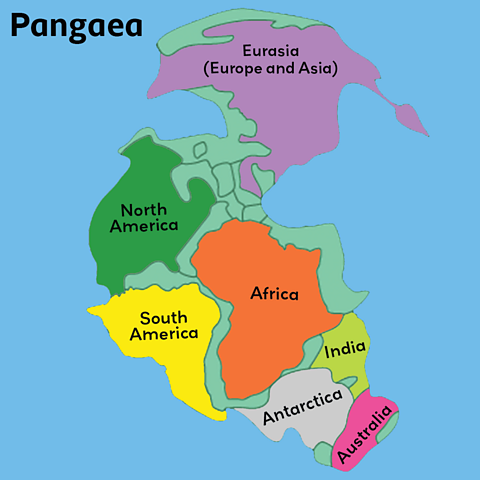
Where did dinosaurs live?
Many of the oldest known dinosaur fossils have been found in what is today Argentina and Brazil
At that time, all the countries and continents were joined together in one huge landmass called Pangaea.
Early dinosaurs lived in very hot, dry environments including deserts and savannahs.
However, as Pangaea slowly broke apart over millions of years, dinosaurs spread across the world.
They eventually lived in many different places such as forests, wetlands, deserts, and even areas that would later become the North and South Poles.
While dinosaurs lived on land, other prehistoric reptiles lived at the same time. Some could fly, like Pterodactyl, and some lived in the sea, such as Ichthyosaurus and Plesiosaurus.
Discover more on KS1 Geography
Learn about more places around the world with these articles.
The continent of Antarctica
KS1 Geography
The continent of Oceania
KS1 Geography
The continent of Africa
KS1 Geography
Dinosaurs quiz
More resources from the BBC
You can find many more amazing resources from around the BBC.
Follow the links below for more on dinosaurs.
Walking with Dinosaurs - Live Lessons
Bitesize for Teachers
Dinosaurs on CBeebies
CBeebies
Dinosaurs from Newsround
Newsround
Where next?
Play Bitesize Primary games. game
Fun and educational primary games in science, maths, English, history, geography, art and design, computing and modern languages.