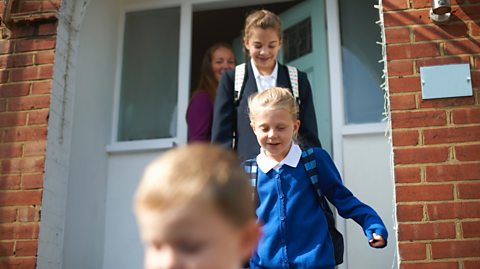
Will I make new friends? How will I find my way around? What if I feel sick on the first day? These are the sort of questions that could be going around your child’s mind as they think about starting secondary school.
Even outwardly confident children, who seem excited about becoming more independent and learning new subjects, may start feeling nervous as the start of term approaches.
We asked Stevie Goulding from young people’s mental health charity YoungMinds for tips on how you can help your child with their exciting new start.
When should I talk to them about starting school?
While it might be tempting to let your child enjoy their whole summer holiday without mentioning the word “school”, it’s best to start the conversation as soon as you can. This will give you time to gently work out any concerns they may have and help to reassure them, without going in with a line of direct questioning that could make them even more nervous.
Stevie says: “Sometimes we might have a tendency to park those conversations…but we should be starting them now and making them little and often.”
Even if your child doesn’t automatically tell you they’re feeling nervous about starting a new school or might find it challenging to express their mix of emotions, you’re likely to find yourself picking up on signs.
Stevie says: “There might be some changes in their behaviours, they might become a little bit more withdrawn. You might find that their sleeping habits change - are they struggling to settle at night? Do they feel like there's lots going around their minds? But most importantly it's about having those conversations and those little gentle check-ins.”
What do I say to my child if they're anxious?
When you’re concerned for your child’s welfare, it’s hard not to rush right in with a line of direct questioning that will quickly get you answers, but Stevie thinks this could actually have the opposite results. She says: “Don’t always ask ‘How are you feeling?’ or ‘Do you feel okay about it?’ because often that can give us quite narrow responses.”
Stevie recommends asking questions that are open and curious, such as "What are you looking forward to?”, “Is there anything that you're feeling less excited about?” or "Is there anything we could do across the summer holidays that might help you feel a little bit more settled?"
She says: “The holidays are a really nice opportunity to do this. If you’re having days out, like picnics, going down the beach, going for a nice walk, taking the dog out - it’s easier in those moments where you're naturally having more kind of quality time together.
“Even sitting side-by-side in the car can make it easier because often face-to-face conversation can be quite daunting.”
Dr Anna Colton has these tips for helping children with anxiety.
What can I do to help them understand their feelings?
It may be tempting to jump straight to finding solutions for your child’s concerns, but the first important step is to show them you understand how they are feeling.
Stevie says: “Give them reassurance that lots of young people are going to feel like this, they’re not on their own. We've all had different transitions in our lifetimes and this can be a really nice opportunity for parents to share how they felt starting a new school and some of the worries they experienced just so that it normalises it a bit more.
“Let the conversation flow. Just be there to listen and not necessarily jump into action planning.”
What can I do to prepare them for being in class?
If your child is worried about a particular situation, such as not having anyone to talk to during breaks or not being able to find their way around their new school, you can guide them to come up with their own solutions. Having an idea of how to respond should help them keep a clear head if their fears are realised.
Stevie says: “If they're worried about moving between classrooms and getting lost, you know, you could say, ‘Okay, well we can't rule that out, but should we make a little plan to say this is what you would do?’ And it might be as simple as just popping your head in the nearest classroom and asking for directions or going to reception, so if it does come up, they’re not like a rabbit in the headlights, they've got some ideas in their back pockets."
Scenario planning can also help children with SEND and can be done with the school’s assistance. Stevie says: “That kind of prep could be done alongside the school to say, for example, they are going to really struggle moving from class to class, is there any way a buddy could be paired up with them or for the first week or so can a member of staff wait outside the classroom to help them get to the next one?”
How can I help them relax before school starts?
“Calmness and joy” is the aim of the day, once you’ve helped your child feel organised for their first day by packing their bag and laying out their uniform.
Stevie recommends trying to get them back into a routine in the week or two running up to the new school year starting, rather than being in full-on summer holiday mode until the very last minute.
The final evening should be spent helping them relax, by running them a bath, encouraging them to put down their screens earlier and read, maybe watch their favourite film - whatever it is that works best for them.
It can also help to talk them through the next morning’s routine - what time they’ll be getting up and so on - but not too close to bedtime as it could set their minds whirring again.
Stevie says: “The conversations you’ve had with them are laying a really solid foundation for the future. There’s no reason for them to stop - keep checking in to see how they're feeling, what's going on for them, what are they really enjoying, what are they maybe finding a little bit more tricky.”
For more help on getting into a routine:
Here are five ways to get your child’s sleep back on track.
And five ways to help your child settle back into the school routine.

More from BBC Bitesize Parents' Toolkit…
Parents' Toolkit
Fun activities, real-life stories, wellbeing support and loads of helpful advice - we're here for you and your child.

What is an EHC plan and how do I get one for my child?
Parents' Toolkit guide to a Education, Health and Care plan, how to get an EHC plan for your child and what to do if your child can’t get an EHC plan.
Guide to School Life
Use our brand new interactive tool to help navigate the tricker areas of school life and discover some of the best content that Bitesize Study Support offers.
Preparing my autistic children for the return to school
Mum-of-four Rhi offers some advice for helping to prepare your child with an autism diagnosis for the return from home to school.
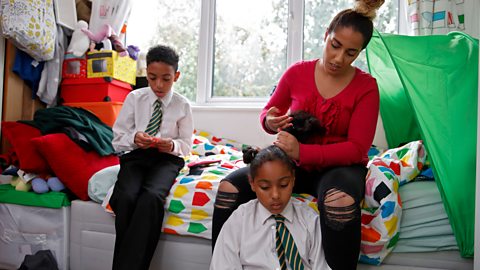
Five ways to help your child settle back into the school routine
Expert advice for parents to help their children feel more comfortable about returning to a school routine.
Four back-to-school worries and how to ease them
Many children will have anxieties about returning to school - here are some expert methods you, as a parent, can use to ease them.