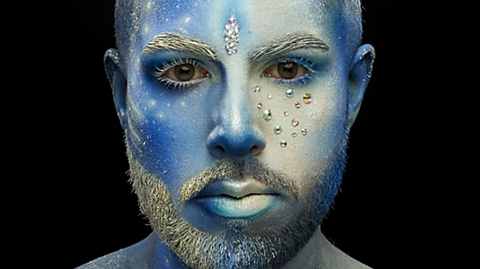
Prompting AI tools can take the same amount of time and focus as perfecting a look with products!" - Rahual
Rahual Das is a talented artist and fan favourite. Known for his bold make up looks and creative flair, he is also an avid photographer.
As the winner of Glow Up’s first AR Snapchat filter competition, the Bitesize Guide to AI spoke to Rahual to talk about the intersection of Artificial Intelligence and human artistry; to discover how make-up pros can use technology to fuel creativity without losing their unique style.
Experimenting with AI tools
Broadly, Rahual has embraced AI tools, blending them into his day-to-day as a make-up artist (MUA). A montage of these uses looks much like Rahual’s make-up palette – vibrant and varied.
“I incorporate AI in practical ways to help organise my time and boost my productivity. I use popular chatbots for life basics like travel planning, meal prepping, and social media calendar organisation, freeing up time for me to maintain my creative focus at work.”
Rahual employs AI tools in creative ways too: “I also use it to inspire my social scripts, tying them back to my personal and professional brand as an MUA. I’ve been experimenting with Pinterest AI for inspiration for my looks and then combine ideas to put my imagination on paper.” But he also experiments with Pinterest’s handy ‘GenAI control’ feature that helps users adjust the percentage of AI-generated results they see on their feed, and opt-out of their data being used to train Pinterest's GenAI tools.
He turns to Adobe Firefly in Photoshop and Lightroom to work up his own concept pieces, face charts and sketches inspired from things around him. But Rahual emphasises that when it comes to his make-up designs, he never copies an AI-tool’s output outright, and always finalises his artwork himself. “AI regurgitates your own ideas and often, it’s output is of a lesser quality that your imagination – often worse than your prompts!”
He recalls childhood experiences of takeaway orders in the 00s: “I remember when the only way to order pizza delivery was on the phone. You’d rehearse what you were going to say beforehand because you had one chance at placing it correctly. It felt like a mini performance, and you had to get it right – you had to use your words wisely, if you like.” Rahual feels that prompting an AI chatbot comes with the same responsibility, “using your prompts sparingly and having clarity of thought before typing is important.”
As a professional make-up artist, Rahual also finds AI tools handy for spotting products for a particular look without endless digging. “It’s really cool for understanding what’s out there, and condensing that to what you actually need. It even helps with kit shopping.”
The industry is adapting fast, pairing physical makeup artistry with AI tools to make life easier. Ultimately, Rahual feels there's a beauty behind using AI as an assistive tool, but knowing how to be in control of it is also a skill to master.
Nature is still the world's best artist
In Rahual’s personal experimentation with AI, he has learnt to strike a balance; warning against over dependency: “We love AI, but anything in excess does no good.” AI shines through as a development tool for ideas and to enhance existing work, but risks like AI hallucination and regurgitation mean it shouldn't define your creativity.
Rahual reflects “If you grew up with smartphones and are a digital native, you might have a part of life where you see the world through the window of the internet. However, AI and the web are only small parts of a much larger world. That is why perspective matters.”
When inspiration stalls, he advises heading outdoors. As a teen, Rahual found his spark by taking walks. “Step out and look at the colours in nature. As the cliché goes, nature is the world’s best artist. I like things like the colour challenge: spot 15 purple items in nature before heading home, then make notes or sketches of the things you saw.”
Embracing feeling over filters
When asked about AI-powered filters and the sortie of AI-enabled photo retouching apps in the market, Rahual also suggests acting here with caution. “I do love playing around with tools, and I think it’s okay to enhance an image for colours, lighting and perhaps a little spot correction, especially when creating a portfolio as a MUA, but professional artists can spot the difference between make-up and filters. As an MUA, we should be learning how to achieve the right effects with our products. It’s about authenticity.”
“AI doesn't have an artistic intention but a task-driven response to prompts. You are the master of artistry and innovation. And prompting AI tools can often take the same amount of time and focus, as perfecting a look with products!”
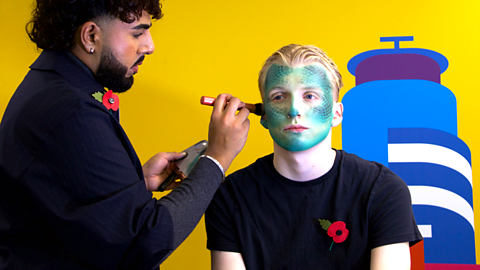
Rahual maintains the emphasis on the human touch being crucial. “I think makeup is a feeling and is much greater than putting layers on one’s face. It's something that brings a character to life and it’s all about letting the energy flow. A digital face chart won’t capture real life colours and texture pairings and makeup makes you feel something that AI does not. Film producers can use digital effects instead of prosthetics now, but I feel prosthetics can help actors get into character more and add depth to a performance. AI doesn’t breathe life into a character, it’s the artist and actor who does.”
Tech-assisted make-up design can open exciting doors, but some elements remain uniquely human. “To mimic textures from AI images, understand the products needed. AI won't give all answers. That is where creative flair takes over… But using AI images as inspiration can be a good place to start with make-up designs, as sometimes you can get a little bit of a creative block and you just need to fuel that inspiration… As a creative, there is a little bit of that fear of AI doing the work for us, but it doesn’t. Using my model’s face contours, it’s always going to be different.”
The future of AI-assisted make-up artistry?
We wanted to know what sort of AI tool Rahual would love to see in the future…
“I would really love to see a tool that could let you know about products and how they engage all the senses without trying them on. It would be cool if you could have an encyclopaedia of product info beyond just the look and feel. If you could, say, filter out everything with a vanilla scent if that’s not your vibe.”
This article was published December 2025
More from the BBC Bitesize Guide to AI
How AI is being used to support positive mental health
Meet Anya Aggarwal, a mental health clinician who helps people using the Wysa AI chatbot.
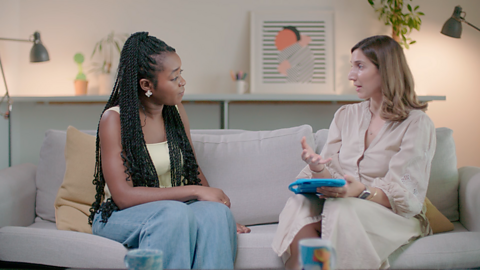
How AI is transforming the fashion industry
How are AI tools impacting the fashion design process? And what sort of skills do aspiring young designers need to have?
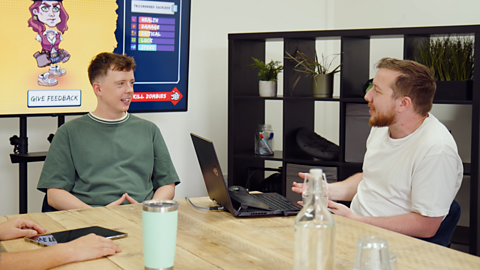
How AI is helping to put you in the game - and fight zombies
Explore how Thomas Mahoney, a games developer at 10six Games is using AI to enable everyone to become their own games designer.