Media in the UK
Quick version
In the UK the media’s role is to inform the public on important issues that affect them whether these issues are local, national or international.
Print media which includes newspapers though less popular due to the internet, still hold influence. Popular papers like The Sun, The Daily Mirror, The Daily Mail and The Guardian are allowed to report with bias, especially around elections, but not all readers are swayed.
Broadcast media which includes TV and radio are required to remain fair and balanced, offering multiple political perspectives.
The internet and social media allows access to varied perspectives, but can also spread misinformation.
The media often holds politicians accountable by reporting on policies and actions, shaping public opinion and debate.
Politicians use media to directly reach and influence voters, making media a key player in political engagement and public involvement.
Learn in more depth
Keep going to learn:
- What is the role of media in UK politics?
- The role of print media
- The role of broadcast media
- The pros and cons of the internet and social media in UK politics.
- How influential can the media be in UK politics?
Then test how much you have learned.
What is the role of the media in UK politics?
The media’s role is to inform the public on important issues that affect the people of the UK whether these issues are local, national or international.
What is the role of print media in UK politics?
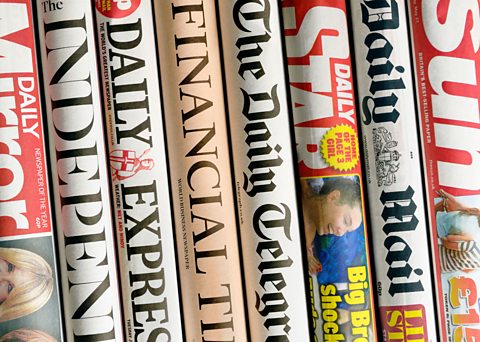 Image source, Simon Belcher / Alamy
In recent years the internet has become more popular, than newspapers as a source of political news. However, thousands of newspapers are still sold every day and many people read newspaper articles online.
In UK the most widely read popular newspapers are The Sun, The Daily Mirror, The Daily Mail and The Guardian.
Within the laws of the land, newspapers do not have to be balanced. As long as the information is accurate, the newspaper can print what they like.
This means that different newspapers can choose to report the news in different ways. Different newspapers can report the same story in different ways, using different headlines and taking different viewpoints.
In their choice of stories, pictures and headlines, newspapers can take a one-sided approach to news reporting.
Image source, Simon Belcher / AlamyAt the time of an election, newspapers are often very clear as to which political party they support and may urge their readers to vote for one political party of another.
This does not mean that all voters are persuaded by the newspaper they read. Many people buy a newspaper for other reasons, such as sport, or are not influenced by what they read.
What is the role of broadcast media in UK politics?
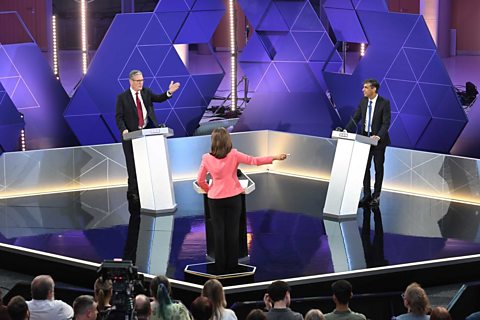
Broadcast media means television and radio.
Television and radio news reporting is different from newspapers. The law says that they have to be fair and balanced.
Television and radio companies are expected to report the facts and to be balanced in their analysis. Different representatives from different political parties are each expected to be allowed to give their views on important issues.
In recent years, a number of TV debates have been broadcast involving the leaders of different parties. Each of these debates was watched by millions of voters.
Analysis of the effect of election debates suggests that they have little impact on individual's voting choice, or on the overall share of votes:
- This suggests that most people who watch debates have already made up their minds and are not influenced by what they hear.
- Although one party leader may appear to ‘win’ the debate, overall the debates have little impact on the election result.
The role of the internet and social media in UK politics
 Image source, Jeremy Sutton-Hibbert / Alamy
Increasingly, people in the UK are switching to the internet as a source of information, especially social media.
Unlike television and radio channels, the internet allows almost anyone to post almost anything they choose. This means that some information may not be accurate.
However, the internet does allow for people to have almost unlimited access to information. This means that people can now be more informed about social and political issues.
For political parties, being online offers the chance to connect directly with voters.
Image source, Jeremy Sutton-Hibbert / AlamyHow influential is the media in the UK?
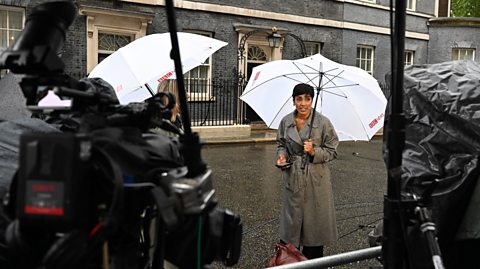
The media is influential because it holds the government and other politicians to account.
Politicians know that their policies and actions can be reported by the media so they must consider how these will be presented and how this will affect public opinion.
When the media is critical of political failures or difficulties, politicians must be ready to answer for their actions.
In covering wider social and political issues, the media can stimulate public interest and debate on issues. Politicians may have to respond to how this affects public opinion.
The media is an important tool for politicians to communicate with voters, for example a social media presence allows politicians and parties to speak more directly with members of the public.
By covering politics and elections, the media can play an important role in educating the public and encouraging their participation in decision making.
Quiz
Recap what you have learned
The UK's media’s primary role is to keep the public informed on local, national, and international issues that impact Scotland.
The role of print media
- Newspapers were once the main source of political news but have declined in influence due to the internet.
- Widely read newspapers include The Sun, The Daily Mirror, The Daily Mail and The Guardian.
- Newspapers can report with a particular bias or perspective as long as their information is accurate, often leading to varied portrayals of the same story.
- During elections, newspapers may openly endorse certain political parties, though not all readers are influenced by this.
The role of broadcast media
- Broadcast media (television and radio) is legally required to provide fair and balanced reporting.
- Political debates aired on TV, while popular, have shown minimal influence on changing voter opinions.
Internet and social media:
- Increasingly, the internet, especially social media, has become a significant source of political news for many.
- Online platforms provide extensive information access but can contain misinformation due to lack of regulation.
- Social media enables political parties to communicate directly with voters, broadening engagement opportunities.
