From arduous mountain climbs to city sprints, unexpected punctures to photo finishes, road cycling has it all.
But if you're just watching a road cycling event for the first time, you might be slightly confused by all the terminology being used.
Fortunately, BBC Bitesize is here to help you sort your pelotons from your echelons.
Peloton
You’ll hear this word used a lot in cycling commentary, whether it’s the Tour de France or an Olympic road race. Quite simply, it’s a large group of riders bunched together on the race route.
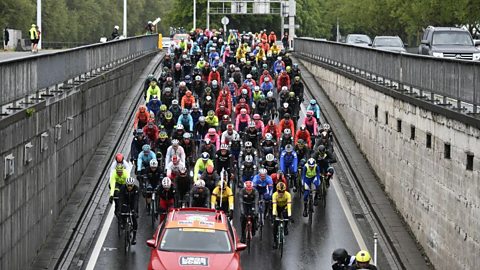
A good way to gauge how successful a breakway rider’s bid for glory can be is checking the distance between their bike and the peloton. In French, the word means 'small ball' or 'group' and dates back to the 17th century, when it referred to a small group of soldiers (or ‘platoon’).
Echelon
Similar to peloton, but stretched out across the width of the road. The echelon is where riders position themselves at slight angles alongside each other, to ensure they get the best protection from a crosswind and preserve energy for later in the race.
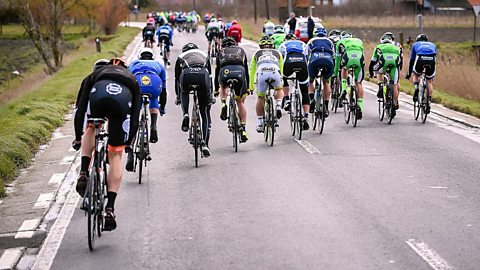
A peloton can be made up of a series of echelons and it’s an example of the racers working together for the good of the event. The word means ‘rung of a ladder’ in French and has its background in military use, although ‘upper echelons’ is now used to describe the top ranks in many different occupations.
Chapeau
Another example of the sportsmanship involved in road cycling, participants will say this to someone who had has a particularly good day at the races.
Chapeau is French for 'hat' and is seen as the equivalent of doffing one’s cap to someone who deserves your admiration.
Bonking
No, it’s nothing violent (or anything else you think ‘bonking’ may mean…) but if you’ve ever heard the term ‘hitting the wall’ used in long-distance running, then this is its cycling equivalent.
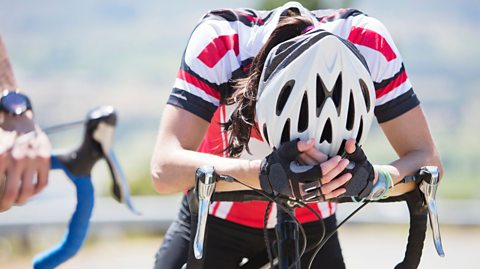
To cycle any long distance, your body needs fuel in the form of food and drink. Skimp on that and you run out of glycogen - a type of glucose - stores and your body just can’t go on, like a car using up the final drops of fuel. It’s at that point you are bonking.
So, keep an eye out for cyclists bonking during the coverage of the race. They usually need a good rest and something to eat after all that exertion.
Drafting
Everyone needs to save energy and this is one way cyclists can do it. If a cyclist positions themselves behind another, they can take advantage of the slipstream created and coast along, using around 20% less energy than they were beforehand.
Slingshot
Similar to drafting, this involves taking advantage of the draft created by a front rider and using the momentum created to move ahead of them.
Turkey
Never been on a bike before, or rode in a cycling race? Then this is the term that describes you, as it refers to an unskilled pedaller.
It may be better to be a turkey than a squirrel, though. The latter refers to a rider whose nerves have got the better of them, leading them to move in an unsteady line.
Yard sale
This must be one of the cruellest things that can happen to a cyclist.
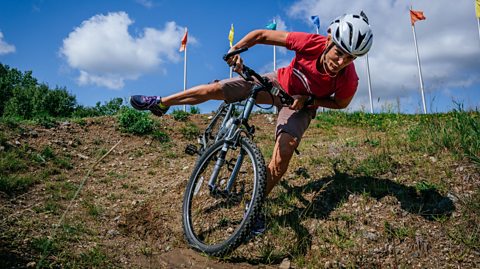
Anyone who comes a complete cropper and winds up coming off their bike with all their equipment and possessions scattered around them on the ground is said to be having a yard sale - as it looks like their property is on sale to allcomers.
This article was published in May 2019 and updated in August 2024
Howzat for a yorker? The origins of cricket jargon
What do ducks have to do with cricket? Find out here.
The origins of football jargon
From hat-trick to volley, learn where some of the most popular football lingo comes from.
Six stories behind horse racing jargon
Why a dark horse can win hands down on the final furlong even if they're not a front runner.