It’s the oldest international rugby tournament in the world.
The Men’s Six Nations gets underway each year in February – with holders France, Ireland, England, Wales, Scotland and Italy competing to win the competition.
It originally began in 1883 as the Home Nations Championship, before France joined in 1910 to make it the Five Nations. Italy completed the Six Nations line-up when they joined in 2000.
BBC Bitesize tells you all you need to know ahead of this year’s Six Nations.
The BBC's Ross Fiddes explains some of the Six Nations' slang and rules
In rugby union there's a lot of slang to get to grips with, right.
There's rucks, there's mauls, you can hoof it, goose step, drop kick, drop goal, lineout and even grubber kick it.
Don't stress too much about all of that – the aim of the game is to get the ball over the line and that's a try worth five points. And then you go for a goal worth two points, but actually you can go for a penalty kick worth three points and a drop goal worth three points.
And then if you win a game by more than four tries, well then you get a bonus point for that. And if you lose a game by less than seven points, well you get a bonus point for that too. I mean, it's simple!
So if you win the Six Nations, then you might also win the Grand Slam or the Triple Crown.
Now the Grand Slam is a title given to the team that beats every other team in the competition. Whereas the Triple Crown is a title given to one of the Home Nations that beats all the other Home Nations of England, Scotland, Wales and Ireland.
So basically, if you win the Grand Slam then you've probably won the triple—wait, no. If you win the Triple Crown then you're most likely to have won the Grand Slam, but only if you're a Home Nation.
D’you know what, forget it. If you win the most matches, you've won the Six Nations.
In Rugby Union there's a lot of rules to get to grips with, to be fair, but it is fairly simple, right. You can't drop the ball. Well, you can actually. But as long as it goes backwards. And you can't pass the ball forwards, but you can pass it backwards.
There's high tackles, spear tackles and even dump tackles – all of which are a no‑go. But if in doubt just shout these phrases: “Forward.” “Knock on.” “Offside.” There's always one of those in the mix. Trust me.
But there we go, we've got you covered for the upcoming Six Nations. You're practically an expert, or you can at least blag it like everyone else does.
So what are you waiting for? Put your feet up, get your fancy dress on and get behind your chosen team.
- The Men’s Six Nations Championship takes place over five weekends in February and March with favourites and defending champions France hosting holders Ireland in a huge opening match.
- Teams can score points in lots of different ways – through tries (five points), conversion kicks (two points), penalty kicks and drop goals (three points each). Winners of matches get four points, with two points each for a draw. Big wins or close defeats can also earn bonus points.
- The team with the most points at the end of the Six Nations wins the championship. If you’re one of the home nations (England, Ireland, Scotland or Wales) and you beat all of the other home nations, you get the Triple Crown. Beat all five teams, and you earn the Grand Slam.
- With almost 150 years of history, there’s plenty of tradition in the Six Nations. Teams have their songs and age-old rivalries are played out – but there’s still time for fun if you feel like a bit of fancy dress too.
- There are a lot of rules in rugby – but the main thing to remember is that passes have to go backwards and while everyone likes a good tackle, anything over the top will see a player sent off.
This article was published in February 2024 and updated in March 2026
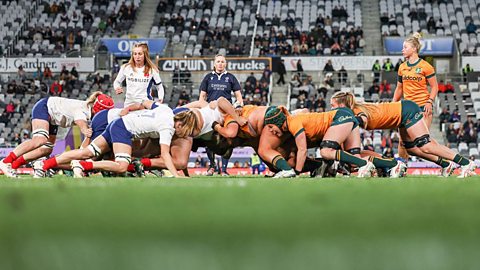
Seven rugby questions you were too embarrassed to ask
The difference between league and union - and just who was William Webb Ellis?
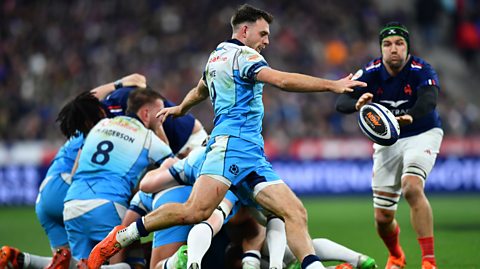
The Six Nations: What's a ruck? And other rugby jargon explained...
Know the difference between your rucks, mauls and scrums
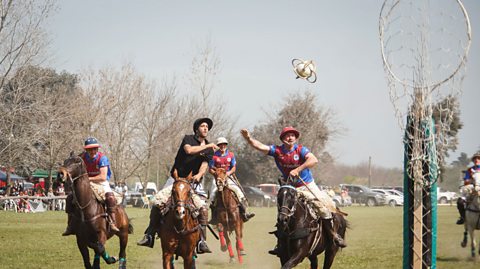
Three unique national sports from around the world
We explore some countries where football, cricket and rugby aren't the country's national sports.