Facts about D-Day and why it is so important
Each year on 6 June we remember D-Day – a moment in history that marked a significant turning point for the UK and many other countries as soldiers from across the world battled for their freedom against Nazi Germany in World War Two. But what is D-Day and why is it so important?
1. What is D-Day?
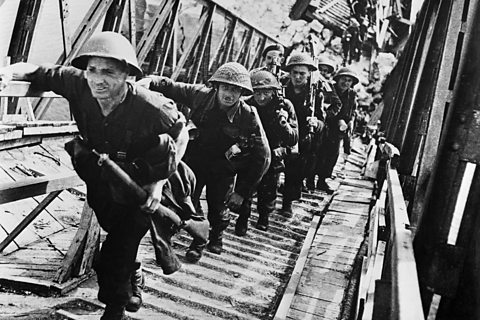
D-Day was the biggest invasion by sea that has ever been attempted.
It happened during World War Two and saw Allied forces – made up of soldiers from the UK, the US, Canada, France and several other countries - launch an attack on German soldiers in Normandy on the coast of northern France.
At the time, Germany was under Nazi rule, led by Adolf Hitler, and had taken over almost all of Europe, including France where they had set up huge defences on the coastline.
2. When and where did D-Day take place?
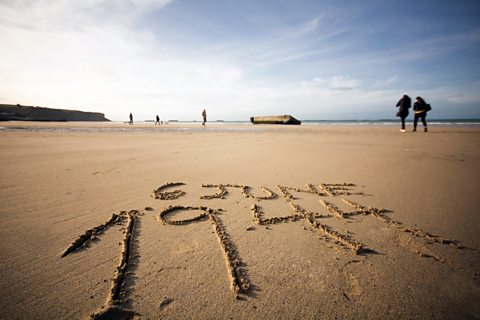
D-Day, which took more than a year of planning, was originally meant to start on 5 June. This day had been picked as it was predicted the seas would be calm, there would be a full moon and an early low tide. But despite all the careful planning, that wasn’t meant to be, and storms meant that it had to be delayed by 24 hours.
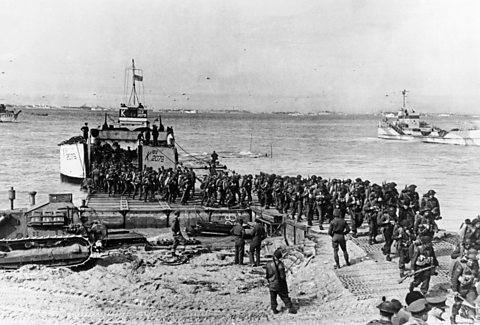
Instead, at 6:30am on 6 June 1944, Allied soldiers landed along an 80km stretch of beaches in Normandy after setting sail from the south coast of England in the dead of night. Hitler had been expecting the armies to cross the English Channel from the UK at its narrowest point. But the troops were cunning, and decided to take a longer sea voyage to avoid some of Hitler’s heaviest defences.
Around 6,000 ships had set sail from the south coast of England to help, with more than 11,000 planes.
By the end of the day, the Allies had 156,000 soldiers ashore, including tens of thousands that had been dropped from planes behind the German defences. This allowed them to take control of roads and bridges, helping prevent the Germany army from sending more men in from other locations to fight.
Throughout the day troops landed on the beaches. By midnight, the Allies had secured most of the beaches and were able to begin pushing further inland.
Get a much more detailed breakdown of what happened on D-Day here.
3. How many soldiers were killed or injured?
Sadly on D-Day alone, as many as 4,400 troops died from the combined allied forces. Some 9,000 were wounded or missing.
Total German casualties on the day are not known, but are estimated as being between 4,000 and 9,000 men.
4. Did D-Day put an end to the war?
And what a plan! This vast operation is undoubtedly the most complicated and difficult that has ever taken place.
In short, D-Day did not put an end to the war.
But it was a significant turning point. At the time, the Nazis had occupied most of Europe and D-Day marked the beginning of an 11-month attack that eventually resulted in Allied forces making their way to the German capital, Berlin, and Adolf Hitler’s headquarters, freeing Europe from Nazi rule.
5. What does the D in D-Day stand for?
The D in D-Day stands for… Day.
It is actually a general term for the start date of any important military operation, and is often used when the exact date has not yet been decided or is being kept top secret. Most military operations will be given a D-Day and a H-Hour, which refers to the specific time of day the operation will start.
Military planners would refer to the days before the operation with terms like D-5, which would mean they were talking about what would happen five days before the planned operation, or D+3, which would refer to plans for three days after.
Learn more about D-Day and World War Two
Want to learn more about D-Day and other significant moments in World War Two? Bitesize has plenty of resources for you to look at.
