Did you catch Laura on BBC One's series of Ambulance? Find out more about her role as a 999 emergency call taker. Part of the Bitesize world of work series.
Laura
I'm Laura, I'm 23, and I'm a 999 call taker for the ambulance service.
From a young age I have always wanted to help people and, you know, be there for somebody when they've got nobody. When I was younger, something happened in my life. Some paramedics came to our house. Growing up without a mum made me more compassionate and I decided then that I wanted to start working for the service and see if I liked it.
You never really know until you get in the building what you're going to be faced with. You've just got to take it as it comes and deal with the call as and when you get it.
First thing I do is log on and I put myself on available, which means I'm ready to take the 999 calls.
"Ambulance service, is the patient breathing?" When somebody rings 999 it comes up on my computer system. The computer generates a specific set of questions that we are required to ask the caller. All the information will then go through to our dispatchers who would then allocate the nearest available vehicle.
We receive a range of calls – it could be CPR, childbirth, an elderly patient that's been on the floor all night, mental health. You don't really know what you're going to get until you pick up the phone.
The North West Ambulance Service can receive up to 2,000 calls per day. It can be exhausting but the mentality you've got to have is to just deal with that call that you've got and then move on to the next one.
Debbie, Laura's manager
Laura is confident in giving her instructions and helping people. She has compassion and empathy for the caller and the patient. She's a great member of the team.
Laura
The skills that you need to answer calls – you've got to be resilient, very open-minded and caring and compassionate. You need to be there for them to help them when they need somebody the most.
When I was in school, I studied Health and Social Care. I did my work experience in a specialist school and then went on to be employed within a residential home and a nursery. I feel those sort of jobs have helped me with this job role that I'm doing now.
The most satisfying part of the job for me is going home knowing I've made a difference to somebody's life.
The most satisfying part of the job for me is going home knowing I've made a difference to somebody's life.
- Laura has always wanted to help other people. She sadly lost her mum when she was 12 but felt inspired by the paramedics who had helped her family when they needed it most
- She went on to study Health and Social Care and has been working as a 999 call taker since 2016
- She handles a wide variety of calls on each shift – everything from childbirth to mental health crises – and has learnt to expect the unexpected!
- Laura has secured a place at university to start paramedic training later this year.
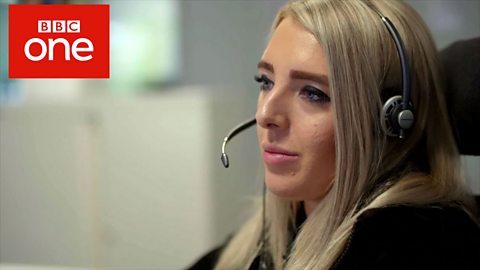

Emergency call takers are sometimes referred to as emergency medical dispatchers. They handle calls from the public and GPs requesting an ambulance.
What to expect if you want to be an emergency medical dispatcher
- Emergency medical dispatcher salary: £25,000 to £30,000 per year
- Emergency medical dispatcher working hours: 37 to 42 hours per week. You could work shifts which could include evenings, weekends and bank holidays
What qualifications do you need to be an emergency medical dispatcher?
You could get into this role via a college course, an apprenticeship or applying directly. Having some relevant experience is important, so you could look into volunteering opportunities. Check your local NHS trust for advice about opportunities.
Sources: National Careers Service
This information is a guide and is constantly changing. Please check the National Careers Service website for the latest information and all the qualifications needed.
For careers advice in all parts of the UK visit: National Careers Service (England), nidirect (Northern Ireland), My World of Work (Scotland) and Careers Wales (Wales).
Find out more
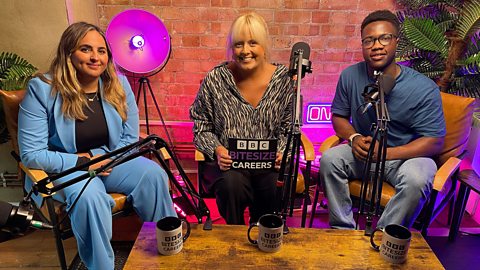
The Bitesize Careers Podcast
Katie Thistleton, inspiring young guests and career experts chat all things careers.
Tips and advice
Help with interviews, writing a CV and other skills for work.
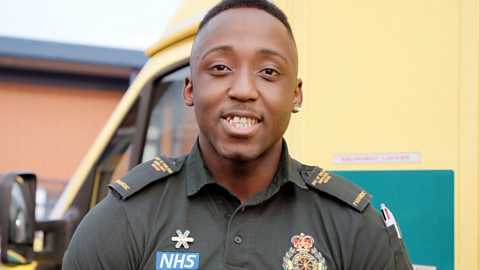
Tanoh: paramedic. video
Tanoh's a paramedic in the NHS.
Kestra: medical student. video
Kestra's a medical student at university.
Kate: critical care nurse. video
Kate started working as a nurse the Monday after she finished her university degree.