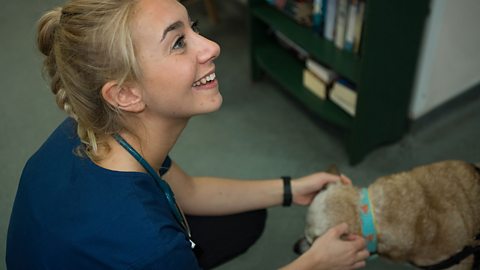
Meet Kestra, 21, and find out about life as a medical student. Part of our Bitesize world of work series.
Kestra:
I'm Kestra, I'm 21 years old, and I'm a medical student.
I didn't always want to do medicine. My favourite subjects in school were creative arts and languages. But my dad is a doctor and when I had to find work experience, I asked my dad if I could go along for a couple of weeks in the hospital.
The first case I saw was a man who had been shot through the eye with a crossbow. At that moment I thought there was no other career that could be as exciting and interesting as medicine.
For A-levels, I took Biology, Chemistry, and Maths. I still wanted languages in there as well so I took German too.
Applying to medicine was challenging, but I was accepted into university after my A-levels and I'm now in my third year and I love it.
Medical students spend time learning on the wards, we spend time learning in the library, we also spend time learning in the clinical skills centre. For example, we might learn CPR where we press on a chest and we do rescue breaths for patients who aren't breathing or their heart has stopped.
We also practise suturing, where we stitch up any nasty wounds, and the orascope to look inside people's ears to see if there's anything wrong.
A big part of medicine is actually trying to prevent bad things before they happen. So we test the blood pressure of members of the public because things like high blood pressure could cause something like a stroke.
Although we're trained to look after a person's body, their emotional health is really important too. So my friends and I helped to set up a charity where we visit children's wards dressed as fairytale characters. It's the most rewarding experience getting to make a child's day.
Communication is really important in medicine. That's why learning another language like German is so valuable. Next year, I have the opportunity to actually go to Germany and work on a mother and child ward, looking after mothers who are pregnant or have recently given birth.
In the future, I'd like to gain experience across the whole of the UK, and eventually become an international aid worker.
Communication is really important in medicine. That's why learning another language like German is so valuable.
- Kestra is training to be a doctor and studying her medical degree at Cardiff University
- Medical school involves a mixture of studying and spending time in different parts of a hospital with real patients
- Kestra chose sciences at A-level, but her favourite subject was German
- She will soon be visiting Germany to volunteer in a mother and baby unit in a hospital.

What to expect if you want to be a hospital doctor
- Hospital doctor average salary: £39,000 to £145,000 per year
- Hospital doctor typical working hours: 42 to 48 hours per week.
What qualifications do you need to be a hospital doctor?
You can get into this role via a university course. You'll need to complete:
- a 5-year degree in Medicine, recognised by the General Medical Council
- a 2-year general medical foundation programme
- a 5 to 8 year specialty training programme, the length dependent on which specialty of medicine you choose
If you already have a degree in a Science subject (minimum upper second), you could take a 4-year graduate entry programme into medicine.
If you don't have qualifications in Science, you may be able to join a six-year degree course in Medicine. This includes a one-year pre-medical or foundation year.
Sources: National Careers Service, NHS Health Careers
This information is a guide and is constantly changing. Please check the National Careers Service website and the NHS Health Careers website for the latest information and all the qualifications needed.
The British Medical Association (BMA) – is a professional body that supports doctors in the UK. They have lots of information and advice about becoming a hospital doctor, from getting in to medical school to working life as a doctor.
For careers advice in all parts of the UK visit: National Careers Service (England), nidirect (Northern Ireland), My World of Work (Scotland) and Careers Wales (Wales).
Work experience in your area
Find work experience placements with Workfinder.
Tips and advice
Help with interviews, writing a CV and all things work experience related.
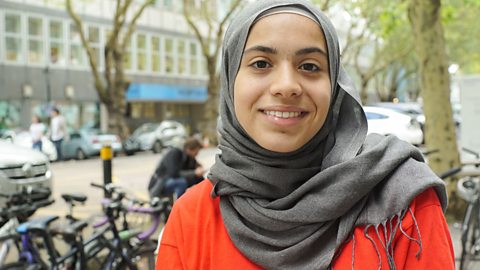
Khadija: first aider
Khadija uses her medical knowledge to teach young people first aid.
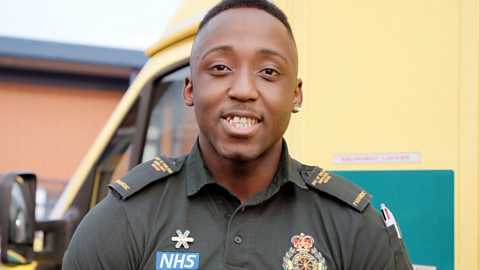
Tanoh: paramedic. video
Tanoh's a paramedic in the NHS.
Lucy: vet
Lucy uses her knowledge of Biology in her job as a vet.