AI-generated videos of different foods “yelling” at people are all over TikTok and Instagram. They show animated fruits, vegetables and household items with faces “talking” at users and giving advice.
The videos - all around one minute long - have racked up millions of likes and views, just a month after they first appeared on the social media platform.
Topics have included when to throw away rotting fruit, how to cook pasta and how to boil an egg the right way. Often the animated foods appear angry, with others looking worried or disappointed.
So why are they suddenly trending? BBC Bitesize Other Side of the Story headed into the kitchen to find out.
Where did the AI fruit and vegetable trend come from?
Many of the videos appearing on your fyp feature foods such as eggs, onions, steak, mushrooms and rice and claim to offer “life hacks you'll actually use”. Users are told the content is AI generated in the caption.
One video posted on 2 January has been played 479,000 times.
By 2 February, videos had been posted covering subjects such as air fryer habits, gym advice, loading a dishwasher and personal hygiene. One post about hygiene mistakes that could cause spots has talking pimples and has been played 4.2 million times.
Several other accounts have posted near-identical videos in January 2026 but it’s unclear if they’re linked or if creators are simply responding to the trend. The hashtag #aifood now has 25,000 posts.
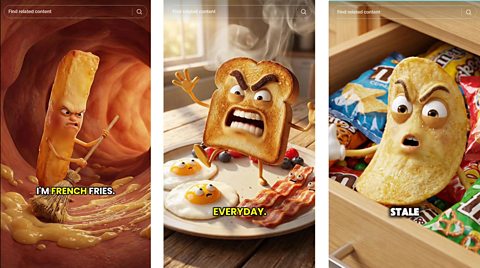 Image source, @sensefulhub
Why do we keep seeing AI fruit and veg videos?
Life advice and hacks is a big social media trend at the start of the year, but this usually comes in the form of advice from people who say they are experts or creators sharing their own ideas. That means the AI videos will stand out in users’ feeds.
The tone of the voice being used has also been important in them being noticed. People have said the foods are “shouting” at them, with one user writing: “Everything has a face now that talks or yells”.
One video telling people they deserve fresh snacks featured a furious looking crisp saying: “If I bend instead of crunch, I’m stale. Stop forcing it, throw me out or accept you’re eating sadness.”
Hashtags used with the videos have included #healthyhabits, #tips and #lifehacks, meaning they may be viewed by people searching for this sort of content. #lifehacks alone has 4.9 million posts on TikTok.
It's also worth remembering that algorithms will suggest content to you based on your previous likes and site visits. What seems like a viral post may just be an echo chamber based on experience.
The more interactions you make with this type of content, the more you will see it on your fyp.
Is #aifood seen as AI 'slop'?
AI videos are increasingly facing a backlash online with comments complaining about them and calling them “slop”. YouTube's CEO, Neal Mohan acknowledged in a January 2026 blog that the rise of AI has “raised concerns about low-quality content, aka “AI slop”.
However the AI fruit and vegetables on TikTok appear to have avoided this criticism so far, with many positive comments and people sharing their own life advice in the comments. One user said: "And school says you learn nothing on TikTok”.
Creators have also been making fun of the trend, with videos showing them hugging loaves of bread and moving them away from the fridge. One said: “When you remember AI told you not to put bread in the fridge”.
While people have said they find the videos entertaining and helpful, it’s still crucial to verify the information in them instead of relying solely on what you’re seeing in front of you. Think critically about what you’re reading, watching and sharing.
Always consider if it’s something that’s being used for clickbait and check if the facts you’re seeing are repeated in trusted sources. Credible claims should be backed by evidence and scientific data.
This article was published in February 2026

Not sure if the news you’re seeing on social media is true or false? Can you always tell if the things you see online are real or fake?
Learn how to get the other side of the story with our quizzes, videos and explainers about media skills and viral trends including popular food myths.
Do secret menus exist?
Are there dishes that only certain people know about?
What is the Japanese cheesecake yoghurt trend?
Two ingredients that have taken over TikTok

Other Side of the Story
Back to our homepage for more quizzes and explainers about fake news, viral trends and media skills.