Sign up to the BBC Bitesize newsletter! External Link
For home education news and stories plus updates on the latest Bitesize content, register for our newsletter today.

How can I look after my mental wellbeing when home educating?
It’s a tough job being a parent, so it can be extra challenging if you’re also home educating your child. It's normal to feel isolated or like you need a break from your responsibilities sometimes.
That’s why it’s important to look after your own wellbeing as well as your child’s. BBC Bitesize Parenting has been speaking to clinical psychologist and parenting consultant Dr Kirsty Pakes to get some top tips.
Why is parent mental health important?
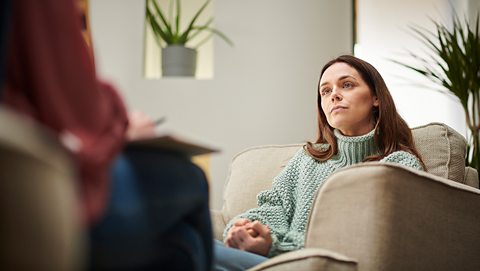
You’ve probably heard the phrase ‘You can’t pour from an empty cup’. Parental mental health is important because looking after your own wellbeing means you’re better placed to look after your child’s wellbeing, as well as handle the ups and downs of life as a parent.
Dr Pakes believes we need to recognise and acknowledge that parenting, and home educating, is emotional work that’s often stressful and under-supported, especially when we’re tired or feeling overwhelmed. Added to that, Dr Pakes explains the reason we often get emotional with our kids – for example feeling triggered by a particular behaviour – is because, “becoming a parent brings up implicit memories of being a child ourselves. We don’t consciously remember but our early experiences get activated by being a parent and sometimes we completely overreact, we lose our temper, and we’re mystified as to why.”
She explains it’s normal for our emotional system to be activated in this way. Knowing this can help us prioritise our wellbeing, practise self-care and self-compassion, and pick up some strategies for looking after our mental health.
Mental health support for parents and carers
“Often everyone is struggling and needs help.” – Dr Kirsty Pakes
One of the keys to looking after your wellbeing as a home educator is to find your support network. There are online groups you can join as well as in-person meet-ups in local areas. Dr Pakes recommends trying to build a community and then working out a reciprocal arrangement where maybe once a week you can look after each other’s child and you go and do something for yourself, such as meet a friend for coffee, go for a walk, etc.
She emphasises it’s completely normal to feel overwhelmed sometimes. It’s important to offload and work through your reactions to your child. You could do this by:
journalling - write down your thoughts and feelings, no one has to read it!
talking to a friend
taking it in turns to listen with a partner, without offering advice or judgement
Home educating on your own
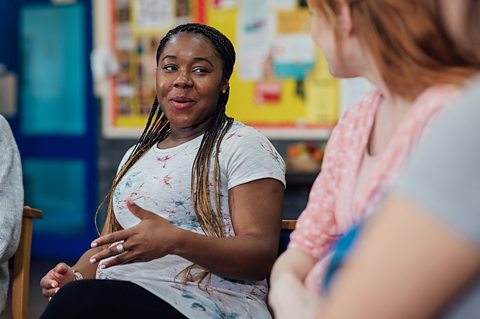
If you’re parenting and home educating on your own, Dr Pakes says to acknowledge how hard that is and try and draw on others as much as you can: “Try not to be afraid to ask family and friends. Make connections in the home education community. Often everyone is struggling and needs help, so see if there’s a reciprocal way of giving help that makes sense.”
Mental health and wellbeing tips for parents: special time
“Parenting our kids is like parenting ourselves, and the two fuel each other.“
Dr Pakes says: “If we want to relate to our kids in a certain way, we need to connect, listen and tune in to them. Well, we need to do that to ourselves in order to do that for our children. The two are not mutually exclusive. Parenting our kids is like parenting ourselves, and the two fuel each other.”
The concept of ‘special time’ can work for parents too. Special time with our child is when we give them 15 minutes of one-to-one uninterrupted attention (no phones!) with a child-led activity, as long as it’s safe. Special time for you means thinking about what you enjoy doing – sport, gigs, art, etc – and putting aside some time for that: “It’s hard to find the time but it impacts on our parenting. If we can connect with those things ourselves, we can offer that to our kids.”
Mental health and wellbeing tips for parents: connection
“Parent-child connectedness is a super proactive factor for mental health outcomes.“
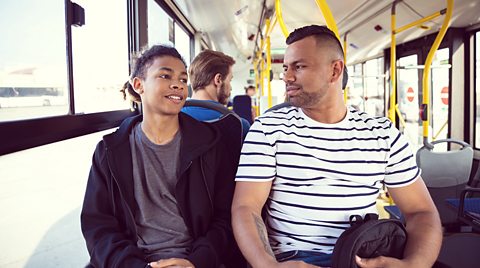
Naturally you may also worry about your child’s wellbeing when you’re home educating them. Dr Pakes says the key thing, for all parents, is to maintain connection with your child: “Parent-child connectedness is a super proactive factor for mental health outcomes in adolescence.”
Find ways to have short bursts of special time together. Young children may enjoy some rough and tumble play. For older children and teenagers, it may be as simple as being with them for ten minutes without asking questions or talking about homework. Take an interest in their lives and listen to them: “It’s a space to really listen and not offer advice.”
It’s also important just to be with a child when they’re upset, allowing them the space to feel their feelings… a difficult thing to do as a parent!. These moments of connection should make your and your child’s home learning journey easier in the long run.
Where can I find more support for home education and mental wellbeing?
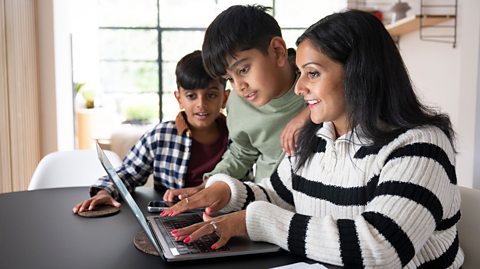
Bitesize Parenting is the go-to place for the whole parenting community to find stories, expert advice and fun activities. Check out the Wellbeing section for mental health support and tips on things like how to talk to your child.
If your child has special educational needs and / or disabilities, be sure to check out the Bitesize Parenting SEND collection.
The BBC Bitesize home education collection is designed to support you and your child’s learning at home with free resources for early years and foundation stage (EYFS), primary and secondary-age students. Have a look at our home education hacks for managing your wellbeing as a parent.
BBC Action Line has further information and support if you’re worried about you or your child’s mental health.
