Six fun facts to get you buzzing about wasps
Summer is finally here, meaning it's time for pools, parks, picnics and… wasps?
Well, you might know wasps as the ultimate fair weather foe, but what else do you know about this striped summer stinger? Here at BBC Bitesize, we've been buzzzy putting together some fun facts to answer all your wasp-y wonderings!
1. What is the most common wasp in the UK?
The most common wasp in the UK is, well, the Common Wasp!
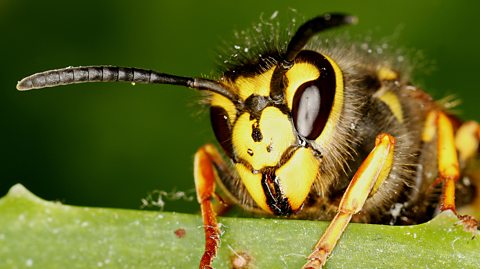
Known as Vespula vulgaris, the common wasp has a black and yellow striped body, with an obvious 'waist' and a characteristic black marking on its face.
Vespula vulgaris is a social wasp, meaning it lives as part of a colony as opposed to on its own.
2. What do wasps do?
Aside from ruin a picnic or barbecue?
Well, despite their standing in public opinion as a picnic pariah, wasps are actually a very important part of our ecosystem.
Social wasps are predators, so play an important role in controlling the number of pests in our ecosystem. It means that without wasps we'd see a lot more greenflies and caterpillars crawling around in our gardens and crops.
Wasps are also important pollinators, transferring pollen as they buzz from flower to flower in search of nectar.
3. What do wasps eat?
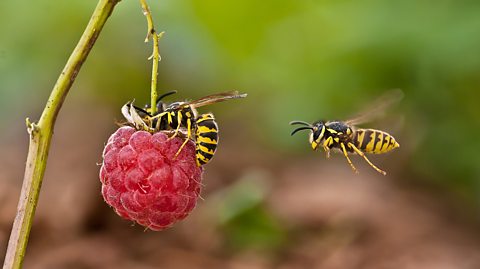
Adult wasps primarily feed on sugar, hence why you'll often see them hanging around a pub beer garden or picnic in search of a sugary drink. Adult wasps can derive this from nectar in flowers, or honeydew produced by aphids (a small, sap-sucking insect).
Young wasps, known as larvae, usually eat insects. These are sourced for them by adult wasps, who will capture and chop the insects up to bring home for their young.
The feeding frenzy isn't a one-way street, however, as wasp larvae also produce a sugary substance which can then be slurped up by the adult wasp as a source of food.
4. How long do wasps live for?
The lifespan of a wasp is usually related to the status it has in a colony. Queen wasps, responsible for laying eggs and leading the colony, usually live for up to a year, hibernating through the winter before emerging in the spring.
Worker wasps, responsible for maintaining the hive and finding food for larvae, mostly live for a few weeks. Drone wasps, who are born without stingers and help to produce a new queen, tend to live for between 15 and 25 days.
5. Why do wasps sting?
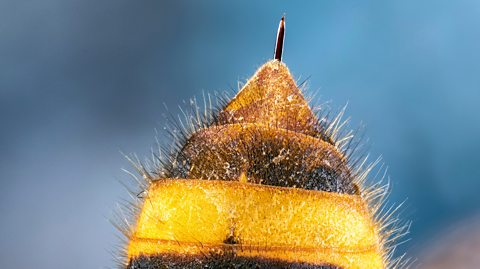
Wasps primarily use their stings as a way of defending themselves and their nest. Even if you don't mean to come across as scary or threatening, it might not always seem that way to a wasp.
For example, while flinging your arms about in a state of fear may seem a reasonable response to you, this might come across as an attack to a wasp, who could then decide to sting you in response.
Additionally, unlike honeybees, wasps do not lose their sting after an attack and will often release pheromones to get the attention of other wasps, which is why you might find a sudden swarm heading your way!
6. How can you get rid of a wasp?
A wasp's vision is primed to look for sharp, sudden movements and changes, so flailing your arms around wildly won't quite do the trick.
Equally, killing a wasp will release pheromones that attracts other wasps to that location, so a slightly softer approach is required.
The best course of action is to catch the wasp under a glass, and either move it outside or release it once you've packed up the picnic!
