 Image source, Burnley FC
Have you ever wondered what happens behind the scenes at a football club? Perhaps you’ve wanted to work at one but thought you’d need to be the biggest footie fan, or next big rising star to get a foot in the door. But did you know that away from the players and managers there are a whole host of jobs that contribute to achievements on the pitch?
BBC Bitesize sat down with three members of staff from Premier League club Burnley, to find out more about their jobs and how they all contribute to the running of a football club.

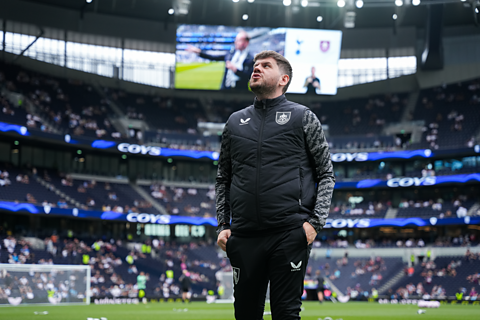 Image source, Burnley FC
'Probably 80% of the conversations I have are nothing to do with football'
Jack Tebbutt is currently the first team player care lead. His role is far removed from tactic boards and team-talks. He’s there to provide support to the players, and other staff, on the very varied issues that life can throw at them. From helping players with admin at home to sorting out flat tyres on the side of road, guiding them in times of grief, and assisting with matters around mental health. “For a lot of our lads, just having someone in the building and knowing they've got a safety blanket is a big thing for them,” he explains.
For him to have the most impact in his position, Jack says that the players' trust has to be earned. Especially when new signings arrive. That’s why he is always one of the first to greet any new players. But gaining that trust can be tricky. Being curious about people and why they might not be trusting is an important part of the role for Jack. “We, as people, judge people’s behaviour all the time. In fact, we should become more curious about their behaviours,” he believes.
'The manager knows that I'm giving the players support to make them thrive on the pitch, which only gives him an easier job'
Jack’s phone is on 24/7 and he makes himself available to players whatever the situation. He’s always there on match day too. He explains in the build up to kick-off some players just want “a normal conversation that detracts from the game and the tactical stuff’. Then, after ninety minutes he’s there to offer honesty and support but uses emotional intelligence to know what to say and when.
It’s this emotional intelligence that Jack says is one of the key skills if you want to work in player care. This could be noticing when a player looks out of sorts on the training ground, and explaining to the manager they are not just being lazy, but they have something going on at home. Or, it could involve interpreting a conversation a player has had with another member of staff. “Players are not invincible… they might make a lot of money, but they still have problems that money doesn’t take away,” he says.
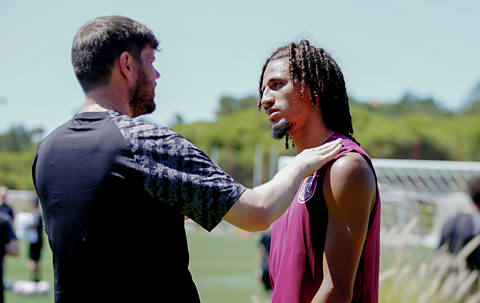 Image source, Burnley FC
'Everyone needs a champion in their life and if I can be that champion for some of them great'
Jack came into the role from a non-football background. He used to work in schools as a non-teaching member of staff, offering pastoral support. He says his biggest education came from “working with young people”.
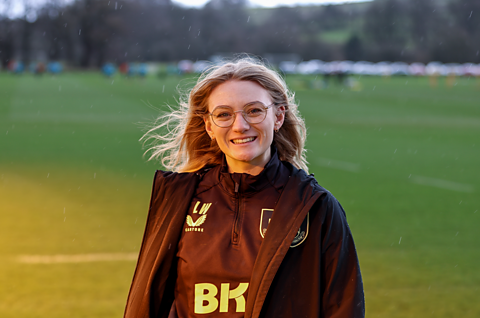 Image source, Burnley FC
As well as mental health, footballers need to make sure their physical health is also in good shape. A key part of this comes through nutrition.
Lauren Welch is the first team nutritionist at Burnley.
What is a nutritionist?
Lauren explains: “A nutritionist is someone who studies the science of food, and helps people improve their diet.” For her this means making sure players are eating the right things, in the right amounts, at the right time.
Lauren explains that it’s a varied job but with some levels of routine. Every morning she’ll chat to the chefs about the menu for breakfast and lunch, and also make the player’s drinks for training. That might sound simple but there is a science to it. “All the players have different drinks with electrolytes and carbs in them, depending on their individual needs,” she explains.
What do footballers eat?
Lauren tells us about the menu at Burnley. “We always have a chicken option. There’s also a fish option, because it’s high in omega three which helps with recovery. There’s a couple of carbohydrate options and vegetable.”
Lauren explains that at the club “we essentially control 60% of what they [players] eat”. But what about the other 40%? Well, Lauren is on hand to make suggestions to players, through plans and food diaries if needed. But she can’t be responsible for everything. “Footballers are just humans… they might just want to have a slice of their kid’s birthday cake,” she tells us.
She also tells us that when it comes to calories and energy, “it’s not as simple as calories in and calories out” and that it’s different for every player. “You can't just give everyone a big bowl of pasta,” she adds.
'You’ve got to be good at thinking on your feet and adapting'
For Lauren, success comes down to careful planning, and collaboration with both other departments at the club, and hotels if it’s an away game. She even has a document of over 30 pages to make sure hotels know exactly how things should be done in terms of food prep and menus.
This planning is especially important when considerations need to be made for players from different cultures or those who follow a particular faith. Lauren explains that during Ramadan (when some players have to fast during the day), if the team are staying in a hotel for an away game, the chefs will prepare large breakfast packs that can be consumed before sunrise.
Everything is geared toward making sure “the players’ minds are as free from concern as possible”, allowing them to perform to their best ability while also following religious practices.
The same close planning and preparation is equally true for the women’s team too, where Lauren previously worked. For example, monitoring the a sporting-specific health concern which can include loss of menstruation, osteoporosis and eating disorders is a key part of nutrition within the women’s game.
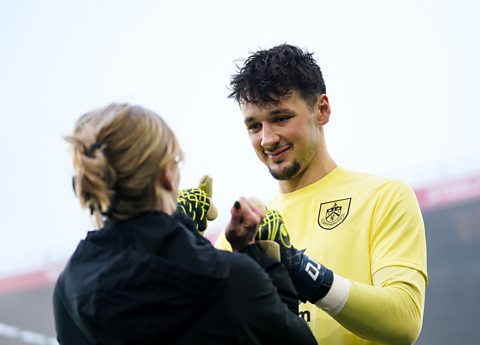 Image source, Burnley FC
'Nutrition can help unlock much hidden potential, whether that’s by building muscle, making you run faster, helping you recover or even sleeping better'
After all the preparation, comes match day. For Lauren things look a bit different compared to rest of the week. It’s about making sure “everyone is in the zone”. Lauren says, “Players can be creatures of habit and often do the same thing every match, I make sure everything runs smoothly so they can perform their best.”
Lauren says one of the best parts of the job is seeing players return from injury when they have worked hard during their rehab, describing it as “a lovely moment”. She does admit the job comes with “a lot of sacrifices” but being “committed to the project” makes the job much easier, and one she loves.
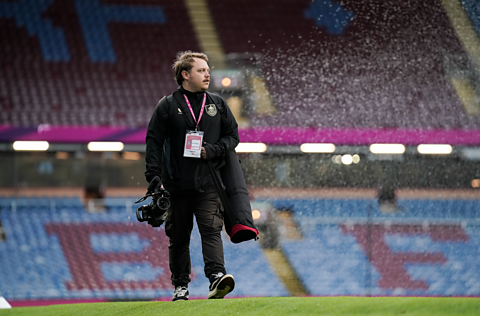 Image source, Burnley FC
One person who really gets the full 360 degree view of the football club is 26-year-old Sam Holmes. He is the club’s lead content producer. From kit reveals to post-match interviews, events in the community to star-studded appearances in the centre circle, in his words “if it moves then I’ve probably filmed it, and if it looks a bit snazzy I’ve probably edited it”.
'It is an honour, when you’re representing the club, you’re representing the town, the community'
A lifelong Burnley fan, Sam describes the job as “incredibly pressurised” but admits he’s learned to enjoy the pressure and sees it as a “privilege”. Equally he recognises the role allows him a “unique perspective" that other people don’t get to see.
'You can always tell which are the better actors, but sometimes it just adds to things when they are stiff as a board'
Perhaps one of the most unique perspectives comes when producing player announcement videos during transfer windows. From putting goalkeeper James Trafford ‘inside’ the world of Back to the Future, or parodying a Lionel Richie video to announce the arrival of defender Kyle Walker - for Sam player reveals have really become “a Burnley thing”.
In terms of exactly how they are produced, he keeps his cards close to his chest “to not give away the magic” but tells us there is a “committee” that meets to create ideas. The group all "absolutely love meme culture, television, cinema and pop culture too" meaning ideas are endless. Sam describes the approach as “a real team effort” and is thankful for being “trusted to be sensitive but encouraged to think outside the box, and really push the envelope.”
Having the idea is one thing, getting a player involved is another. Especially if they’ve just arrived after a six hour flight and then gone through all the physical performance tests. “The more you can make them feel at ease the more up for it they will be,” he says when asked for his top tip.
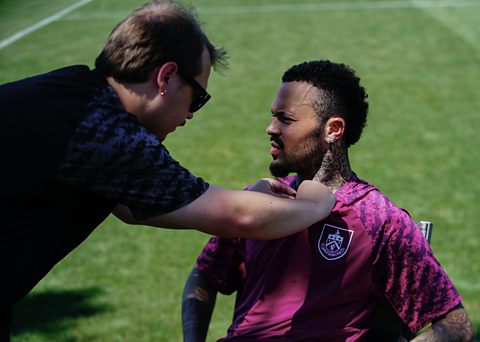 Image source, Burnley FC
'If you want something enough, you’ve got to work for it'
It could be easy for Sam to be swept away in all the excitement and exclusive access. However, he tells us that he keeps to a very simple rule. “Don’t get high with the highs, and don’t get low with the lows,” he says. In the world of football that certainly sounds easier said than done.
Season 2025/2026 is his fourth at The Clarets. He suggests being organised and disciplined are two key “building blocks” for allowing inspiration and creativity to flow. Following school he attended college, then university, before eventually securing an internship at the club. Though not at the first attempt. Two league promotions, one relegation, and multiple “pinch me” moments later, Sam admits the club has “firmly got into my bones”.
This article was published in October 2025
Five unbelievable pieces of football memorabilia
The napkin that launched Messi's career, Maradona's most expensive shirt - and more
How to become a football coach: Bryan's story
Are you interested in becoming a football coach? Meet Bryan and find out what he did to become the head of a football academy.