Green careers
With people all over the globe trying to work together to protect the planet, there has been an increased interest in green careers. We put your questions to four people working in green jobs to find out more about what they do day-to-day and why they enjoy their role. Take a look at these four different jobs below and decide which one might suit your interests.
Chelsea: fuel scientist
Likes working with people who care about making a difference.
Chelsea is a fuel scientist, working in the aviation industry to help make it greener. In her role, she helps to transition products from using conventional fossil fuels to sustainable ones, researching and testing new products in a laboratory.
Chelsea: I’m Chelsea and I work in the aviation industry.
What does a fuel scientist do?
Chelsea: In my job, the focus is to help transition our products from conventional fossil fuels that are more damaging and polluting to sustainable aviation fuel that has a lower emission output.
Why would you want to be a fuel scientist?
Chelsea: By doing this work, I'm slowly enabling us to move away from fossil-based fuels to fuels that are sustainable.
What would a typical day look like for you?
Chelsea: So a typical day here can be quite varied actually, so you never actually know what you'll be doing. At the moment I'm doing a lot of work on my computer. So I'm reading up about a lot of different sustainable aviation fuels but then this can lead to going down to the test rigs doing some testing and then this can also lead to actual laboratory testing of the fuels as well.
What would be the average salary?
Chelsea: Money isn't always what's most important. I think if you are comfortable in life and you are happy with what you do, then you've won you've succeeded. So yeah pay is comfortable here. And we also get a lot of other benefits as well so we can work from home if we need to so, I like to work from home two days a week and we also get a half day on Friday, which is brilliant.
Are there many different pathways into this job?
Chelsea: I think that this industry is very accepting of all educational backgrounds. So don't feel pressured to have to study something that you don't want to. If you are very interested in becoming a scientist or an engineer it would help if you study things like maths, physics, chemistry, anything analytical.
What are the perks of your job?
Chelsea: I'd say one of the biggest perks is sometimes maybe a couple of times a year. We do get the opportunity to actuallygo in see our customer aircraft last year. I got the opportunity to actually go inside of an aircraft's fuel tanks and seeing the aircraft up close and personal it blows your mind every time.
What's your favourite part of your job?
Chelsea: Honestly, my favourite part of the job is the people here so they really make it and we have a really great work environment.And I think that's really important. I work with a lot of people from all over Europe and they all have a lot of different experiences and different knowledge and it’s just really interesting. I think everyone's core values really resonate with mine as well. So everyone does really care about making a difference.
Why do you think it's important for me to get a green career?
Chelsea: Industries need to change but in order to change they need a lot of help and this help comes from new scientistsand new Engineers with fresh ideas. So it's a good idea to get a job in a green career in order to help progress these industries into the right direction. Having a green career is also fulfilling so you go home and you know that even though things might still seem slow and a long way off. You know that the work you have done that day is a small step towards progressing and Industry that does needto improve.
Want to find out more about green jobs and sustainable careers advice? Better go to Bitesize.
By doing this work, I’m slowly enabling us to move away from fossil based fuels to fuels that are sustainable.
Leke: engineering manager
Likes science, problem-solving and people.
Leke is an engineering manager. He works across several different teams, including project managers, engineers and city developers, working together to de-carbonise cities and find sustainable solutions for the future. He also liaises with Members of Parliament when discussing future developments. His role requires a lot of problem-solving as he develops new ways to use renewable energy.
Leke: My name is Leke Oluwole and I’m an engineering manager.
What does an engineering manager do?
Leke: My job allows me to work with incredible people, working with project managers, engineers, city developers, as well as cooperations such as the City Of London. We’re working together to decarbonise the city of London and ensure that we have sustainable solutions for the future.
What would a typical day at your job look like?
Leke: My typical day involves working with engineers, coming up with engineering solutions, dealing with customers and it also involves working with some interesting members of parliament to talk about what the future of decarbonisation would be.
How important is your job role right now?
Leke: Renewable energy comes from our surroundings. That could be from solar panels or from wind farms or even energy from the ground. What we need to do is use proven technology and move at scale. We need to increase our renewable capacity and reduce our dependence on gas. We need to do this now and we need to do this over the next decade to come.
Is it cheaper to make electricity renewable?
Leke: The good news is it is cheaper to make electricity from renewable sources, whether that's solar panels or from wind farms or from other renewable sources.
How is the work life balance in the field of sustainable engineering?
When we talk about work life balance, there’s an old adage that says if you love what you do, you’ll never work a day in your life. I’m passionate about my job and I’m passionate about making a difference in the world in terms of coming up with solutions and making sure we have a sustainable future. Yes, there are days that are very tough and yes, there are days that are very long but I enjoy the challenge of solving engineering problems and working with my colleagues to design solutions that'll help our city.
What is your motivation for this job and what excites you the most about it?
Leke: The favourite part of my job is that I get to work on engineering solutions that affects people's lives and has a positive impact.
What qualifications do you need for this job?
Leke: There are many pathways into sustainable engineering. There are apprenticeships or you can work your way up from a junior position within an organisation. There are traditional roots such as A Levels, a university degree or a postgraduate degree. That was actually my journey into sustainable engineering.
How will your job shape the future and how many opportunities will there be in this field for work?
Leke: The latest statistics show that there will be hundreds of thousands of jobs across all industries. The future is sustainable which means that every activity that we do, from how we grow food that we eat, travel, sustainable fuels, sustainable clothing and renewable energy. My company currently employs fifty thousand people across Europe, working on renewable energy projects that will shape our future.
How does it feel to earn money and know that you are doing good for the planet?
Leke: The pay in the green industry is rewarding. However, it’s more important to focus on your calling. For me, personally, I derive joy from solving engineering problems and that's what gets me out of bed every day and that's what I live for. That's why I want to be part of this industry. Because I believe I can make a difference.
Want to find out more about green jobs and sustainable careers advice, better go to bitesize.
I’m passionate about my job and about making a change in the world. The days are long and tough, but I enjoy the challenge of solving engineering problems and working with my colleagues to design solutions that help our city.
Fergal: sustainable events manager
Likes being sociable and in a role that focuses on sustainability.
Fergal is a sustainable events manager. He runs clothes-selling events throughout the year, promoting slow fashion. In the build-up to these events, he liaises with vendors and oversees marketing and social media planning. It’s a very varied role, which requires interacting with lots of different people.
Fergal: My name is Fergal and I am a sustainable events manager.
How do you convince people to not constantly change what they wear?
Fergal: So I think slow fashion is important in so many ways. You can’t get rid of fast fashion, it’s part of our world and it does help a lot of people, but slow fashion is more about how we use the clothes that we already have and I think that’s really important because we’ve lost a whole industry. I mean Manchester used to be the cotton-opolis of the UK. We’ve lost all those skills and I think getting those skills back is the main part of what we are trying to do but also it’s really good for slow fashion because it increases the longevity of each item that you have and that’s really important.
What qualifications do you need for this job?
Fergal: So for the fashion industry itself I don’t think you need qualifications to get into a career where I am. You can go and do careers in fashion at different universities. I started off, I did a fashion buying and merchandising course at Manchester Metropolitan. I then moved into merchandising but I wanted to become more of a sustainable person in myself and also in my career. That change took a while. It took about six to eight months to really get in and find the right job which is what am in now. After you’ve found it you just push and push and push and you can never give up.
What does a sustainable events manager do?
Fergal: So a sustainable events manager does various things. I do vender liaison, marketing planning, social media planning and then also looking to the future of our events. I run the fairs we hold around four times a year. They are basically a space where loads of vendors come to sell their clothes.
What does a typical day look like for you?
Fergal: So, a typical day outside the fair is planning other events. So, we’ve got a couple of other events coming up. Some in the centre of town and potentially a fashion show soon. Also setting up for the fair and doing a lot of content creation. It’s very broad so there’s lots of things you can do.
Is your job sociable?
Fergal: I think the best part of this job is meeting people. I’m a very social person so meeting people on the day, meeting the vendors beforehand…yeah, that’s my favourite part of the job.
How do you encourage people to get involved?
Fergal: In terms of the events we offer lots of opportunities for volunteers to come along. We partner well with universities and we offer as many people to come along and help out. It's a different role to the one I have but it helps people get a feel for what it's like within the fashion industry and you learn a lot from the people that are already here.
Could social media make slow fashion a reality?
Fergal: I think social media can really help slow fashion, just like it does with fast fashion. Although, there are more influencers that promote fast fashion. I think what we’re trying to do is become that in-between person that can bring in influencers that have huge followings, to produce slow fashion and help towards making a better future. Not just in Manchester, but in the whole UK.
Does the job pay well?
Fergal: So we have a lot of room to grow, I think that with the money side of things it will grow and grow because we don’t just want to do them within this venue we want to do them outside, we’ve had opportunities already coming from outside of the fair and we want to move down to all sorts of places across the UK. Basically, promote slow fashion in every community that we can.
Want to find out more about green jobs and sustainable careers advice, better go to bitesize!
We can’t get rid of fast fashion but slow fashion is important in many ways. It’s about how you use the clothes you already have.
Sireesha: conservation project manager
Likes animals, biology and being outside.
Sireesha is a conservation project manager. She works with a team of specialists and scientists who are trying to understand species and habitats through their work. Her role is to manage the resources for the project. Her role can often require working outdoors, for example in fields and forests, conducting surveys, and returning to the office to analyse the data that’s been collected.
Sireesha: I’m Sireesha and I’m a conservation project manager.
I’ve never heard about this job, how did you find out about it?
Sireesha: Well I got into conservation because of my love for animals, biology, just for wider nature. I just let my instinct and my passion drive me in the field and that's why I ended up in the sector.
What’s your favourite part about working in conservation?
Sireesha: So, going to bed knowing that I’ve made a difference despite the pressures our environment is facing. I can just watch nature thrive and survive.
What does a project manager in conservation do?
Sireesha: So a project manager is somebody who manages the resources for a particular project to get completed. In conservation, I work with a team of specialists and scientists who are building a policy to help understand species and habitats and what their favourable conservation status.
What is your greatest work accomplishment?
Sireesha: My personal best was when I contributed to projects that successfully reintroduced previously extinct or endangered animals into the wild, such as the Eurasian Beaver and white tailed eagle.
Do you need to go to uni to get this job?
Sireesha: So, if you go to university you will learn a deeper understanding of how biological processes affect environmental conservation. We also need all kinds of people from different different areas of work so we need accountants, lawyers, data analyst, scientists, we need everyone in this field.
What are the dangers of your job?
Sireesha: So we do visit some remote areas but as long as the health and safety is managed it’s not a dangerous job and it’s accessible to everybody. In-fact, conservation starts in your own backyard.
What are the different environments you get to work in?
Sireesha: So, whether you’re a fresh volunteer or a graduate of conservation sciences, it can take you anywhere. You’ll be working with land managers, you can work on a field, you can work in a forest environment conducting surveys and in some circumstances you come back to the office and I’ll do the mapping of the data I’ve collected or conduct any analysis of the work that you have collected as well.
What is the career progression on conservation like?
Sireesha: So there are various routes you can take if you want to progress in conservation. You can become land manager advisors, you can become researches you can also become conservation policy advisors and also wildlife photographers if you're into that.
How many hours do you work a week?
Sireesha: Right now I work thirty seven hours a week but it varies especially when you’re going on the field doing surveys or when you’re travelling in general.
How important is it, what you do for the future of the planet?
We are at the cusp of what scientists call 'The Sixth Mass Extinction' and combined with global warming and climate change it’s more imperative than ever to start conserving our natural environment and how it’s linked with all the natural resources we use.
Why is conservation so important to you?
Sireesha: Our purpose is to build partnerships on the ground so biodiversity, nature, species, thrive and survive. It not only promotes and enhances bio-diversity but then also makes it accessible for people everywhere.
Want to find out more about green jobs and sustainable careers advice, better go to Bitesize!
We are at the cusp of what scientists call a sixth mass extinction. Combined with global warming and climate change, it’s more imperative than ever to start conserving our natural environment.
For more information on green careers, visit Green Careers Week
Where next?
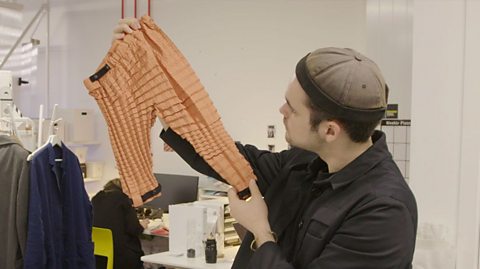
How origami inspired my sustainable fashion business. video
Find out why Ryan switched aeronautical engineering for running his own wearable technology company.
Liberty: conservation trainee
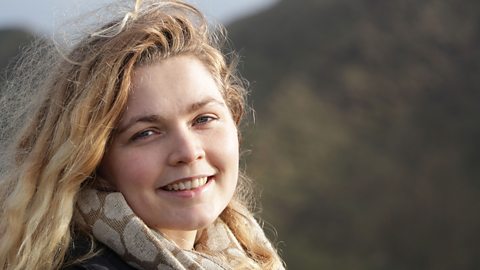
Liberty is a conservation trainee with the Yorkshire Wildlife Trust.
Karina: co-founder of a green business. video
Karina owns a sustainable drinks company that tackles food and plastic waste.