The afro comb has a long history which brings many claims, especially on social media with people asking the question where did it come from and who invented it.
It has been associated with everything from the civil rights movement to popular culture and celebs. Many people believe it was invented in the US in the 70s but that’s far from the truth.
BBC Bitesize Other Side of the Story spoke to Professor Carol Tulloch of University of Arts London - an expert in fashion, textiles and cultural heritage about the origins and history of the afro.
What is an afro comb ?
The afro comb is a styling tool designed to help give afro hair more volume and provide ease when detangling it, and also curly hair - with long teeth and wider spaces, it was also useful to white people with curls.
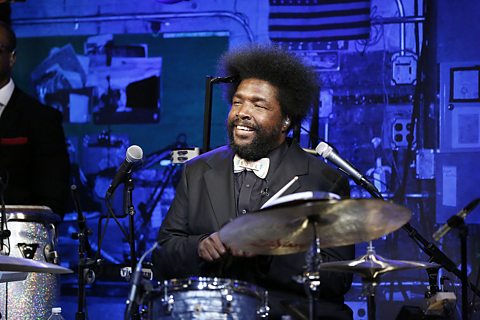
Celebrities like actress Lupita Nyong’o and The Roots drummer QuestLove have expressed their love for the afro comb and shared its cultural significance.
Common claims and beliefs
Lots of people on socials believe that it was invented in the US in the 1970s by American hairstylist and entrepreneur Willie Lee Morrow. However, the barber was not the sole inventor, but he did help popularise the comb in the 60s and 70s.
Actually, afro combs have been around for more than 6,000 years with its history tracing back to ancient Egypt according to The Fitzwilliam Museum, part of the University of Cambridge.
Some believe that in many African societies the comb served as a status symbol - the handles of the comb would reveal the person’s status, tribe and religious beliefs.
On X, one post gained 10K views claiming that an afro comb from Benin was used to document past events and the lives of people in the royal courts.
Why is the afro comb so significant?
Prof Tulloch shared that: “The afro comb emerged with the Black Power Movement and the Civil Rights Movement during the emergence of the afro. The movement was a symbol of Black Pride against prejudice.”
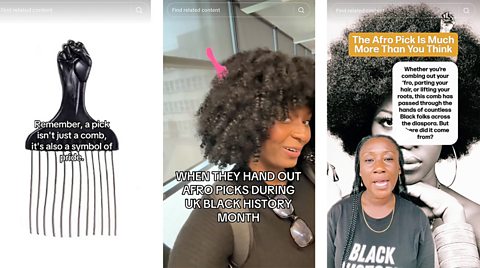
In the 1960s, the Black is Beautiful movement celebrated black identity and culture - empowering black men and women. The afro comb featuring a fist in its design became a sign of allegiance to the Black Power movement and sparked a change in popular culture, with more African Americans demanding more roles and realistic portrayals of black people.
The styling tool remains a huge part of Black culture and on social media many people have shared posts about it, with more than 15K posts using #afropick on Instagram alone.
History behind the afro comb
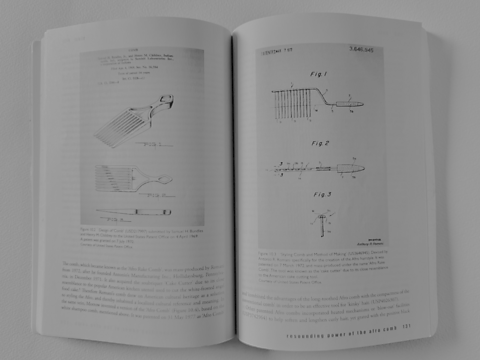
The afro comb has a rich and fascinating history – even dating back to Egyptian times. There are many variations of the comb itself, with some designs going back 6,000 years. The first afro comb patented (which is a right to an invention) was actually by two African Americans; Samuel H. Bundles Jr and Henry M Childrey in 1969.
Prof Tulloch explained: “In 1972, Antonio Romani patented the Afro Rake Comb, specifically designed for the afro hairstyle. The tool was known as “The Cake Cutter", due to its close resemblance to the utensil used to cut angel food cake[a type of light sponge].
"Romani’s comb drew on American cultural heritage as a solution to styling the afro, so it was really a mix of African combs as well as American tools.”
In later years, after being inspired by a African comb he received as a gift from a friend, Willie Morrow created his own version in 1977, hoping to popularise it in the western world.
This is an example of how misinformation can spread quickly on social media, though it was not intentional - it does not share the full story.
Both Bundles Jr, Childrey and Romani had a part to play in the development of the afro comb in the US before Morrow, however he is the figure referenced on social media. The others involved may not have got as much publicity as him, regardless of their role in cultural history.
This article was published in October 2025

Not sure if the news you’re seeing on social media is true or false? Can you always tell if the things you see online are real or fake? Learn how to get the other side of the story with our quizzes, videos and explainers.
Understanding afro hair: Myths, truths and why it matters
The most common myths and misinformation about afro hair spread online

Does cracking your knuckles lead to arthritis in later life?
Dr Chris and Dr Xand on the claim many of us hear as we are growing up