While scrolling through social media, you may have seen friends and family appearing as caricatures. It’s part of a new trend where people are using the generative artificial intelligence (AI) tool ChatGPT to reimagine themselves as exaggerated cartoon images.
The images also show items related to the jobs people do and in some cases their hobbies. The trend took off on several apps in the first week of February.
It’s not the first time an AI trend like this has gone viral online. In spring 2025, people were turning themselves into Barbie-like dolls and transforming their photos into Studio Ghibli-inspired scenes.
BBC Bitesize Other Side of the Story has taken a look behind the images you’ve seen online.
How does the ChatGPT caricature trend work?
People are creating the images by uploading a picture of themselves to ChatGPT, along with a written prompt explaining how they want the final picture to look.
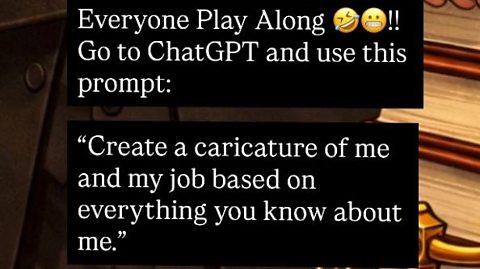
Users ask for a caricature of themselves and their job “based on everything you know about me”. This works best for people who use ChatGPT a lot, and not first-time users.
Why has the ChatGPT caricature trend taken off?
Trends like this can go viral quickly when it’s something that excites us and looks easy and fun to do. People have been enjoying sharing what they look like in cartoon form, which in turn prompts family and friends to do their own.
The photos include a caption encouraging others to “play along”, presenting it as a game. They also tell people exactly where they can create their caricature and how.
Although there doesn’t appear to be one distinct hashtag for the trend, making it hard to show exactly who’s been using it and where, “Chat GPT Caricature Trend” has become a trending search on TikTok.
The caricatures have also had cross-platform appeal, appearing on social media apps including TikTok, Instagram, Facebook, X and also careers networking platform LinkedIn.
The more interactions you make with content about a specific subject on social media, the more you’re likely to see it on your fyp. That’s because social media platforms like TikTok and Instagram use algorithms to suggest similar content to things that you’ve previously engaged with or shared with friends.
What are the concerns about the AI cartoon trend?
As with any AI-driven trend, there are some concerns over its use of data and energy. AI needs more powerful hardware than traditional computing tasks - and that also means more water for cooling.
While an image usually remains private to your account, the company may keep it on their servers and, in some cases, use it to improve their AI systems unless you change the settings.
Internet Matters, a UK-based not-for-profit organisation dedicated to helping parents keep kids safe online, says many AI services will allow you to delete chats or uploaded files and turn off the ability for them to use your data to train future models.
While creating AI caricatures can be fun, it says we need to remember that it involves sharing personal images with a digital system: “Before uploading, it’s worth checking privacy settings, understanding how the image may be stored, and thinking about whether you’d be comfortable with that photo being used in ways you can’t control later.”
Any stored data carries some risk of misuse or breach. Internet Matters says the biggest risk in AI trends like this isn’t what happens today - for young people it’s that their face becomes part of a digital system they can’t fully control in the future.
What do we need to think about before joining in with AI trends?
It's important to have fun and be entertained on your socials, but when a trend involves uploading a photo or other personal information, make sure you’re comfortable with how your data is likely to be used. Think critically about the images you’re seeing before joining in.
Jake Moore, Global Cybersecurity Advisor at ESET, says that when it comes to AI trends, it’s important to check what you’ve agreed to in return for “a few seconds of fun”.
He told Other Side of the Story: “It gains traction on social media and that’s what spreads it further but when you upload a photo and personal details to a chatbot the platform collects this information and it gets stored.
“Always look at the privacy and security settings in every app. You can turn off data sharing in the settings and you can also disable things that say things like it’ll be used to “improve the model”. Each chatbot will say something slightly different.
“Avoid uploading photos with family members or something sensitive in the background because it will scan that, it will analyse what’s in that image and add it to the file that is connected to you, so there is that trade off between fun and privacy.”
Jake believes we should also remain cautious in case those settings are changed in the future: “If the terms and conditions are changed many people will just click yes and agree. So it’s really about erring on the side of caution.”
AI trends - a safety checklist
Internet Matters says there are some important points to consider when jumping on an AI trend like this:
- Would you be happy if this image were to exist online forever?
- Does the image show a school uniform, location, or personal details?
- Is the account set to private or with training turned off?
This article was published in February 2026

Not sure if the news you’re seeing on social media is true or false? Can you always tell if the things you see online are real or fake? Learn how to get the other side of the story with our quizzes, videos and explainers.
Does AI own your images?
Exploring who owns AI images, the person in the image or the person or company who made it
Why are AI fruit and vegetables on TikTok telling us what to eat?
‘Yelling’ AI-generated foods are giving advice on everything from kitchen habits to personal hygiene