When do the clocks go back?
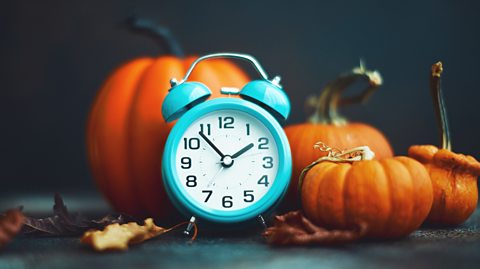
Clocks go back one hour on Sunday 25 October at 2am, marking the annual move from British Summer Time (BST) back to Greenwich Mean Time (GMT).
It’s a very old tradition, dating back to 1916, but over the years, and especially in recent times on social media, there have been numerous myths and rumours surrounding the reasons why.
Does it mean darker mornings? Is it only done in the UK? And what on earth does it have to do with Coldplay’s Chris Martin?
CLAIM 1: The clocks going back makes mornings darker
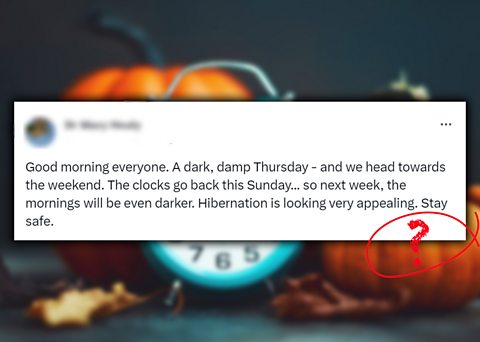
FALSE
It actually does the opposite! When the clocks go back we gain an ‘extra hour’, which maximises the amount of daylight we get, giving us brighter mornings. But this also means shorter days and earlier sunsets.
CLAIM 2: Daylight saving only happens in the UK
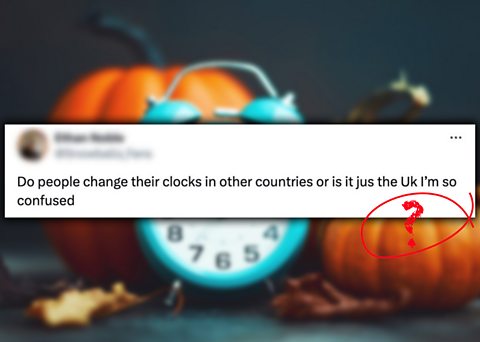
FALSE
Around 70 countries across the world change their clocks, mainly in Europe, most of North America, parts of South America and Australasia, all 27 EU countries, and the USA (though not in Hawaii and most of Arizona).
CLAIM 3: It was proposed by Chris Martin's great-great-grandfather
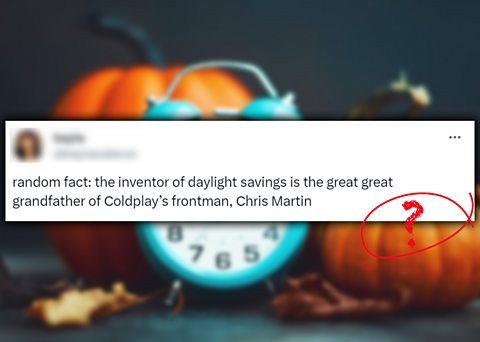
TRUE
In the UK, the first serious proposal about Daylight Saving Time came in 1907 from builder William Willett… who also happens to be the great-great-grandfather of Coldplay frontman Chris Martin!
CLAIM 4: We change our clocks because of farmers
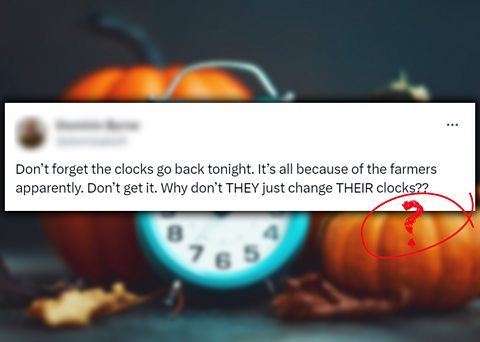

FALSE
While this is a widely spread idea about the reason for the clocks changing, it’s actually false.
William Willett put forward the suggestion of moving the clocks forward during summertime (before being returned to normal in the winter) as a way to avoid the waste of additional daylight in the evenings.
Daylight Savings Time was introduced in 1916, to give people who do most of their work outside as much sunlight as possible to work in.
The act was passed in British parliament (shortly after being passed in Germany) during World War One, as a way to conserve energy by taking advantage of the increased daylight.
When do the clocks go forward again?
In the UK, the clocks go forward one hour at 1am on the last Sunday of March. This means the clocks will go forward again at 1am on Sunday 28 March 2027, putting us back to British Summer Time (BST).
Find out more about BST - and bust some viral myths - with our explainer about when the clocks go forward.
This article was updated in September 2026.

Not sure if the news you’re seeing on social media is true or false? Can you always tell if the things you see online are real or fake?
Learn how to get the other side of the story with our quizzes, videos and explainers about media skills and viral trends including popular food myths.
The monthly AI or Real quiz: September 2026
Can you tell AI fashion from real in these iconic looks from the catwalk?

Claims about coffee and the facts behind them
Busting viral myths about your 'cuppa morning joe'...

Other Side of the Story
Back to our homepage for more quizzes and explainers about fake news, viral trends and media skills.