Why do we have bank holidays?
In the United Kingdom we love a good bank holiday! But have you ever stopped to think why they exist? And who created them in the first place?
Around the country, there are certain times of the year where many workers down tools and enjoy an extra day off. So let's delve into their history, how many we get a year, whether there's a chance we'll ever get more and, most importantly, which bank holidays are coming up in 2026!
Read on for all the answers to your bank holiday questions!
1. The history of bank holidays
Bank holidays came about thanks to - well, banks! Places like the Bank of England and other public offices would take a large number of holidays a year where they'd shut up shop to celebrate things like Christian festivals, saints' days and even royal events.
In fact, at one point, banks were taking around 40 days a year off! But nothing was standardised, and individual towns and cities around the country could all choose completely different days.
This became much more impractical as the Industrial Revolution rolled around. Different banks and factories closing on different days could cause all sorts of problems with things like paying people's wages and eventually bank holidays were cut down to just four a year - though they were still chosen by individual towns and cities, making everything a little bit chaotic.
But in 1871, a politician and banker named Sir John Lubbock came up with the Bank Holidays Act. What Lubbock's Bank Holidays Bill did was essentially make four official dates when all banks would close across Britain. Instead of different towns picking their own days off, everyone now had the same day, causing a lot less financial problems for manufacturing companies and other businesses.
People were so grateful to Sir John that some of the first official bank holidays were actually referred to as St Lubbock’s Days for a while!
2. How did more bank holidays get added?
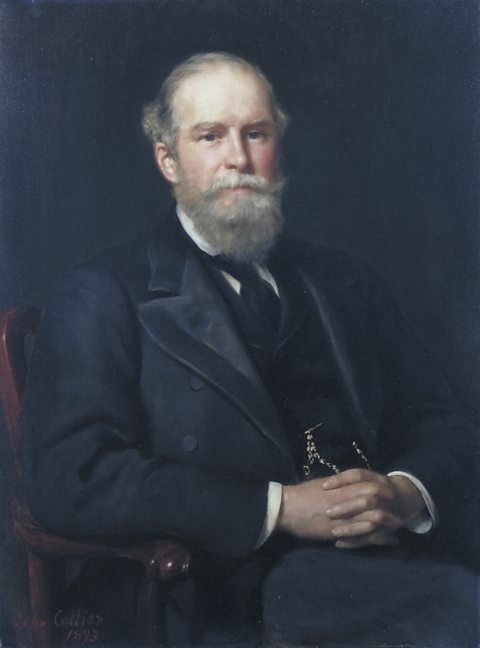
Sir John made sure that four dates were made official bank holidays on his 1871 Bank Holiday Act.
These were: Easter Monday, the first Monday in August, the 26th December (Boxing Day), and Whit Monday (England, Wales and Northern Ireland). For Scotland the dates were New Year's Day, Good Friday, the first Monday in May, the first Monday in August, and Christmas Day.
In England, Wales and Northern Ireland, both Christmas Day and Good Friday were traditional days of rest and Christian worship (as were Sundays) and did not need to be included in the Act.
But this still seems a bit stingy, right?
Turns out, the public were in agreement. More than a century after Sir John's Act was passed, two more bank holidays were officially added to Britain's calendar. New Year’s Day has been proclaimed a bank holiday in England, Wales and Northern Ireland since 1974, as has the first Monday in May, known as May Day, since 1978.
Northern Ireland had St Patrick's Day (17 March) added by a special Act of Parliament in 1903 and 12 July (Anniversary ofthe Battle of the Boyne in 1690), by the Governor of Northern Ireland in 1926. For Scotland, 2 January was created an additional bank holiday in Scotland by the 1971 Banking and Financial Dealings Act.
3. So, how many bank holidays are there now?
There's an easy answer to this - which you might have already worked out from the information above.
In England and Wales there are eight bank holidays, Scotland has nine bank holidays and Northern Ireland has 10.
4. Will we ever get more bank holidays in the future?
Yes, there's a chance more holidays could be added…sort of!
Basically, it's happened before! In November 2021, the UK government announced that an additional bank holiday would be granted to celebrate the Queen’s Platinum Jubilee. This took place on 3 June 2022. Later that year, when she passed away, it was announced that the State Funeral would also be a bank holiday. This took place on 22 September 2022.
A bank holiday was also added in 2023, on 8 May, to mark the coronation of King Charles III.
Bank holidays have also been previously granted for the royal wedding in 2011 and the Queen’s Diamond Jubilee in 2012.
All of these bank holidays were one-off holidays though, and do not get added every year.

5. Do other countries have bank holidays
Yes, lots of other countries have bank holidays.
In fact, take a deep breath for this one, here in the UK, and particularly England and Wales, we almost have the least amount of public holidays in the world! Gutted.
Nepal has the most minimum number of bank holidays with a whopping 35. Sadly, Britain is fairly far down on the list, with only the United States and Vietnam (who both have the minimum of six), and the Netherlands (with a minimum of seven) below us. Yikes.
6. When is the next bank holiday?
Here are the bank holidays we have in 2026.
2026
- 1 January 2026 (New Year's Day)
- 2 January 2026 (Scotland only)
- 17 March 2026 (St Patrick's Day) (Northern Ireland only)
- 3 April (Good Friday)
- 6 April (Easter Monday) (England, Wales and Northern Ireland only)
- 4 May
- 25 May
- 13 July (Battle of the Boyne) (Northern Ireland only)
- 3 August (Scotland only)
- 31 August (England, Wales and Northern Ireland only)
- 30 November (St Andrew's Day) (Scotland only)
- 25 December (Christmas Day)
- 28 December (substitute day for Boxing Day as it falls on a weekend)
Want to know more about bank holidays and history?
Learn more about this history behind bank holidays with Bitesize. We've got plenty of fun articles for you to test your knowledge with!
