Meet Jake. He's a mental health nurse who responds to calls that have been made to 999. Part of our Bitesize world of work series.
Jake
My name’s Jake, I'm 29, I'm a mental health nurse working with North West Ambulance Service. If someone's experiencing a mentalhealth problem and they ring 999, I'll offer specialist help for them.
All the original call takers are in this room with me and they take the initial call. These are all the jobs, Category 3 and under, that we have in Lancashire at the moment. So when I come in, I'm looking for a mental health problem. I’ll open up that job to find out what the initial call was about and what's happening. It's everything from somebody who's low in mood, somebody who is anxious in certain situations, all the way to through to someone who's acutely psychotic. We have a conversation around what's been going on and how they could best be supported.
[Jake on the phone] "So you've got a history of anxiety and today you've got quite upset, quite emotional. Is that fair to say? Got quite angry, right. Do you get these feelings quite a lot?"
One of the main things we look for is risk and that's usually risk to themselves.
[Jake on the phone] "I think we need to get you seen this evening. Some of the things you're saying to me there, they're a bit concerning."
It's very rare that someone with mental health presentation is best treated in A&E and we have those links, that access to be able to get them treated in the right way for them.
[Jake on the phone] I"'d just like someone just to come and have that face-to-face conversation with you and offer support. It's not paramedics. It'll be a mental health nurse like me."
My mentality is to get patients help and if that, you know, if that can be done, alternative to ambulance, then it's a bonus.
[Jake on the phone] "All right, not a problem. No problem. Take care."
[Jake to his colleague] "You alright?"
[Jake's colleague] "How's it going tonight?"
[Jake] " Yeah, I've been really busy to be honest."
Jake's colleague
I love having the mental health team with us. They've got a fountain of knowledge and they perhaps know the patient that we've got on the telephone. It's absolutely vital that we have them.
Jake
Being around people and family members that have mental health problems, it made me want to learn more and want to do more, you know, and help people in similar situations. To do Mental Health Nursing at university, you need to have your Maths and English GCSEs. I did ICT at college and then worked for a bit in a pub. I took a leap really, went to university and really, really enjoyed it.
There's a lot of job satisfaction with being a mental health nurse. You get to be there for someone who hasn't necessarily had someone there. You get to help people cope with the stress and hopefully have an impact on their lives for the better.
There's a lot of job satisfaction with being a mental health nurse. You get to be there for someone who hasn't necessarily had someone there.
- Jake identifies 999 calls that have come in that trigger mental health concerns. He calls patients back to make sure they get access to the right services
- Calls are very varied and can include patients experiencing low mood, anxiety or psychosis
- Jake studied ICT at college, worked in a pub for a while and then went to university to do Mental Health Nursing
- He was inspired to do this career by seeing loved ones with mental health difficulties and wanting to know how to help others in similar situations.

What to expect if you want to be a nurse
- Nurse average salary: NHS bands 5-6. Read more about NHS bands. Salaries will differ in private healthcare.
- Nurse typical working hours: 37 to 42 hours per week
What qualifications do you need to be a nurse?
You can get into this role via a university course. You can do a degree in adult nursing approved by the Nursing & Midwifery Council. Some degree courses let you study another area of nursing alongside adult nursing. You may be able to join the second year of a nursing degree if you already have a degree in:
- a health-related subject
- psychology
- life sciences
- social work
Full-time courses usually take 3 years. You may be able to do a degree apprenticeship in nursing if you work in a healthcare setting like a hospital. The apprenticeship takes around 4 years and is a mix of academic study and on-the-job training.
Sources: National Careers Service, NHS Health Careers
This information is a guide and is constantly changing. Please check the National Careers Service website for the latest information and all the qualifications needed.
Find out more
For more information about careers in nursing, you can check out:
For careers advice in all parts of the UK visit: National Careers Service (England), nidirect (Northern Ireland), My World of Work (Scotland) and Careers Wales (Wales).
Work experience in your area
Find work experience placements with Workfinder.
Tips and advice
Help with interviews, writing a CV and all things work experience related.
How to become a nurse. collection
A collection of nurse job profiles and information about what the role entails.
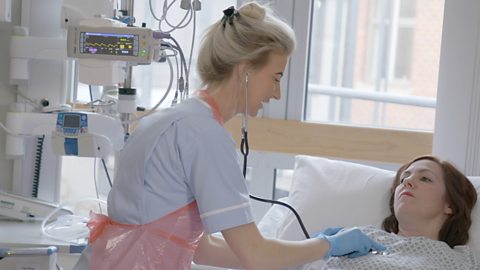
Job inspiration: Careers in healthcare and frontline services. collection
Hear from people working across the healthcare sector and in frontline services, including some roles you may not know existed!
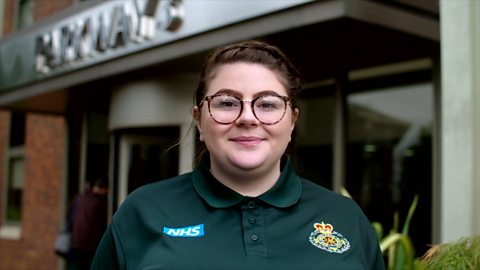
BBC One's Ambulance: Meet the real life heroes. collection
A collection of articles and stories from BBC One's series Ambulance.