Food allergies vs intolerances
A massive part of our day-to-day lives, health and culture, we all have foods we love - and others that we absolutely loathe. It is important to eat food that provides us with nutrients and energy, but often personal, social and economic factors can affect our food choices.
In other cases, people may be unable to eat certain foods or ingredients, whether that be due to an allergy or an intolerance. But what is the difference between a food allergy and food intolerance?
Here, BBC Bitesize takes a closer look at both, as well as their symptoms, which are the most common and advice. You can find out more below.

What is a food allergy?

You’ve likely heard food allergies before, know somebody who has one or be allergic to certain foods yourself. But what is the definition of a food allergy?
A food allergy is when your body, more specifically your immune system, overreacts to certain foods. There are many different foods that different people are allergic to that cause a reaction and it is not clear why this happens.
Some food allergies are mild for people – meaning symptoms can be more manageable and less severe. But for others, allergic reactions can be very serious and sometimes life-threatening.
What is a food intolerance?

When it comes to food intolerances – like food allergies - you’ve likely heard of different types, may have one yourself or know somebody who does. But what is the definition of a food intolerance and how is it different to a food allergy?
To start, a food intolerance is not caused by the immune system. A food intolerance is when a person finds a certain food or ingredient difficult to digest.
Food intolerances are not usually serious and unlike an allergy, is not life-threatening. However, they do cause symptoms and you can feel unwell if you eat the food you’re intolerant to.
What symptoms are associated with food allergies?

A food allergy and its symptoms are not the same for every individual. Symptoms can affect any part of the body, or multiple parts at the same time.
In some cases, you may immediately get symptoms straight after eating the food you’re allergic to. Whereas for others, symptoms may come days later.
According to the NHS, there are several common symptoms of a food allergy. These can include feeling dizzy or lightheaded, itchy skin or a raised rash – known as hives, swelling of the lips, face and eyes – known as angioedema, and the likes of coughing, wheezing, breathlessness, noisy breathing or a hoarse voice.
Other common symptoms can be sneezing or an itchy, runny or blocked nose, feeling sick or being sick, tummy pain or diarrhoea. The term allergen means something that can cause a response in the immune system, which can result in an allergic reaction.
Food allergies are very serious and if only a small amount of the food is eaten, the body’s reaction to the allergen can mean it can go into anaphylactic shock. This is an extreme allergic reaction which can be life-threatening and can cause the mouth and throat to swell, blocking the airway and increasing the risk of suffocation.
Food allergies can be worrying and often scary – but there are different steps you can take to manage them, as well as suitable treatments and advice provided by doctors and medical professionals.
What symptoms are associated with food intolerances?

Similarly to a food allergy, food intolerances are different for everyone and can cause different symptoms or multiple symptoms at the same time. Food intolerance symptoms usually occur a few hours after the person has eaten the food or ingredient they are intolerant to and symptoms could last for a few hours, into the next day or longer.
More common than a food allergy, food intolerances can make a person feel unwell and usually cause symptoms such as bloating or stomach pain. According to the NHS, other common symptoms include diarrhoea or excess gas.
But, there are also other symptoms that many with food intolerances can experience. This may include feeling tired or exhausted, having a headache, constipation, feeling sick, joint pain or rashes.
Like food allergies, food intolerances can also be worrying and cause concern – but there are different steps you can take to manage them, as well as advice provided by doctors and medical professionals.
What are the most common food allergies?
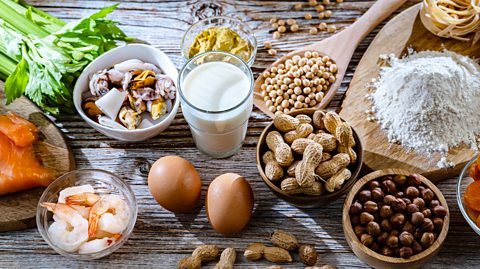
People can be allergic to any type of food or ingredient – but there are some which are more common than others. According to the NHS, you have a “slightly higher chance” of getting a food allergy if “you or a close family member have other allergies, asthma or eczema.”
Asthma is a very common condition which affects the bronchioles, which are small tubes that carry air into and out of the lungs. Eczema is a common skin condition which can cause skin to become dry, itchy, sore, cracked or blistered.
One of the most common allergic foods are nuts – whether that be peanuts or different types of tree nuts like walnuts, almonds, pistachios, Brazil nuts and more. A severe reaction to nuts is called anaphylaxis and symptoms can often occur very quickly after coming into contact with them.
Another common food people are allergic to is egg. This is common especially in children; however, some can grow out of it – and the allergy can be to all forms of eggs, whether that be baked or well cooked, lightly cooked or raw eggs.
The NHS state that other common allergic foods include fish – in particular shellfish like prawns, crab and lobster, wheat, cows’ milk and soybeans, peas and chickpeas.
What are the most common food intolerances?

The most common food intolerance is lactose intolerance – which means when your body has an adverse reaction to cow’s milk. This results in your body being unable to digest lactose, which is a type of sugar mainly found in milk or other dairy products.
Some also suffer from the adverse reaction because they cannot tolerate the protein component of milk. But, a person can be intolerant to any food or ingredient and there are a number we could mention.
Many people have a gluten intolerance, meaning they are unable to digest wheat, rye or barley found in foods like bread and pasta. Others have an intolerance of caffeine which can be found in coffee, tea or certain fizzy drinks or sulphites which are found in cider, beer or wine.
Advice for people with food allergies and/or food intolerances

There is a lot of dietary and lifestyle advice for people with food allergies or food intolerances. A big and often obvious piece of advice is to avoid the food you are allergic to or intolerant to and to check pre-packed food or drink labels to ensure that ingredient is not included.
It is also important to let people around you be aware of your dietary requirements too, whether that be a member of staff at a restaurant, cabin staff on an aeroplane or a friend who is hosting guests. If you have a food allergy, doctors and medical professionals will provide medicines to help manage symptoms or in case of an emergency.
For more severe allergic reactions, people use emergency medicines known as adrenaline auto-injectors, such as EpiPens. There are also different tests carried out by specialists to determine if you have a food allergy.
It is always important to talk to a GP or medical professional about any symptoms or concerns you may have for allergies or intolerances.
Visit the NHS website to find out more about about food allergies and intolerances. Here at BBC Bitesize, we also have more information on food allergies and intolerances to educate and help you with your studies.
This article was written in December 2025
