
Pizza is a popular topic on social media - in fact there are more than 77 million Instagram posts with the hashtag #pizza.
It's also a firm favourite in the UK, with the most recent report from market research group Mintel revealing that 65% of Britons either dined in or ordered takeaway pizza in the previous year.
Some restaurant chains have struggled. Pizza Hut recently announced they are set to close 68 restaurants in the UK.
But how much do we really know about this fast-food favourite?
Was Hawaiian pizza really invented in Hawaii? Did pizza originate in America? And, is pepperoni an Italian topping?
CLAIM: Hawaiian pizza comes from Hawaii
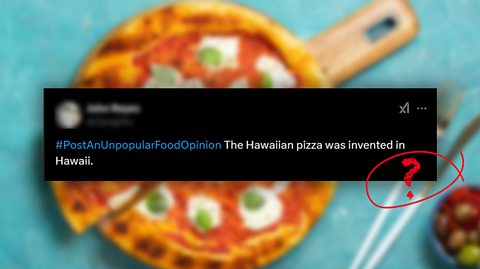
It's a myth!
Pineapple on pizza is a controversial topic that's hotly debated. It is however, one of the main ingredients on a ‘Hawaiian pizza'. The pizza – which tends to split opinion among foodies – usually consists of cooked ham or bacon, pineapple and cheese on a tomato sauce base. But where was it invented?
Hawaiian pizza most likely wasn’t invented in Hawaii – but instead, the popular version we know today is believed to have originated in Canada.
Back in the mid-1950s, the term ‘Hawaiian’ was used to describe pizzas topped with fruit, however the pineapple version became popular after Greek immigrant Sam Panopoulos and his brothers started serving it in 1962 at their restaurant in Ontario.
The brothers first added pizza to their restaurant's menu following a trip to Naples and, according to a BBC interview with Panopoulos, as he became increasingly adventurous with the dish, the restauranteur decided to add pineapple to a pizza with ham. It proved a success with customers and became known as a Hawaiian after the brand of tinned pineapple that was used.
CLAIM: Pizza originated in America
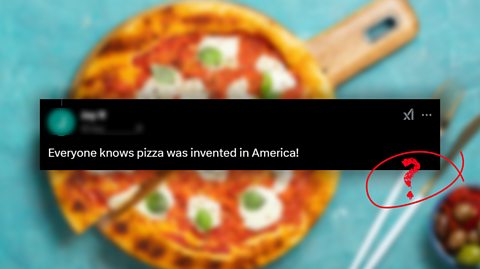
It's a myth!
While the US has given us some classic variations on pizza, such as the New York, Chicago and Detroit, the origins of the dish stretch much further afield.
Flatbreads, which are often considered a forerunner to pizza, have been around for thousands of years in the Middle East. In Ancient Greece, flatbreads known as plakous were baked in mud ovens and often topped with oil, spices, garlic and cheese - similar to modern focaccia bread.
When residents from Greece settled in a new city called Parthenope – in the area now known as Naples - they brought their recipes with them, and the word pizza was first documented in 997 AD in Gaeta, a city just north of the region. In the late 18th century the idea of takeaway pizza was popularised by street vendors in Naples who sold pizzas with simple toppings such as garlic and lard.
The popularity of pizza around the globe is credited to a number of factors, including the migration of 26 million Italians who left Italy in search of work in countries throughout Europe and in the US between 1870 and 1970. North-east America saw a huge number of pizzerias opening in the 1970s – almost half of which were operated by Greek Americans.
The end of the second world war is also often seen as a factor because of the return of Allied forces who served in wartime Italy, however, this is disputed by others who say pizza would have been in short supply in Italy at this time.
CLAIM: Pepperoni comes from Italy
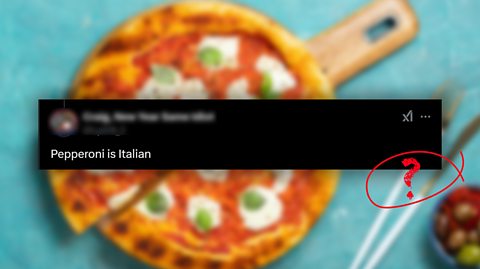
It's a myth!
According to Britannica - pepperoni is believed to have been invented by Italians who came to the United States in the early 20th century. The sausage was created by adding paprika and chilli-based spices to dry salami, with the spices giving pepperoni its distinctive red colour.
In Italy, finding ‘pepperoni’ on a pizza is rare. Instead they serve up a ‘Diavola’ pizza which comes topped with spicy salami - this pizza is also popular in other parts of the world. The word ‘peperoni’ in Italian (pepperoni without the extra p) actually means bell pepper, so be careful you know what you're ordering if you're on holiday in Italy!
When reading comments and seeing posts online, it's worth using multiple sources to check any facts or opinions for bias and when it comes to food and drink, make sure that you also consider nutrition and health advice from professionals and trusted sources. It's also worth making sure you double check the source. Using a reliable source can help you decide whether or not a post or comment is true.
This article was updated in October 2025

Claims about coffee and the facts behind them
Busting viral myths about your 'cuppa morning joe'...


Other Side of the Story
Back to our homepage for more quizzes and explainers about fake news, viral trends and media skills.