Who were the Tudors?
The Tudors were a royal family reigning in Britain between 1485 and1603. Their names and the order in which they reigned:
- Henry VII – 1485-1509
- Henry VIII – 1509-1547
- Edward VI – 1547-1553
- Mary I – 1553-1558
- Elizabeth I – 1558-1603
Did you know?
Lady Jane Grey reigned for nine days in 1553. Jane was a great-granddaughter of Henry VII through his youngest daughter, Mary. Edward VI chose Jane to be queen after he died because he didn't want his half-sister, Mary, to reign because she was Catholic. However, Mary became queen and Jane was executed. Not everyone considers Lady Jane Gray to be one of the Tudors.
Wars of the Roses
Before Henry Tudor became king he had to win the crown from King Richard III. He succeeded in doing this in the Battle of Bosworth Field in 1485 at the end of a bloody civil war called the Wars of the Roses.
The Wars of the Roses were a war between two families – the House of Lancaster (Henry Tudor) and the House of York (Richard III). The reason they were fighting was that both families wanted the crown.
But where did the name for the war come from?
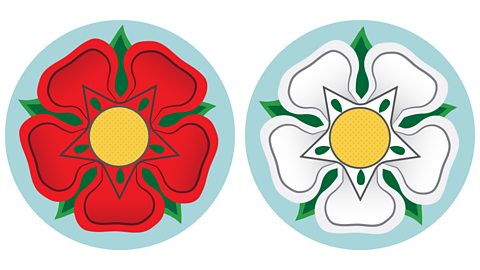
The House of Lancaster was represented by the sign of red rose. The House of York was represented by a white rose.
Battle of Bosworth Field (1485)
During the Battle of Bosworth Field, Henry was able to defeat Richard III with help from Welsh soldiers.
Henry Tudor had friends from all over Wales – after all, he was born at Pembroke Castle and grew up in Raglan. Her grandfather Owen Tudor was from Penmynydd on Anglesey.
After winning the crown, Henry Tudor became king of England. And the civil war – the Wars of the Roses – ended after 30 years.
Henry Tudor married, or Henry VII as he was known, Elizabeth. Henry belonged to the House of Lancaster and Elizabeth belonged to the House of York. By getting married, Henry successfully joined both sides, and ensured that he kept the crown on his head.
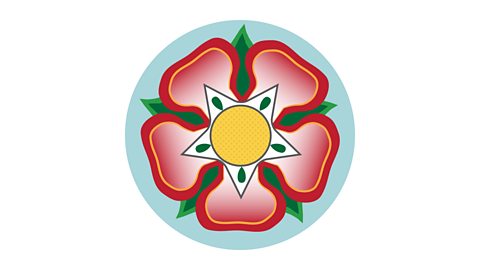
To show this important unity, Henry added five white petals to the centre of a red rose to create a brand-new sign. This rose was called a Tudor Rose.
Video – The Tudors
PRESENTER 1:
Hi, History Hunters, what's out there for us to explore today?
I've come across these. I picked them from the garden this morning.
But they're more than just beautiful flowers.
They represent the two different sides that fought the War of the Roses in the 15th century.
The red rose represents the House of Lancaster and the white rose the House of York.
When Henry Tudor, who represented the House of Lancaster, married Elizabeth of York, he united both sides and made sure he kept his new crown on his head.
He was now King Henry VII.
Henry added five white petals in the middle of a red rose to make a brand new emblem which he called the Tudor Rose.
Clever, eh?
Let's go back in time to discover more about the Tudor dynasty and what it was like to live under their reign. Let's go!
PRESENTER 2: Did you know that the Tudors were a royal family who reigned from 1485 to 1603?
That's a total of 118 years!
But before becoming king, Henry Tudor had to win the crown from Richard III.
He did this at the Battle of Bosworth, in 1485.
It was at the end of a bloody civil war called the War of the Roses, which was a rivalry for the crown between the two houses of Lancaster and York.
And that was not easy at all because Richard III's army was three times the size of Henry's!
We now know that Richard met a pretty grisly end because they recently found his body buried under a car park!
The theory is that a Welsh halberdier killed the king with one of these, a halberd.
Oh, dear!
HENRY TUDOR: You have no idea how hard it was for me to become king.
I mean, that Richard the III was a real menace!
But I managed to finish him off with the help of all the Welsh soldiers that joined me on the way to the battle!
PRESENTER 2: A Welsh poet called Guto'r Glyn wrote a poem soon after the battle.
And, in the poem, he says that the Welsh soldier that killed Richard III was called Rhys ap Thomas, a landowner from Carmarthenshire who led a large army of Welshmen to Bosworth.
Well, Rhys must have done something to impress Henry, as he was knighted then and there on the battlefield.
HENRY TUDOR: I had friends from all over.
After all, I was born in Pembroke Castle and was brought up in Raglan.
And my grandfather, Owain Tudur, was from Penmynydd in Anglesey.
After I sailed from France, where I was exiled and landed in Pembrokeshire.
The trek to Bosworth was a long way for us all and we were pretty tired, but we succeeded in the end!
PRESENTER 1: Once he had won the battle, Henry Tudor became king and ended the war which had been raging on for over 30 years.
Nice one, Henry!
Life was quite different back then, especially for children.
In Wales, most Welsh people lived in the countryside in longhouses like these.
Guess who lived at one end? The animals. It must've been so smelly!
Chores were much harder too. There was no running water for a start.
They had to fetch water from a nearby river!
It was such a pain that they didn’t bother having a bath very often.
They thought too many baths were bad for you anyway!
There were no toilets either, so they just poured buckets of waste away outside the house.
Oh no! That doesn't sound very nice at all!
PRESENTER 3: The Tudors changed the home completely with something quite important – wait for it – the chimney!
I know – it doesn't sound very groundbreaking, does it?
But when they introduced the chimney into the everyday home, it made life a lot more pleasant and most importantly, for the first time, ordinary houses could have an upstairs!
That meant that some people who could afford it, could have more private living space upstairs and not live on top of one another on the ground floor.
It must have been amazing to have all that extra space for the first time!
PRESENTER 4: The early Tudor period was also called the Age of Discovery because people started navigating the seven seas and exploring the world by boat.
Tudor seafarers brought back all sorts of exotic food from their adventures, including the orange.
There was no word for the colour of one of these until the Tudor period!
They just described it as somewhere between yellow and red! How bizarre!
PRESENTER 2: One food that was brought back from expeditions and changed everything during the Tudor period was sugar.
Before, they had used honey to sweeten things, but processed sugar was called the new "white gold."
The production of sugar was bad news, both for the people across the world who had to make it and in the end, for the people who ate it.
It was only the rich who could afford to buy sugar.
It became so fashionable people started painting their teeth black to pretend they could afford it.
Sugar was so bad for them, because the Tudors didn't brush their teeth.
They used sticks and sometimes cloths to try and clean them.
But obviously not very well.
PRESENTER 1: Having bad teeth could be really dangerous in this period.
It could even kill you!
One person who really enjoyed sugar was Henry VII's son, Henry VIII.
HENRY VIII: Hello, I'm Henry VIII.
As king, I get to eat what I want, whenever I want.
And I have parties where the party food is made from sugar to look like normal foods, even pieces of bacon!
I mean, my breeches don't fit anymore and my jerkin is a bit tight.
But who cares?!
I can get new ones made with all the fabrics that have arrived on my galleon ship.
Now where's my wife? Anne? No, she lost her head. The other one.
PRESENTER 3: Henry VIII had a big appetite in general and he was pretty greedy when it came to having wives as well.
He had six in total and decided to execute two of them to make way for the others.
Yikes.
PRESENTER 2: Twenty years into his reign, Henry VIII turned his attention to Wales.
In 1536, he introduced new rules that made Wales part of the kingdom of England.
These rules were called the Act of Union.
They brought in English systems of government and laws to Wales and banned the use of the Welsh language in those systems, which was not very fair on people who could only speak Welsh!
The gentry didn't seem to mind though, because it gave them more power.
Basically, Henry did as he pleased.
But, along with destroying the monasteries in Wales, which got rid of the monks, whose job it was to write things down, he had a big impact on the future of Welsh language and culture.
PRESENTER 1: Religion was very important in Tudor times. Everyone had to go to church.
And it was a good idea to go to the same sort of church that your King or Queen did - either the Protestant Church or Catholic Church.
If you got it wrong, you could get arrested, thrown in prison, and even executed!
Queen Mary I got a bad reputation for punishing people for their religion and so she became known as Bloody Mary.
PRESENTER 3: In Wales, most people spoke Welsh, and very little English.
Only educated people spoke Latin, and most people couldn't read at all.
So it must have been pretty hard to follow Catholic services, because they were all held in Latin.
PRESENTER 2: Did you know that printing was invented just before the Tudor period?
So printed books were a new and very exciting thing.
It took almost a century to print the first Welsh language book though.
In 1546, John Price of Brecon printed this book:
Yny lhyvyr hwnn – In This Book.
Not the best title, is it really?
But printing this book paved the way for some other very influential books.
PRESENTER 1: They say that Queen Elizabeth I, the last Tudor Queen, could speak Welsh.
She thought it would be a great idea if the Welsh people could practise their religion in their own language.
Elizabeth decided that the Welsh should have their own prayer book and even allowed the Bible to be translated into Welsh, which could then be read out in services.
Two Williams got to it.
William Salesbury translated the Book of Common Prayer and the New Testament by 1567.
But William Morgan had a much bigger task.
He finished the whole Welsh Bible in 1588.
WILLIAM MORGAN: I am William Morgan.Yes, it has taken me some years to translate the Bible.
But it was quite difficult.
There are no real dictionaries, you see.
I wasn't sure how to spell a lot of words.
I am Will—
No, I've done that bit already.
PRESENTER 1: This was a huge U-turn for the status of the Welsh language, which had been banned from official use in 1536 and it could be the reason why the language has survived.
Thanks, Liz!
It's such a shame she was the last one of the Tudors.
She left no heir to the throne and had no-one to give her crown to.
No-one was sure who would rule after her death.
ELIZABETH I: I have been far too busy to marry someone and have children.
First of all, who would I choose? There are far too many options!
And secondly, ruling a country, fighting things like the Spanish Armada— when would I have time to have a baby and produce an heir?
Anyway, it's pretty dangerous to have children in this day and age.
No, far safer for me to be single and free!
PRESENTER 2: Someone who had a very different view on having a family was Katheryn of Berain.
She was a very influential Welsh courtier and one of Elizabeth's trusted friends. Katheryn was very keen on husbands.
She had four of them in total. And she chose them very wisely indeed.
When they died, they left her so much money she became one of the wealthiest people in Britain.
Katheryn is known as Mam Cymru, the mother of Wales, because her six children became very successful and important people.
PRESENTER 1: When Elizabeth died in 1603, her Scottish cousin, James I, automatically became king without much of a fuss.
This meant that the Tudor dynasty came to an end, as Scotland joined England (and Wales) and a new royal family ruled the country — the Stuarts.
But that's another story!
PRESENTER 4: Considering how long ago they lived, we have a huge amount of knowledge about the Tudors.
Let's take a look at what we've learnt.
Henry Tudor won his crown at the Battle of Bosworth. He ended a long period of civil war, called the Wars of the Roses.
Chimneys became popular during this period and people started sleeping upstairs. Their chores were hard. And they didn't like taking too many baths.
They started exploring the world but ate too much sugar.
Religion was pretty important, as was the new Welsh Bible.
Elizabeth I died in 1603 and passed the crown onto her cousin James I, the first Stuart king.
Phew!
Wales and the Tudors
The Welsh were happy when Henry Tudor won the battle of Bosworth Field in 1485 and was crowned Henry VII, the king of England and Wales. After all, he was of Welsh blood.
As a result, many Welshmen were very interested in the Tudor court in London. In order to “get on in the world”, they would often anglicise their names, for example:
- Ieuan ap Dafydd > John Davies
- Huw ap Hywel > Hugh Powell
Tudor Society
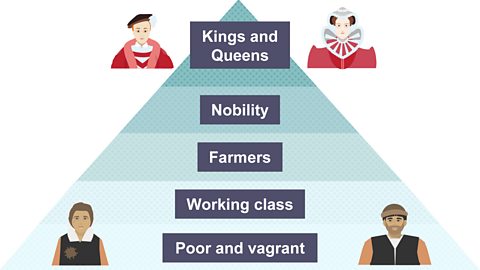
The breeding of cattle and sheep on their large estates was the main subsistence of the nobility in Wales in Tudor times. Thousands of cattle would be driven to London markets. This would bring large amounts of cash to farmers. Sheep were mainly kept for their wool, and the textile industry was prosperous.
Under the nobility were small farmers who were scraping a living. They would grow their own food and sell the very little left to pay the rent, tithe and local taxes.
Underneath them, the working class lived frugally on bread, porridge, oat bread, cheese and poached rabbits. Shortages, sickness and death were a daily reality for them.
At the bottom of the social ladder there were the poor and the vagrant. During the Tudor era, they differentiated between the poor who deserved help – the sick and the infirm – and those they thought were lazy and not deserving of help. They would be punished by being whipped in public and driven back to the areas where they were born.
But, although life was rough and hard, the folk still enjoyed traditional customs, for example:
- dancing around the maypole
- playing bando and cnapan
- playing cruel sports such as cockfighting
Everyday life
Life was very different during Tudor times.
In Wales, most people lived in the country in long houses. The family lived in one side of the house and the animals lived in the other side.
Housework was hard. There was no clean water available in people’s houses as there is today. So, people had to collect water from the river.
That meant they didn’t have a bath very often. And there were no toilets. People used buckets and had to get rid of their waste outside their houses. This meant that people often became ill.
But the Tudors completely changed houses with something very important, the chimney.
Life was much more enjoyable when people added a chimney to their houses. For the first time, ordinary houses were able to be built with a second floor. That meant that people had more space and privacy upstairs, rather than living on top of each other on the ground floor.
The Acts of Union
After the death of Henry VII, his son Henry VIII became king. Henry VIII was famous for having six wives:
- Catherine of Aragon - divorce
- Ann Boleyn - beheaded
- Jane Seymour - died while she was married to Henry
- Ann of Cleves - divorce
- Catherine Howard - beheaded
- Catherine Parr - died after Henry died
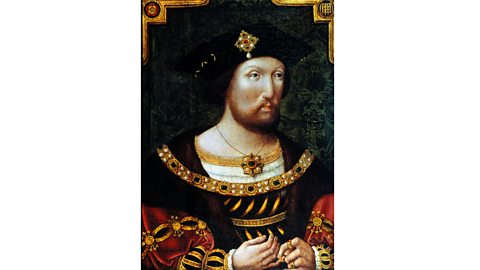
As he died, Henry Tudor asked his son, Henry VIII, to care for Wales and, indeed, during his reign (1509-47), major changes occurred in Wales.
There was a lot of chaos in the country at the time, but Henry VIII needed order to be able to impress his religion – Protestantism – onto his people.
That is why the Acts of Union between England and Wales were passed by the English parliament in 1536 and 1543.
The purpose of the Acts of Union was to try and remove the differences between the two countries and ensure a single language, the same practices and the same administration.
The Acts:
- divided Wales into 13 counties
- gave 27 members of parliament to Wales
- removed the old Welsh laws and replaced them with English laws
- established courts to help maintain law and order
- made English the only official language of Wales
All courts of law in Wales had to conduct everything through the medium of English. From then on, Welsh would be a second-rate, unofficial language in its own country.
Religion
Religion was very important to people in the Tudor Age, but there was a great deal of religious disagreement.
During Henry VIII’s reign Protestant supporters sought to remove the Roman Catholic Church from the country.
Everyone had to go to the same church as the King or Queen, or they would be arrested, imprisoned or even killed.
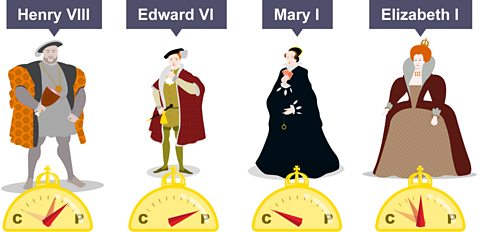
When the Protestant, King Edward VI (1547-53), and his Catholic sister Mary Tudor (1553-8) reigned, England moved from one faith to another. But the Welsh stood firm, without fully supporting either faith.
Language
In Wales in the Tudor Age, most people spoke only Welsh. Not many people could speak English at that time.
Services in the Roman Catholic Church were conducted through the medium of Latin. But only people who had received an education could speak Latin. So following a Roman Catholic service would have been impossible for most people.
In the small parish churches, the new language of services was English, not Latin. They used the English Bible and new English prayer book, but many of the Welsh could not understand the language.
Welsh Bible
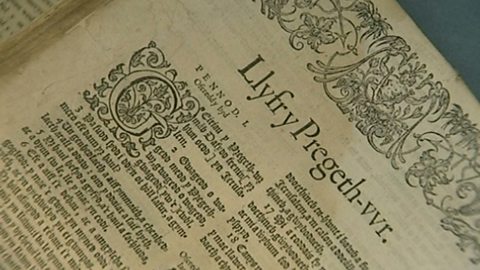
1588 is an important year in Welsh history, as this is when William Morgan’s translation of the Bible into Welsh was first published.
Queen Elizabeth I was said to be able to speak Welsh. She believed that it would be good if the Welsh could worship in their own language.
William Salesbury translated the Book of Common Prayer and New Testament by 1567.
But William Morgan was the one to complete the translation of the whole Bible into Welsh in 1588.
Prior to this, since 1536, there was no right to use Welsh in official situations, so having a Bible in Welsh was a very good thing for the status of the Welsh language. Indeed, many believe that this is the reason why the Welsh language has survived to this day.
End of the Tudor Age
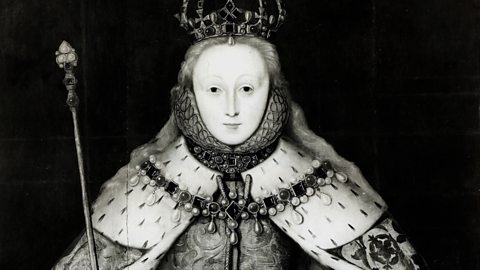
Elizabeth I didn’t marry and she had no children, so she had no direct heir. Nobody was sure who would reign after she died.
In the end, when Elizabeth died in 1603, her cousin James I of Scotland became king.
This is how the Tudor era came to an end. Scotland joined England and Wales, and a new royal family came to power, the Stuarts.
Quiz - The Tudors
Maths 8-11
Videos and activities
Welsh Second Language 8-11
Exciting videos and activities for learning Welsh
Sustainability 8-11
A collection of lessons for pupils aged between 8 and 11

More on History
Find out more by working through a topic
- count5 of 5
- count1 of 5
- count2 of 5
- count3 of 5