Sign up to the BBC Bitesize newsletter! External Link
For home education news and stories plus updates on the latest Bitesize content, register for our newsletter today.

Deschooling
If your child has been in school and you’ve taken the decision to deregister them and begin home education, you and your family may experience a period of adjustment as you ‘deschool’.
The homeschooling transition can feel unsettling at first, and you may question whether you’re doing enough for your child. Follow these BBC Bitesize Parenting tips on deschooling your child, and you, when you first start home educating.

What is 'deschooling'?
Deschooling is the transition period between school and home education, when you and your child adjust from the routine and format of a typical school day. It can take time to ‘unlearn’ some of the habits and routines your child has been used to, and to discover a rhythm and way of learning at home that suits you both.
Home education is a whole different way of life and change isn’t easy.”
Clinical psychologist Dr Naomi Fisher says: “Schooling takes up a lot of time and when you’re at school you don’t have to make choices about how you use your time nor what you learn… It’s a big adjustment to home education, where each day could be different and where what your child is interested in really matters. It’s an entirely different mindset and requires many more active choices.”
Deschooling is different to unschooling, which is a style of learning in home education (usually naturally-occurring or child-led learning).
How do I start deschooling my child?
“Sometimes having some breathing room makes it easier to work out what they actually want or need next.”
Dr Fisher advises you take the pressure off for a bit. Focus on your child’s emotional wellbeing, especially if they’re suffering from school burnout. Parent Sasha Jackson, who offers advice on The Home Ed Daily, noticed her son needed some “breathing room” when he left school. She used that deschooling time to observe what books and activities her son gravitated towards.
She says this initial period of adjustment can be hard for parents. “If a child initially sleeps more, games a lot or seems to do very little, particularly after a stressful school experience, that doesn’t automatically mean something has gone wrong. They may genuinely need rest, and suddenly having control over their own time can take some getting used to.”
Sasha adds: “Sometimes having some breathing room makes it easier to work out what they actually want or need next.” Dr Fisher suggests you use the time to research what resources you might use and what’s going on in your area so that you know “what opportunities there are around you” once your child is ready.
How can I support my child and myself to ‘deschool’?

Sasha Jackson says managing your own anxiety around whether your child is doing ‘enough’ is “probably one of the hardest parts” of deschooling. What she calls the “familiar evidence of education” is gone: “There may be no exercise books, marked work or timetable reassuring you something has been ‘done’.”
For Sasha, deschooling meant trying not to have a set picture of how education should look and giving herself and her child “space to discover what might work better”. That includes:
trying not to ‘overfill’ your time
observing your child, what they’re interested in and when they concentrate best
noticing when learning is already happening
keeping notes
“After a few weeks you often realise far more has been happening than you thought… A conversation can lead into history or science. Cooking involves maths. A walk can involve ecology, weather and navigation. Reading might be novels, comics, websites, subtitles or researching an interest.”
Dr Naomi Fisher adds, “If your child doesn’t seem to have any curiosity, focus on bringing new experiences into their life. We often stumble upon interests. One family told me their son had developed a fascination for carnivorous plants after seeing one at their local garden centre. This led them to finding out about how plants evolve and to trips to their local woods to see if they could find carnivorous plants in the wild. He started drawing carnivorous plants and wrote stories about them. Home educating parents talk about the little sparks of interest which can lead to all sorts of places.”
How can I support my child’s and my own wellbeing?
“Try things. Drop things that don’t work. Meet other families.”
It’s normal to worry about your child’s social connections and them making friends as you deschool. Experiment with groups and excursions outside the home to see what suits your child best. There are many online support and meet-up groups you can research in your area, as well as free days out for home educators at local museums and attractions.
Sasha says: “The first few weeks are a beginning, not a test. You don’t have to discover your perfect version of home education straight away. Try things. Drop things that don’t work. Meet other families. Offer opportunities without turning every offer into an obligation. Your approach can change as your child changes too.”
Look after your own wellbeing when home educating by building a community for yourself as well, sharing responsibility and carving out recovery time where you can.
What can I do if my child is struggling with deschooling?
Naomi advises: “Transitions are often difficult and tiring and many parents worry this means they aren’t doing the right thing. It’s normal for this stage to be bumpy. Home education is a whole different way of life and change isn’t easy.”
If you’re struggling with the homeschooling transition, use our guide How to start home educating in the UK, which gives you suggestions on how to find a rhythm for your day.
Where can I find more support for home education and parenting?
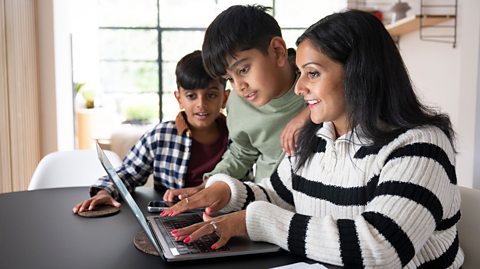
The BBC Bitesize home education collection is designed to support you and your child’s learning at home with free downloadable resources, advice articles and videos for children aged two-to-five years old, five-to-11 years old and 11-to-16+ years old.
Bitesize Parenting is the go-to place for the whole parenting community to find stories, expert advice and fun activities.
If your child has special educational needs or disabilities, be sure to check out the Parenting SEND collection. Bitesize has a collection of Sensory Stories, an immersive video series of unique sensory adventures for children with additional needs.
For more information about home education, this BBC News article covers the rise in families deciding to educate their children at home.
