Social media and phones make it easier than ever to get news and opinions in front of an audience. That also means it’s easier to share fake news and misinformation, and it’s a matter of concern for teens in the UK.
As part of Teen Summit, a survey commissioned by BBC Bitesize and BBC Radio 5 and carried out by Survation, more than 2,000 teenagers aged 13-18 answered questions about their feelings and thoughts on the world around them. Among those surveyed, 51% said they had seen conspiracy theories online, but another 18% didn’t know if they had or not. One of their biggest worries, after scams and identifying AI-generated content successfully, is conspiracy theories replacing facts.
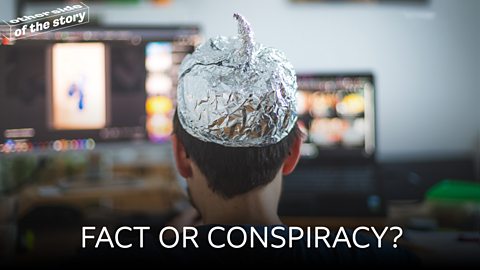
BBC Bitesize Other Side of the Story has taken a look at three different conspiracies, all of which have been debunked through proper research and fact-checking.
Conspiracy #1: 'Avril Lavigne was replaced by a body double'
Canadian singer and songwriter Avril Lavigne became a big star in her teens. Signed to a record label at the age of 16, some of her biggest hits include Complicated and Sk8er Boi.
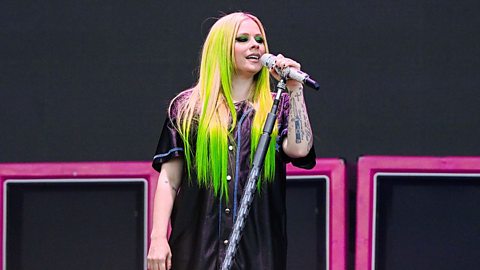
She still performs gigs today, but some conspiracy theorists would have you believe that the woman singing centre stage at these concerts is not Avril Lavigne at all. They claim she is a double, whose real name is Melissa Vandella, hired by the record company to cover up that Avril actually died in 2003. The theory also suggests the lookalike gave clues to her true identity in photographs, such as having ‘Melissa’ written on the back of her hand in one image.
A blog in Brazil posted speculations about changes in the singer’s appearance. When a journalist covered the story, it brought the speculation to a wider audience, although it was later said that the blog was originally set up to show how a conspiracy theory could be started in the first place. However well intended, this is an example of disinformation, where false stories are started deliberately with the intention of misleading people.
There is no evidence to support the claim that Avril Lavigne has died. The singer regularly posts on Instagram for her 13.9m followers and spent the spring and summer of 2025 on a greatest hits tour. In 2019, she addressed the rumours in an interview with the Entertainment Weekly website, saying: “[I'm] flabbergasted that people bought into it. Isn't that so weird? It's so dumb. And I look the exact same.”
Conspiracy #2: 'Chemicals are sprayed on to us by aeroplanes'
You can usually tell when a plane has just flown overhead. In high humidity conditions, they leave distinctive white streaks which linger in the sky and eventually fade.
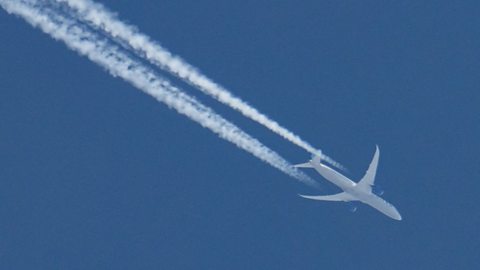
These trails are mostly made up of water and soot particles that have become ice crystals. They are called contrails - or vapour trails. But some people think there may be more than water in these trails. They believe planes are spraying people with chemicals for a sinister reason, with the vapour known as chemtrails. Conspiracy theories for these trails include the spread of Covid-19 or, to turn that idea upside down, vaccinating the population below. Some believers even suggest leaving bowls of white vinegar outside, to stop the chemtrails’ supposed effects.
The British Airline Pilots Association (BALPA) told the BBC in 2022 that they were aware of the chemtrails conspiracy but there was no evidence to support them.
The Teen Summit survey showed that 66% of the young people who took part were concerned about the impact of fake news and misinformation online. These type of stories can become viral if enough people share them. If you’re regularly engaging with these posts online, the algorithm will continue to feed you similar content, so that everything you see on your feed ends up having one point of view. This could lead to being in an echo chamber. If that worries you, here’s some tips on how to stop the spread of fake news.
Conspiracy #3: 'A UFO crashed in the USA in the 1940s'
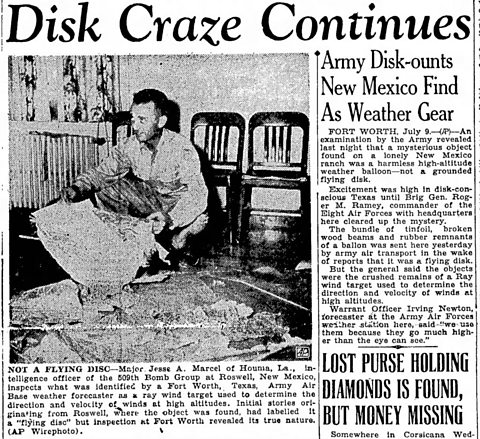
The conspiracy theory which has possibly led to more films, TV shows and merchandise than any other is the Roswell incident of 1947. To this day, people still believe that an alien spacecraft crashed near the city in New Mexico, USA, and that the government has been keeping the information secret.
It began when a ranch owner near Roswell found strange debris on his land. Military officials were sent there, leading to reports that a ‘flying disc’ and its crew had been found and taken away for examination. This was quickly corrected to the military finding a weather balloon at the site - these are usually sent up into the atmosphere to collect data at high altitude.
Around 30 years later, claims were made that the Roswell weather balloon story had been made up. Photographs showing the balloon debris were said to be staged and that witnesses to what really happened - a UFO crash - were ordered to keep quiet. Some witnesses then claimed it really was a spacecraft and it (and the bodies of its alien crew) had been taken to a military base called Area 51 in Nevada.
In 1994, the US Congress made an official investigation into Roswell. Their research did not reveal visitors from another planet, but a top secret operation where observation balloons checked out possible Soviet Union nuclear missile tests. This was at the very start of the Cold War when America and the USSR were rivals in world politics. It was one of those balloons that crashed on the Roswell ranch in the early stages of its journey.
It’s not the only conspiracy theory linked to space travel - there’s also one about the 1969 Apollo space mission to the Moon and singer Katy Perry's recent trip into the stars.
Before conspiracy theories are properly researched, it can be tricky to spot if it's fake or not. This is reflected in the Teen Summit survey; 26% of those asked were confident in being able to spot an online conspiracy theory every time they see one, while 12% believed they wouldn't be able to. If you need more advice, BBC Bitesize Other Side of the Story has resources to help you check these articles out and think more critically.

Not sure if the news you’re seeing on social media is true or false? Can you always tell if the things you see online are real or fake?
Learn how to get the other side of the story with our quizzes, videos and explainers about media skills and viral trends including popular food myths.
The monthly AI or Real quiz: September 2025
Can you tell the real images from the ones created using AI in this month’s special edition quiz?

Teen Summit: Can you sort the facts from the conspiracies?
Some people believe in conspiracy theories, others laugh at them; but do you know how to spot one?
Other Side of the Story
Back to our homepage for more quizzes and explainers about fake news, viral trends and media skills.