Welcome to The Regenerators.
Supermarkets make food shopping a breeze.
But it’s easy to forget that what we buy doesn’t just magically show up on the shelves. It takes time, energy and resources to grow and produce everything we eat.
When we waste food, we waste these resources. Food waste also contributes to climate change when it rots in landfill by producing greenhouse gas emissions.
So, how do we cut down the environmental impact of what we eat while still enjoying the food we love?
Can these families reduce the environmental impact of their food?
Three families - The Clarkes, The Gardeners and The Kunchalas - explore how what they eat affects the environment.
Aneeshwar: Wow! New potato and mint, I know that would be very tasty.
Elizabeth: The average UK household wastes the equivalent of eight meals every week.
Rachel: And if food waste were a country, it would be the third biggest greenhouse gas emitter in the world.
Anil: Producing a kilogram of beef emits 60 kilograms of greenhouse gases.
Elizabeth: Compared to just one kilogram of greenhouse gases for a kilogram of peas. That's a lot. It's crazy, isn't it?
Rachel: Are you up for the challenge?
Neo-Rae: Yeah, I have a book of meals.
Sienna: This looks good.
Daniel: That looks nice and we like wraps as well.
Rachel: We're on the whole vegetarian, oh you'd like this one. Now have some of the vegetables cooking away.
Elizabeth: I'm definitely not going to be on MasterChef anytime soon, but not bad for my first attempt.
Raymond: Mmm not bad, pretty good, well done chef.
Rachel: What are you guys up to?
Neo-Rae: So we're going to write our shopping list.
Raymond: For all the food for the week.
Rachel: And on the other side, guys, I'll give you our meal plans for the week. So you write the shopping list on our meal plans is that a deal?
Raymond: Yeah.
Daniel: So we've just arrived in the supermarket.
Austin: To get some vegetarian meals. So we're going to get this lime for the recipe.
Elizabeth: Today, we thought it might be a nice idea to plant some vegetables. So what do you think kids? Do you think this is going to be a good success? Do you think we're going to create some massive lettuce and really juicy big onions?
Sienna: Yes.
Austin: Yes.
Anil: Just put some carrots here, some mint. This little plant actually gave us 250 plums. We've started that last year, but we try and grow food here at least weekly – one day we get it from our garden.
Aneeshwar: We've got this many blackberries. Mmm, it tastes very good.
Daniel: Like, when I go to the shop now, I'm more conscious of what I pick up off the shelf. I think even with our meals and stuff more on the ball.
Elizabeth: More conscious of…
Daniel: Yeah a bit more meal planning, meal prepping.
Rachel: We struggled with a plant-based diet, it kind of wasn't for our household. I did the meal plan and planning the whole week worth of food, it meant that I used everything. I didn't have to empty the fridge and chuck things away like I would normally do.
Sneha: It gives me a satisfaction to go to my garden and harvest the crops.
Anil: The growing of food is not difficult, it is easy, only important part what everyone needs to remember is just to go out, spend some time in the garden, water the plants. That gives you your fresh air and it makes it easy.
Try plant-based meals
Surprise the kids with a plant-based dinner. If they become a fan overnight, why not try incorporating more plant-based meals into your family’s diet?
There are lots of plant-based protein sources such as beans, lentils, tofu, tempeh or soya chunks that you can try as meat substitutes.
A plant-based diet may not be for everyone, so if meat is still on the menu, try choosing meat that was produced in the UK (the packaging usually says where it came from). The greenhouse gas emissions from beef produced in the UK are about half the global average according to the Committee on Climate Change.
Plan your meals
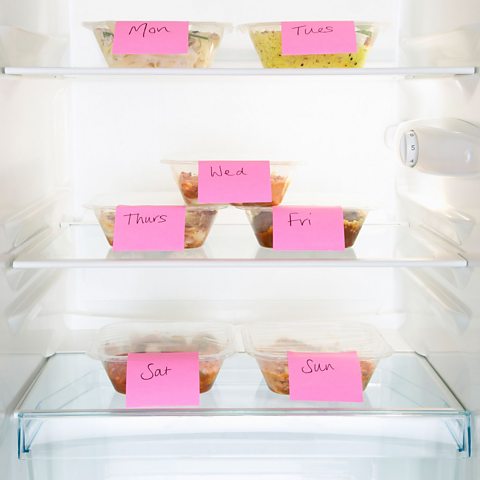
Decide what you want to eat in the next few days and write down the ingredients you need before you do the next big shop. This way you’ll only buy the things you will use.
If you still end up with extra ingredients or leftover food, see if you can use it for a different recipe or freeze it, then make a note for the next shop. Your food waste can go into a food waste bin or you can consider making a home compost.
Grow your own food
Out of all the tips we’ve given so far, this is probably the most exciting for little ones.
The Royal Horticultural Society suggests that November is a good time to plant fruit trees, but only if the ground is not frosted or too wet. In the spring and summer, you can grow tomatoes, cucumber or strawberries – they’re fairly easy to grow and will cope well in the British summer (if it’s not too unpredictable!).
You can also grow herbs like coriander, mint and basil on your windowsill or rent an allotment to grow your own fruit and vegetables.
Buy seasonally
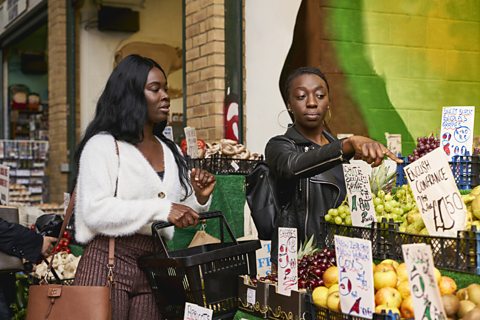
Susha Sooral, Communications Coordinator from environmental charity Hubbub, says choosing local fruit and veg grown in the UK is one easy way to reduce the carbon footprint of your food. If it’s naturally in harvest at this time of year it’s likely to taste better, and because it hasn’t had to travel too far, it will be fresher too!
Make a difference
Discover more about the planet and how to protect it with the BBC.
How to be a zero-waste hero
THE REGENERATORS
Easy recipes for kids
BBC FOOD


Return to the homepage
Back to The Regenerators
BBC BITESIZE