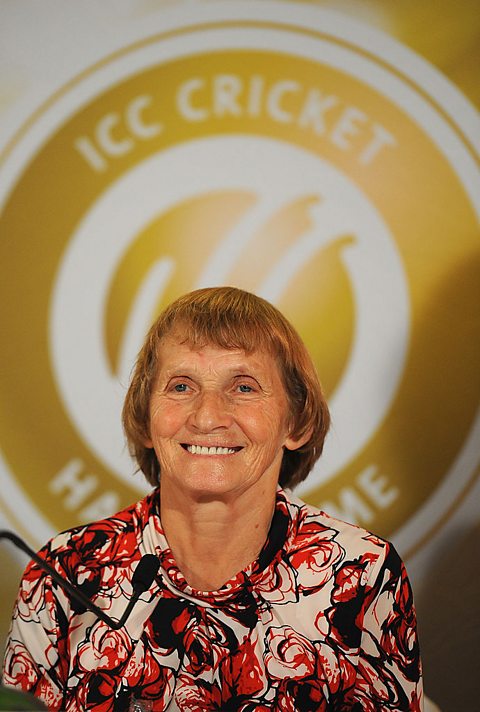
Enid Bakewell is not your standard 82 year old. She’s a legend of women’s cricket who shows no signs of slowing down anytime soon.
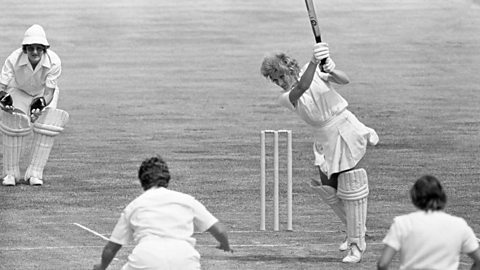
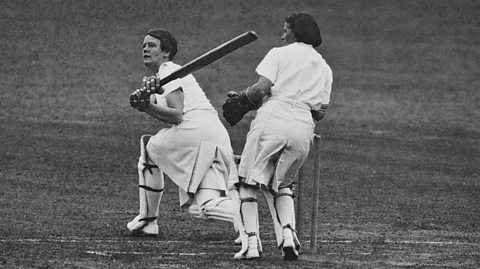
During her illustrious Test career (1968 to 1979), Enid established herself as one of England’s best A player who is skilled at both batting and bowling.. She had an average run rate of 59.88, and took 50 wickets in 12 matches, as well as being part of the England team that won the 1973 Women’s Cricket World Cup. Thanks to those stats, Enid is considered one of cricket’s greatest female players of all time.
Watch: Enid Bakewell discusses her incredible life playing cricket
Kim: So Enid, where did it all start for you? How did you begin to play cricket?
Enid: I was a tomboy and so I used to play in what was a mining village and we literally cut a strip of playing field on a local pitch that was about knee high at least in grass. And of course, there were slugs and all sorts of things which were where we used to lose the ball. Anyway, it was the secret of my success, because then you didn't dare let the ball bounce. So I used to move my feet and hit the ball before it bounced.
Kim: And who would have known that would have created such an amazing cricket player?
Enid: Well, I am competitive, this is the problem. Because we didn't have television, you played all day outside, even in dark time, so it was great.
Kim: In your lengthy lifetime, you have seen so much change throughout the cricketing world from when you first started. Could you just talk to us a bit about the changes you've seen?
Enid: I wanted to teach cricket. And I said to the woman, PE adviser: "Can I teach cricket to the girls?" It was an all girls school, in lesson time. "Oh, no", she said, "It's too unladylike." So I said, "Well, can I teach it in a club afterwards?" "Yes", she said. But then I found out, that the caretaker said to me: "They're trying to get rid of you here", so I managed to get a a job at another school.
Kim: Where do you find your resolve to keep going when people say no?
Enid: Well, I am competitive and I thought I was there and I was there for a purpose.
Kim: So if you were gonna try and encourage children then, obviously it's something you're really passionate about, you wanna see children and young people getting involved with the sport. How would you sell it to them?
Enid: It's fun. You're trying to outwit somebody, alright. It's like a competitive game of chess really. But you're having fun at the same time, and you're making friends with all the people who are on your team.
Kim: What's the best game that you've ever played in? Have you got a favourite when you look back?
Enid: I think there's one where I took 10 wickets and I got a century as well and then we beat the West Indies.
Kim: Is there anything else you would like to achieve? Is there anything missing from Enid Bakewell's long list of achievements?
Enid: Probably to carry on playing it for as long as I can and to keep following the cricket so that I can follow it and enjoy it and it will keep me healthy.
When asked what she believes her best match was, Enid replies: “I think there's one where I took ten wickets and I got a century as well… and we beat the West Indies”. That was actually Enid’s last Test match, in 1979 at Edgbaston.
However, retirement from Test match cricket certainly hasn’t dulled her passion for the game. As recently as 2022, Enid was touring Australia and New Zealand with the East Anglian Veteran Ladies team, being named player of the match in their opening game. Even with having two artificial knees!
But where did she get her start?
The first innings
Describing her younger self as a “tomboy”, Enid first began playing cricket in Newstead, the Nottinghamshire village where she grew up. The group of kids would play on a quiet street with few cars, using an electricity box as a wicket. However, the ball would often end up in the neighbours’ gardens, so they had a rethink and cut a strip of playing field through a local pitch which had knee-high grass.
Thinking back on those early days, Enid says: “Anyway, it was the secret of my success, because then you didn't dare let the ball bounce. You got to get the ball before it bounced. So I used to move my feet and hit the ball before it bounced so that was great and and my mum sometimes would come up and we would be looking for the ball with all the slugs.”
Enid’s parents were supportive of her cricketing passion, buying her some stumps, a bat and wicket-keeping gloves.
Teaching the next generation
After leaving college, Enid became a PE teacher, but faced opposition to her plans to get more girls playing cricket.
“I said to the woman PE advisor, ‘Can I teach cricket to the girls?' It was an all girls’ school, in lesson time. ‘Oh, no’, she said, ‘it's too unladylike’. So I said, ‘Well, can I teach it in a club afterwards?’ ‘Yes’, she said."
At another mixed-gender school, Enid was astonished to find that whilst there were four cricket pitches, the girls weren’t allowed to play: “Eventually they do now. But the four pitches, they were wasted because the girls didn't [play]… And I couldn't do anything about it at that time.”
Making friends worldwide
The global friendships Enid’s made through cricket clearly mean a great deal to her: “It's like a competitive game of chess, really. That you're playing with friends and you're playing against friends… You're trying to outwit somebody. Alright, but you're having fun at the same time and you're making friends with all the people who are on your team.
“I've got friends in New Zealand, in Australia, that I've known through cricket and that's the only reason they're friends because I've met them at cricket and and you can't beat friendship.”
However, she realised early on in her international career that sometimes friendship had to be put aside in favour of competitive spirit during the match: “But I learned when I first played against the Aussies, I sat at a lunch and I talked to the opening bowlers, and I realised that I hadn't got to do that ever again, because of course you don't feel the enmity that you felt before.”
Receiving royal recognition
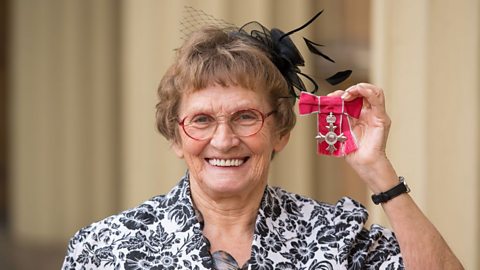
In February 2019, Enid was awarded an MBE for services to women’s cricket and was thrilled to discover that she would be presented with the honour by the Princess Royal.
“The biggest prize was the fact that Princess Anne had come to give us the award of the cup when we played the Australians at Egerton. And when I got there and it was Princess Anne giving the awards, it was amazing… When I had left there and she'd given me the medal, I then bowled a ball before I went.”
Looking to the future of women's cricket
On the whole Enid is optimistic about the future of women’s cricket in the UK: “Men are tending to accept women as cricketers and virtually as equals. Whether we'll ever get paid on a par with the Australians… The Australians have been paid more for longer than we have and so they are more professional. So hopefully we can we can see that that's right.”
Enid also welcomes the greater investment in women's cricket, and hopes it will encourage more and more young people to play.
And as for her own future? Well, Enid plans to “carry on playing for as long as I can and to keep following the cricket, so that I can follow it and enjoy it and it will keep me healthy.”
This article was published in June 2023
25 years of the Women’s Ashes trophy: A brief history of England vs Australia
How did the sporting rivalry between England and Australia begin? BBC Bitesize takes a look at the story behind the Women’s Ashes.
Quiz: The science of cricket
Test your knowledge of the science behind cricket with this BBC Bitesize quiz, ahead of the men's 2025/26 Ashes.
Howzat for a yorker? The origins of cricket jargon
What do ducks have to do with cricket? Find out here.