The chances are you’re probably reading this on a smart phone or a tablet – something that just 15-20 years ago wouldn’t have been possible for most of us.
Technology has advanced at incredible speeds. Some gadgets once thought of as science-fiction are now commonplace - such as touch screens, face recognition and a world without wires.
But as our technology improves, it means some former favourites have become obsolete. BBC Bitesize looks back at some of the tech you may stumble upon in your attic that, depending on your age, may trigger either curiosity or nostalgia.
Pagers
Imagine your phone buzzes in your pocket with a new message.
However, instead of being able to read what your friend wants to say, you need to ring a number and listen to their message. If you want to reply to them, you might need to leave them a message on that same call too.
Sounds slow, doesn’t it? But that’s often how messaging would work with pagers.
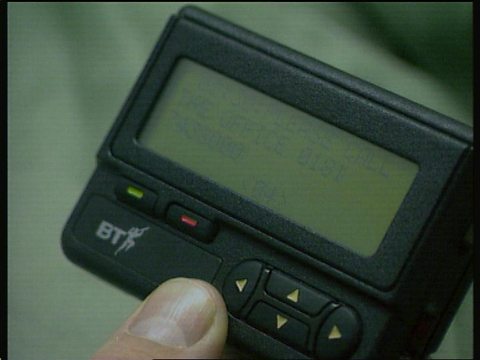
Also known as beepers and used frequently in hospitals, pagers are wireless communications devices that can receive text or numeric messages. More advanced versions would be able to receive voice messages too and even be able to send text replies.
The first pagers started being used in hospitals in New York in 1950 before being popularised in the 1960s and 70s. As mobile phones became more prominent in the early 21st Century, pager use declined in the majority of business sectors – with two notable exceptions.
Some restaurants still use a version of a pager to let customers know their table is ready, while the NHS remains one of the biggest users of the tech worldwide. One in 10 pagers in use around the world is within the NHS – around 130,000 as of 2019.
The pagers are still used as a quick and efficient way of contacting multiple medical professionals in an emergency situation and often have better signal coverage than phones - but the Health Secretary Matt Hancock announced in 2019 that the NHS would look to find more modern solutions by 2021.
Minidisc
Vinyl records and cassettes have still found a place today despite the advent of music streaming services – but the MiniDisc never really hit the heights.
Initially launched by Sony in 1992 – the MiniDisc was designed to be the perfect mix of cassettes and CDs, giving consumers the ability to listen to quality audio and to create their own mixtapes, but without the vulnerability offered by easily snapped tapes and scratchable CDs.
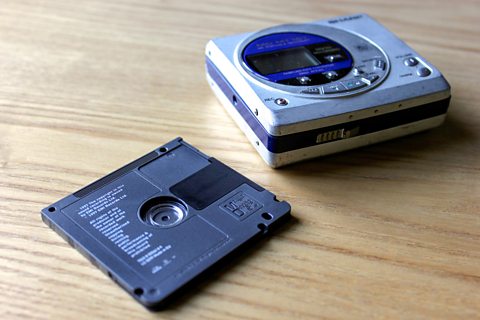
But the format didn’t take off at launch. A relaunch with cheaper kit and digital recording in 1997 saw more people buying MiniDiscs, but the new millennium saw the technology effectively stopped before it could advance further in popularity.
Recordable CDs and the launch of mp3 players, including the first iPod in 2001, saw sales dramatically drop and in 2011, Sony produced its final MiniDisc players.
Black and white television
HD, 4K and even 8K – it seems as if televisions are constantly becoming more and more advanced.
As home screens get larger and brighter with even clearer pictures and more colours, it’s hard to remember a time when TVs could only show programmes in black and white.
Back in November 1936, the BBC launched the world’s first regular ‘high definition’ television service – in black and white. In the 1950s, channels in the United States began broadcasting some programmes in colour before it became much more prominent in 1965.
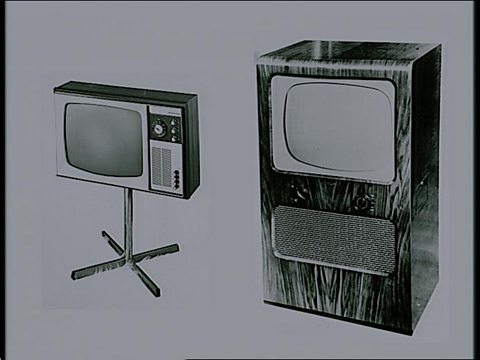
Two years later, the BBC launched the first regular colour television service in Europe with a broadcast of the Wimbledon Tennis Championships. By mid 1968, nearly all of BBC Two’s output was broadcast in colour, with BBC One and ITV following in 1969.
Colour televisions became bigger and more affordable and the technology started to replace monochrome screens in homes across the country – but while black and white TVs are very rare, they’ve not disappeared completely.
In March 2019, just under 7,000 people had black and white TV licenses out of more than 25.5 million total licenses in the UK.
VHS
A famous 1979 song by The Buggles once proclaimed that “video killed the radio star” – but the wireless has very much outlasted video recorders.
Recording video onto magnetic tape was first possible in the 1950s, but due to the cost, they were only used in professional broadcasting or within some medical procedures.

A number of machines were released for home use in the 1960s and 1970s using different formats, but it wasn’t until the invention and subsequent popularity of VHS (Video Home System) that the technology really took off.
Viewers now had the chance to buy or rent films and to record programmes from tv channels – albeit in some cases, depending on how many tuners you had, only the channel you were actually watching. During the 1990s, around 200 million video recorders were being sold worldwide each year.
The introduction of DVDs in the 1990s, combined with digital recording on camcorders, led to the decline of VHS, with some high street stores removing the recorders from their shelves from 2004 and production of new recorders and tapes finally stopping in 2016.
Wires
OK, so not all wires have disappeared but it’s incredible to think of how many of them are now scattered in drawers around the house rather than in use.
Many phones no longer have headphone slots, meaning it’s a choice between a wireless set or being that person who plays their music out loud on the bus.
You can even charge some of those phones wirelessly (although technically speaking, it does still need a wire to plug in).
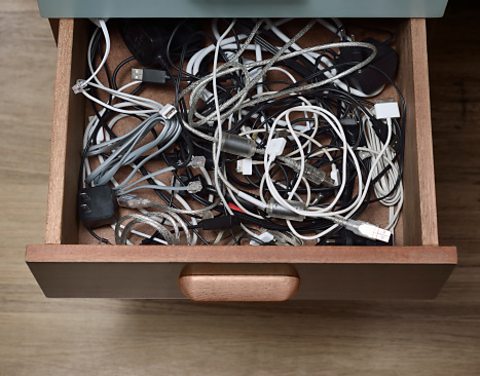
We can even go online without the need for wires now – gone are the days of the late 1990s and early 2000s when you could only use your computer within a few feet of your dial-up modem.
And there’s more! Scart leads have become a virtual thing of the past as newer TV sets rely on digital connections rather than analogue. Games controllers and cameras can connect via Bluetooth rather than length cables. And if you go even further back, some early TVs or VCRs had remote controls – but ones that needed to actually be plugged into the telly itself.
So while we may feel the urge to upgrade our kit more often these days as technology progresses (although it's worth remembering that just because that smart phone or tablet has got older, it doesn't mean you necessarily need to replace it), we can be grateful for one thing. At least we no longer have to untangle loads of wires.

When film and TV got the future spot-on
The storytellers who predicted President Trump and the technology we have today.

More amazing science facts - as chosen by scientists
The mystery at the centre of the Earth, liquid metal - and mixing oil and water

Quiz: Do you know these animated firsts?
When it comes to groundbreaking animations, exactly how much do you know?