Quiz: Which original TV Gladiator are you?

Part ofIYKYK

Gladiators, ready!

Decades after its initial series debuted, generations of fans were thrilled to welcome back the hit show Gladiators, but to a new home on the BBC. It was back in the 90s that we were first introduced to the popular game show, which sees members of the public, known as contenders, compete against elite, superhuman athletes, known as the Gladiators, in various physical challenges.

It’s now been over 30 years since the original Gladiators series first came to our screens in the UK. But if you had to choose, which original Gladiator would you be?

Check out our quiz below to find out if you’re more Hunter, Lightning, Saracen, Wolf, Rhino, Panther, Falcon or Zodiac. Here, BBC Bitesize also takes a closer look at the history of gladiators, how the series became a phenomenon and what we can learn from today’s BBC line-up.
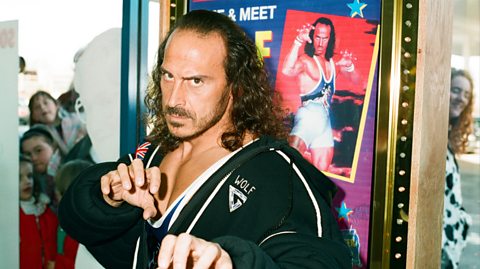
Wolf, Wolf, real name Michael van Wijk, at a Gladiators event in Blockbuster. He has long, dark curly hair, a moustache and beard and has an intense look on his face as he poses for the camera. His hands are posed like claws and he wears a black hoody jacket which says Wolf on it. Behind him is a poster of himself in the same pose, wearing his metallic blue Gladiator uniform. At the window behind him, fans peer through to catch a look at the Gladiator
Image caption,
Wolf, real name Michael van Wijk, is one of the best known Gladiators

What is a gladiator?

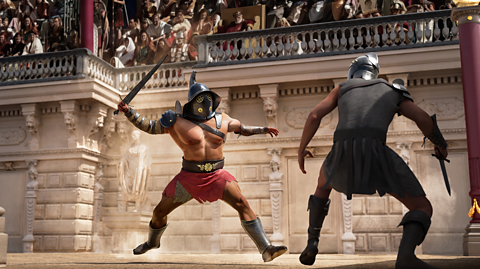
Two gladiators would fight in a Roman amphitheatre. Overlooking the fighters are crowds looking down into the pit. One gladiator is wearing a helmet and face covering, topless with armour on his arms, boots and a red skirt called a pteruges. His opponent has his back to the camera, wearing full grey armour and a silver helmet
Image caption,
Gladiators would fight to entertain spectators in Roman amphitheatres

It’s now been over 1,500 years since the last Roman gladiators fought. But what is a gladiator?

Well, the term is said to derive from the Latin word gladius, meaning swordsman and historically refers to a combatant who would fight, often brutally, in public against opponents for the entertainment of spectators. People would go to watch gladiators fight for their lives in Roman amphitheatres, which were large, outdoor arenas.

Gladiators were usually normal men from various backgrounds. Some were enslaved or criminals punished to fight in the arenas, whereas others volunteered to make money and take home the glory.

Two gladiators would fight in a Roman amphitheatre. Overlooking the fighters are crowds looking down into the pit. One gladiator is wearing a helmet and face covering, topless with armour on his arms, boots and a red skirt called a pteruges. His opponent has his back to the camera, wearing full grey armour and a silver helmet
Image caption,
Gladiators would fight to entertain spectators in Roman amphitheatres

What inspired the original TV Gladiators series?
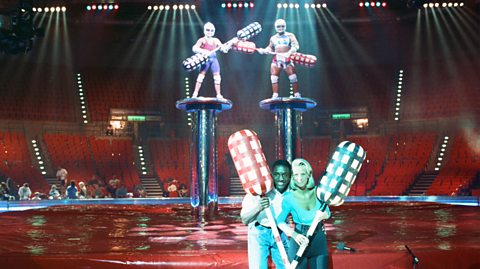
Gladiators presenters John Fashanu and Ulrika Jonsson stand at the front of the red arena, with a red stage and red seats, holding a puglil stick each, as they smile for the camera. They both wear jeans, while John wears a white shirt and Ulrika wears a long-sleeved bright blue top. Behind them, a contender and Gladiator each stand on their own podium holding pugil sticks, ready to fight
Image caption,
The original UK series was presented by John Fashanu and Ulrika Jonsson

Like the ancient Romans who fought for entertainment, the Gladiators TV show introduced us to several athletes and body builders, all with their own superhuman names, identities and strengths, who go up against everyday contestants in various challenges. However, the show is nothing like the violent tales we read about in our history books - it is all about competing in iconic sporty challenges like Dual and Hang Tough to win a prize.

Each episode, players, known as contenders, compete in a series of physical challenges against the Gladiators to reach the contenders-only final event, which is known as the Eliminator. In the original UK series, which first aired on ITV back in 1992, Gladiator combatants stepped into the arena wearing bold and unforgettable lycra-clad outfits.

The original UK series was presented by Ulrika Jonsson and John Fashanu and the show ran for eight series until 2000. It was briefly resurrected between 2008 and 2009 by Sky, with Kirsty Gallacher, Ian Wright and Caroline Flack hosting.

Gladiators presenters John Fashanu and Ulrika Jonsson stand at the front of the red arena, with a red stage and red seats, holding a puglil stick each, as they smile for the camera. They both wear jeans, while John wears a white shirt and Ulrika wears a long-sleeved bright blue top. Behind them, a contender and Gladiator each stand on their own podium holding pugil sticks, ready to fight
Image caption,
The original UK series was presented by John Fashanu and Ulrika Jonsson

Who were the original TV Gladiators?

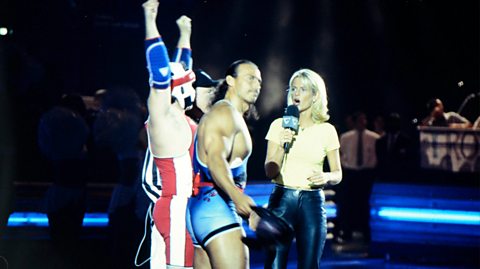
Presenter Ulrika Jonsson in the ring at a Gladiators event, 1990s. She has short blonde hair and wears a yellow short-sleeved top and black leather pants as she speaks into a mic. Next to her is a contender celebrating with his arms in the air, wearing head protection and a lycra outfit, next to Gladiator wolf, who wears a lycra short suit and has his dark curly hair in a ponytail
Image caption,
Presenter Ulrika Jonsson in the ring next to Gladiator wolf, circa 1990s

In the first UK series, airing on ITV in 1992, we were initially introduced to 12 Gladiators and along the way, we were introduced to many more. Out of the original series one line-up, only four competed in all the series - Cobra (Michael Wilson), Lightning (Kim Betts), Saracen (Michael Lewis) and Wolf (Michael van Wijk).

There are so many to name, but other memorable Gladiators from the first UK series include Falcon, Hunter, Panther, Rhino and Zodiac.

Presenter Ulrika Jonsson in the ring at a Gladiators event, 1990s. She has short blonde hair and wears a yellow short-sleeved top and black leather pants as she speaks into a mic. Next to her is a contender celebrating with his arms in the air, wearing head protection and a lycra outfit, next to Gladiator wolf, who wears a lycra short suit and has his dark curly hair in a ponytail
Image caption,
Presenter Ulrika Jonsson in the ring next to Gladiator wolf, circa 1990s

Which original TV Gladiator are you?

Other famous gladiators on our screens
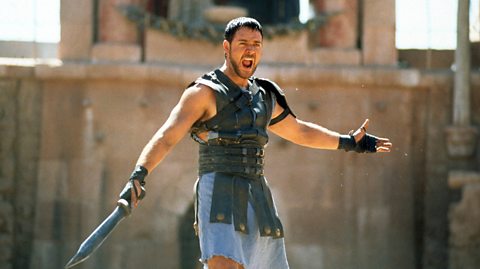
Russell Crowe in Gladiator. He has short brown hair and a beard and is screaming in the photo with his arms opened out. He wears leather armour and holds a sword in his right hand
Image caption,
Russell Crowe in Gladiator

The fascination with gladiators on our screens isn’t confined to the popular gameshow loved by generations in the UK. Older generations will remember the 1960 film Spartacus, starring Kirk Douglas and the TV series, which aired in the early 2010s, was inspired by the same gladiator who led a slave uprising against the Roman Republic.

Another famous film is Gladiator, directed by Ridley Scott and starring Russell Crowe, which hit cinemas in 2000. Its sequel, starring Pedro Pascal and Paul Mescal, was released in 2024.

However, these are only fictional depictions – and Bitesize previously took a closer look at the common misconceptions about gladiators seen in film and television.

Russell Crowe in Gladiator. He has short brown hair and a beard and is screaming in the photo with his arms opened out. He wears leather armour and holds a sword in his right hand
Image caption,
Russell Crowe in Gladiator

When was Gladiators rebooted?

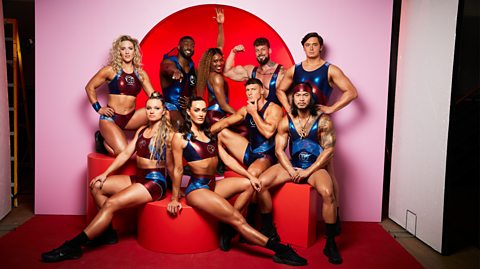
The new Gladiators during Red Nose Day for Comic Relief on March 15, 2024. They sit and stand in a studio with red floor, red seating and a white background with a red nose day circle in the centre. The male and female Gladiators wear various versions of uniform, which are shiny blue metallic and red
Image caption,
The new Gladiators during Red Nose Day for Comic Relief on March 15, 2024

Gladiators fans may remember a brief revival of the show on Sky One in the late 2000s, but after years off our screens, Gladiators returned to a brand-new home on the BBC in January 2024. Hosted by father and son presenters Bradley and Barney Walsh, the revival has become a huge success, introducing new audiences to one of TV's most exciting sports entertainment shows.

Welcoming a new generation of superhuman Gladiators and contenders, each week they take on classic challenges, including fan-favourite The Eliminator, as well as new games. In the first BBC series, the Gladiators on our screens were Apollo, Athena, Bionic, Comet, Diamond, Dynamite, Electro, Fire, Fury, Giant, Legend, Nitro, Phantom, Sabre, Steel and Viper.

Since its revival, two more series of BBC's Gladiators have come to our screens. Famous faces have also got in on the action in the celebrity specials.

The new Gladiators during Red Nose Day for Comic Relief on March 15, 2024. They sit and stand in a studio with red floor, red seating and a white background with a red nose day circle in the centre. The male and female Gladiators wear various versions of uniform, which are shiny blue metallic and red
Image caption,
The new Gladiators during Red Nose Day for Comic Relief on March 15, 2024

Who are the current BBC Gladiators?

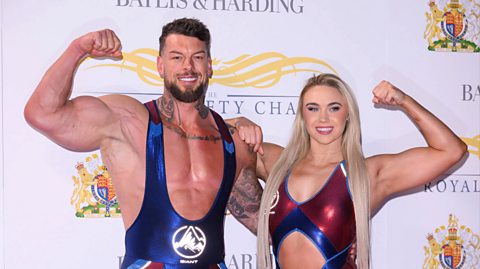
Gladiators Jamie Christian Johal and Livi Sheldon attend the Royal Variety Performance at Royal Albert Hall, 2025. They stand on a red carpet with an advertising board behind them promoting the event. They both pose with one arm flexed in a strong pose and the other arm around one another. Jamie has short, dark hair and wears a metallic blue leotard which is cut out on the chest. On the right, Livi wears a leotard cut out above the stomach which is metallic red and blue - she has long blonde hair
Image caption,
Gladiators Jamie Christian Johal and Livi Sheldon attend the Royal Variety Performance at Royal Albert Hall, 2025

In January 2026, Gladiators made its triumphant return to our screens for its third series. But who are the 18 Gladiators taking over our screens?

Well, in the line-up are 18 faces you’ll no doubt recognise from the first two series. They are Apollo, Athena, Bionic, Comet, Cyclone, Diamond, Dynamite, Electro, Fire, Fury, Giant, Hammer, Legend, Nitro, Phantom, Sabre, Steel and Viper.

Gladiators Jamie Christian Johal and Livi Sheldon attend the Royal Variety Performance at Royal Albert Hall, 2025. They stand on a red carpet with an advertising board behind them promoting the event. They both pose with one arm flexed in a strong pose and the other arm around one another. Jamie has short, dark hair and wears a metallic blue leotard which is cut out on the chest. On the right, Livi wears a leotard cut out above the stomach which is metallic red and blue - she has long blonde hair
Image caption,
Gladiators Jamie Christian Johal and Livi Sheldon attend the Royal Variety Performance at Royal Albert Hall, 2025

What can we learn from the Gladiators?

Sheli McCoy poses with the Audience Award for Gladiators during the 2025 BAFTA Scotland Awards. She has a tartan red suit on and her long, blonde hair in a ponytail. She smiles at the camera with the transparent glass BAFTA Award, which looks like a head, in her right hand. Behind her is a black advertising board on the red carpet promoting the BAFTAs
Image caption,
Sheli McCoy poses with the Audience Award for Gladiators during the 2025 BAFTA Scotland Awards

The Gladiators TV programme has been entertaining audiences across the world for generations – but it is far more than just a game show. If you look closely, it teaches many skills and important life lessons, as well as celebrates pros and contestants who are inspiring role models.

As much as the show is about physical strength and health, it is also about having a strong mental mindset. In the challenges, we see Gladiators and contenders overcome physical obstacles, but the same can also be said for personal ones.

On the show, confidence is key and it is important to stay resilient – even if you don’t succeed first time, it’s important to dust yourself off and try again. All Gladiators and contenders are different with different strengths and skills and on the show, they are all celebrated.

Another vital theme is teamwork and even if it’s a small victory, the players don’t forget to celebrate it.

Sheli McCoy poses with the Audience Award for Gladiators during the 2025 BAFTA Scotland Awards. She has a tartan red suit on and her long, blonde hair in a ponytail. She smiles at the camera with the transparent glass BAFTA Award, which looks like a head, in her right hand. Behind her is a black advertising board on the red carpet promoting the BAFTAs
Image caption,
Sheli McCoy poses with the Audience Award for Gladiators during the 2025 BAFTA Scotland Awards

When is BBC's Gladiators back on our screens in 2026?

Gladiators returned to BBC One and iPlayer for its third series on 24 January 2026. It usually airs weekly on Saturday at 5.45pm.

In the latest series, Gladiators and contenders will be taking on new events, such as Destruction and Everest. But if you missed out on the action in series one and two, you can still catch up with them on BBC iPlayer.

This article was written in January 2026

Learn more about Gladiators - past and present