What are the features of democratic political society in Scotland?
Quick version
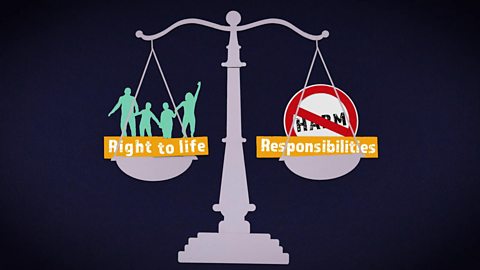
For society to be democratic, everyone is entitled to a basic level of fairness, equality and freedom.
In Scotland, a combination of rights, freedoms and laws help maintain democracy.
- voting - everyone aged 16 and over gets to choose political representatives
- political participation - all British citizens can stand as a political representative
- freedom of speech - everyone is free to express their opinion
- freedom of association and assembly - people can come together to work towards common interests
- freedom of the press - media can hold politicians to account
- independent judiciary - the justice system is protected from political influence
Learn in more depth
What is a constitutional monarchy?
Scotland is part of the United Kingdom (UK).
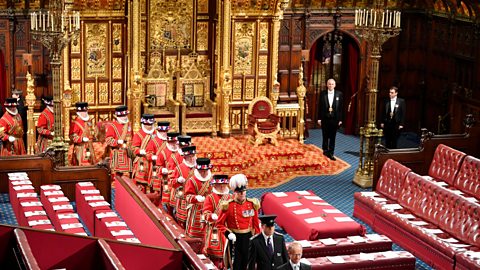
The UK is a constitutional monarchy. The monarch is the head of state, but this role is largely symbolic. This means that the monarch has no real power.
The Scottish Government runs Scotland on behalf of the monarch and the Scottish Parliament has responsibility for making laws.
It is the people who have the power to choose who represents them in the Scottish Parliament and who forms the Scottish Government.
- Image source, PA Images / Alamy
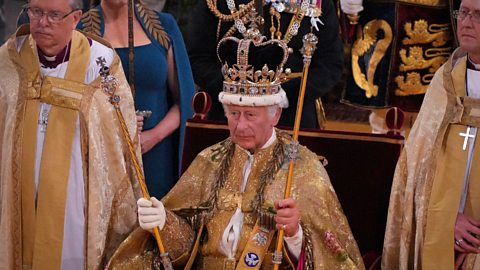
Image caption, King Charles III, the UK's current monarch.
1 of 2
What is a constitution?
A constitution sets out rules and regulations of how a country is run.
A constitution helps democracy by setting out laws and principles that political leaders can be held to.
The UK does not have a written constitution like the USA. Instead, it can be found in many different places including:
- laws
- decisions taking by judges
- tradition
What is representative democracy?
Scotland is a .
In Scotland there are too many people to all discuss all the the decisions about how the country is run. Therefore are elected to make decisions on our behalf.
Representatives include Members of the Scottish Parliament (MSPs), Members of Parliament (MPs) and local councillors.
These representatives are usually members of a political party. In Scotland the main political parties are:
- Scottish Conservative and Unionist Party
- Scottish Green Party
- Scottish Labour
- Scottish Liberal Democrats
- Scottish National Party
How does voting contribute to democracy?
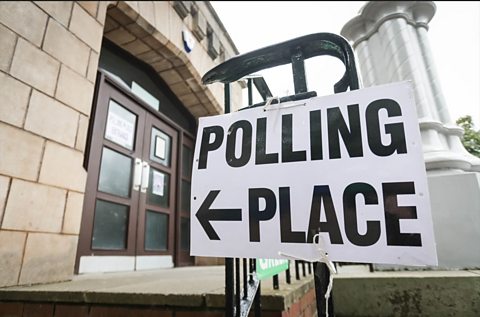
Voting is a key part of democracy. Regular elections allow voters in Scotland to choose who represents them in parliament and government.
Elections are held by secret ballot. This means individuals’ votes are anonymous which helps prevent people from being pressured to vote in a particular way.
- everyone aged 16 or over can vote in Scottish Parliament elections, local elections and referendums
- everyone aged 18 or over can vote in UK Parliament elections
How does political participation contribute to democracy?
All adult British citizens can stand as an MSP, MP or local councillor. This means that anyone can become involved in political decision making.
The does not include some groups of people:
- serving police officers
- serving army officers
- civil servants
- judges
These groups are excluded to prevent these jobs being politicised.
How does freedom of speech contribute to democracy?
Everyone is entitled to their own opinions and to express their views.
They can do this in a number of ways:
- in person
- in print
- in the media
- online
They must do this within certain laws that prevent threats, hate, The act of encouraging someone to act violently or commit another crime or making dishonest statements to damage someone's reputation.
People can also start or sign petitions about issues they care about.
How does freedom of association and assembly contribute to democracy?
People are free to participate in organisations including:
- political parties
- pressure groups
- trade unions
These are all ways in which individuals can come together to work in their common interests.
Individuals have the right to take part in protests, marches and demonstrations provided they are peaceful.
How does freedom of the press contribute to democracy?
Newspapers, television, radio and online media are able to report freely on social and political issues.
They are able to criticise and hold government, politicians and other bodies to account for their policies, successes and failures.
While television and radio news must be Not biased. Treating everyone fairly and equally., other media can take sides and express opinions, as long as what they say is accurate.
How does independence of the judiciary contribute to democracy?
The justice system in Scotland is kept separate from government.
Judges’ decisions must be impartial and independent of political bias.
Members of government and MSPs are barred from trying to influence judges’ decisions.
Judges cannot be sued or prosecuted for their work. This is designed to further protect them from influence or pressure.
Quiz
Recap what you have learned
Scotland is part of the UK, which is a constitutional monarchy
- the monarch holds symbolic power only
- the constitution creates laws and principles for how the country is run
Scotland is a representative democracy
- voting allows people to choose political representatives
- all British citizens can stand as a political representative
- freedom of speech protects our ability to express our own opinions
- freedom of association and assembly allows people to come together and work towards common interests
- freedom of the press means the media can hold politicians to account
- independent judiciaryprotects the justice system from political influence
More on Democracy in Scotland
Find out more by working through a topic
- count5 of 18