WARNING: This article contains mild spoilers about the early episodes of series four of The Traitors
When we sit down and watch an episode of The Traitors, there’s a good chance we’ll see a bit of ourselves in certain players, or recognise the personality of someone we know.
The latest series on BBC One, which began on New Year’s Day, has already generated tens of thousands of views across the various social posts people have made about the different players.
How this group of people have been interacting with each other - and deciding who to banish - can teach us some important life lessons, as well as reflecting how different parts of social media work. Dr Douglas Martin, a psychologist at the University of Aberdeen, explained more to Other Side of the Story.
What are the expectations caused by stereotypes?
“Players in the Traitors often form expectations of others based on their knowledge of stereotypes of the roles they have in real life,” Dr Martin said. “People are then viewed with suspicion when their behaviour doesn’t match the stereotype.”
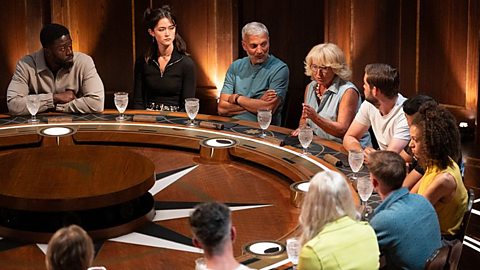
For example, when the players learned that Hugo was a barrister, Dr Martin noted how they expected his behaviour to reflect that role - being confident, argumentative and someone who leads a discussion. He continued: “When he didn’t act that way at the first roundtable, some players found it suspicious, as if he was ‘holding back’ or hiding something. Judging people based on stereotypes can lead to unfair conclusions, and that behaviour often has many explanations beyond the role we expect someone to play.”
This links in with confirmation bias. When we see a social post that backs up something we believe in - for example, that our favourite football team is the best in the world - then we are less likely to question it because we like what it has to say.
Is there a filter bubble at The Traitors’ roundtable?
You may have heard of an echo chamber, but what about a filter bubble?
This is where the things we see online are shaped by our search histories, the social media accounts we follow and the algorithm that creates. That means we often see posts which back up our opinions and less of those which oppose or challenge it. To break out of a filter bubble, seek out accounts whose viewpoints you may not agree with, give them a follow, and it can bring more diverse opinions to your feeds.
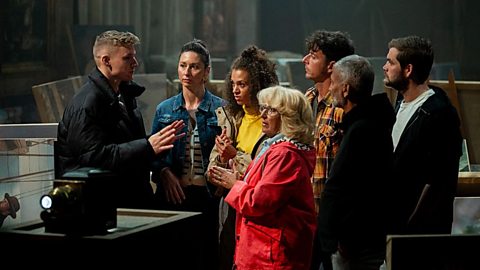
A similar thing can happen around The Traitors’ round table, especially when players are trying to save themselves. Dr Martin pointed out that when accusations against a particular player build up, the other players can start to vote for the same person. He said: “Once there’s a sense of momentum behind accusations against a particular person, it becomes safer for everyone else to vote with the group, because adding your vote to the majority saves your own skin.
“This creates a powerful pressure to conform, even when your instincts or evidence point in a different direction. The life lesson here is that when a group starts moving in one direction, it can feel safer to follow the crowd than to speak your mind, but acting out of fear rather than conviction can lead you to choices you don’t truly believe in.
“Thinking and behaving like other people is important for creating social bonds. However, learning to pause and think for yourself, to actively choose your own path is a powerful skill in friendships, school groups, and online spaces.”
It’s not just what we read online that can create bias
We’ve already mentioned confirmation bias, but there are many different kinds. Dr Martin pointed out that the pressured environment of The Traitors can bring this out in the players.
“Unfamiliar situations, social pressure, time pressure, mental overload, stress, anxiety, tiredness, uncertainty, personal risk or reward, and fear are all conditions that make people far more likely to rely on mental shortcuts and biased thinking,” he said.

Dr Martin added how the brain will “grab” at small things in these situations - such as comments from other players, nervous body language or awkward pauses - and convince themselves that they have solid evidence someone is a traitor or a faithful.
He continued: “This can push people towards snap judgements, misread signals, or following the crowd simply because it feels safer than standing out.
“Pressure doesn’t just make decisions harder, it changes how we think. Learning to slow down, breathe, and check your assumptions can help you make clearer, more rational, and kinder choices in everyday life.”
Letting bias convince a player that someone is a traitor, and then spreading that opinion around the other players, is similar to how fake news can spread online, and even go viral. It’s important to use critical thinking when making decisions like The Traitors players have to around the round table.
Want to put your critical thinking and media literacy skills in to practice? Check out Other Side of the Story’s Solve the Story.
The current series of The Traitors is available to watch on BBC One and BBC iPlayer.

Not sure if the news you’re seeing on social media is true or false? Can you always tell if the things you see online are real or fake? Learn how to get the other side of the story with our quizzes, videos and explainers.
What can The Celebrity Traitors teach us about unconscious bias?
How prior knowledge and experiences may be influencing the players' votes
Is there going to be another ‘final’ episode of Stranger Things?
Posts on social media teased fans with a theory about a 'mystery' episode 9 of Netflix sci-fi drama Stranger Things