WARNING: This article contains spoilers about The Celebrity Traitors
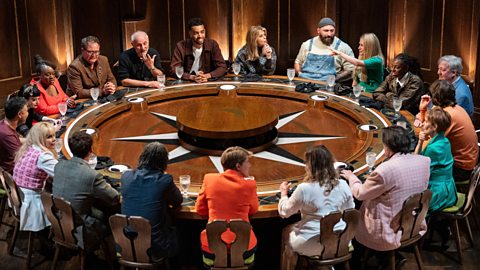
It's all over. The Celebrity Traitors has crowned its winner.
Even though the close-knit duo of Nick Mohammed and Joe Marler looked to have the game sewn up after traitor Cat Burns was banished at the final round table, there was more intrigue to come. A last-minute moment of doubt from Nick, along with a long-held theory from historian David Olusoga, saw Joe surprisingly voted out in the final game, which eventually saw traitor Alan Carr named champion.
Over the nine episodes, there was a lot of theories over who was faithful and who wasn't - but how big a part did unconscious bias play in that?
BBC Bitesize Other Side of the Story dug a little deeper into why so many faithfuls were branded traitors, and vice versa.
What is unconscious bias?
We all have ideas or thoughts about various people, places and things. When we encounter a story or piece of information, our reaction to it can be influenced by those thoughts and ideas - even if that info is presented in the most balanced or neutral way possible. This is our unconscious bias, and it’s influenced by our experiences, where we grew up, and lots of other things. It affects all of us, no matter what our background is or our view of the world.
So, how does unconscious bias affect the players on The Celebrity Traitors? We spoke to Dr Douglas Martin, a psychologist at the University of Aberdeen, who specialises in social bias and finds the show provides “endless examples” of it in action!
Some players in The Celebrity Traitors are better known to the public than others. How could this influence the round table?
Dr Martin explained that players already knowing each other, their different social circles, and the personalities some participants are famous for, will likely have influenced the earlier voting rounds.
He said: “Players would be more likely to speak to, form informal alliances with, and trust other players they are already friendly or familiar with.”
He continued: “As a long-established broadcaster and chat show host, Jonathan Ross is likely to be the best-connected player in the game and therefore have the biggest early advantage. Less established celebrities might quickly find themselves outside the informal alliances, being viewed as an outsider, and distinctive from the celebrity herd; all these things make them more vulnerable to banishment.”
This is also where, Dr Martin explained, unconscious bias comes into play - especially if our brain does not have all the information it needs: “For example, while other celebrities might not know Tom Daley personally, they will know him as a gold medal-winning Olympian who is unusually driven, single-minded and competitive… These preconceptions are likely to bias the way they make inferences about Tom’s behaviour in The Traitors. The same would be true of Niko [Omilana], whose reputation as a prankster is likely to bias people’s inferences.”
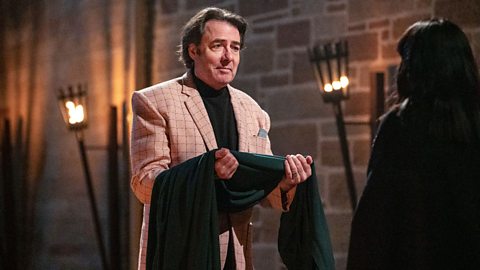
There has been talk of a ‘Big Dog’ theory, regarding Jonathan Ross and Stephen Fry. How much is this about unconscious bias?
Dr Martin said: “The Big Dog theory is likely to be influenced by Where a positive impression of someone make you think that all aspects of their personality are equally positive. and When we believe someone is more accurate than others because they are in a position of authority., whereby the high status of Jonathan Ross and Stephen Fry from their everyday lives is carried over into The Traitors and influences their group assignments. Because the theory fits with people’s preconceptions and biases, is easy to explain and has a memorable name, it is more likely to be shared.”
Former England rugby player Joe Marler has mentioned this theory in particular, and Dr Martin suggested that his background in team sport may be an influence: “Joe’s life will have been dominated by a team mentality, with opposing teams being led by dominant authority figures, captains and coaches for example. It would be natural to apply the logic of this lifetime of experience to the novel circumstances of The Traitors.”

There are many different examples of bias and social behaviour on show in The Celebrity Traitors. Dr Martin gave us a guide to just a few of them.
Confirmation bias: Players will search for evidence to support ideas they already have about whether a player is a faithful or traitor. Other Side of the Story has more on confirmation bias here.
Fundamental attribution error: Where players view the behaviour of others as being down to their status as either a faithful or a traitor - and not just the task at hand. For example, a nervous player at the round table may be viewed as a traitor, even though it’s a nervous situation.
Groupthink: Humans are social animals who are driven to cooperate with each other. This means that, often, we publicly agree, even if we privately disagree. The more people voice their agreement, the less likely people are to offer alternative opinions. This can lead to an entire group believing they all think the same thing.
Verbal and non-verbal behaviour: How do people react when others are banished or do not appear for breakfast? How do people react when they get a shield? This is interesting in Celebrity Traitors, where there are accomplished actors like Celia Imrie and Mark Bonnar. In reality, people are poor at detecting when other people are lying and are more likely to be biased by behaviour like a failure to maintain eye contact - which isn’t a good indicator that someone is lying!
Gender bias: This wasn't mentioned by Dr Martin but it is something that can be found in news articles and social posts. It's where a view of someone is based entirely on their gender instead of their personality or skills.
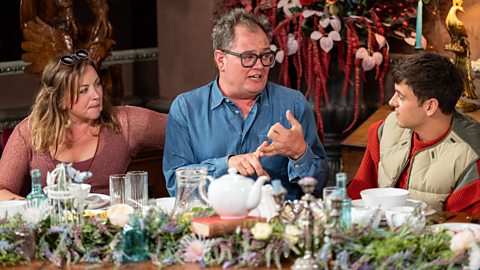
How much does the conversation around the round table affect the vote?
Dr Martin said these can have a big influence, compared to those which take place earlier in the day.
He explained further: “While discussions centre around attempts to banish a traitor, the more pressing concern for all players concerned is avoiding being banished themselves. If conversations around the table seem to lead toward a certain individual, it is in the interests of all players - other than that person - to vote for them. Survival is the number one priority and that means ensuring someone else gets voted off!”
Want to know more about unconscious bias? See how these well-known faces did when they were put to the test by Other Side of the Story - can you do better?
Take the Bitesize quiz: Are you a traitor or a faithful?
This article was published in October 2025
Not sure if the news you’re seeing on social media is true or false? Can you always tell if the things you see online are real or fake?
Learn how to get the other side of the story with our quizzes, videos and explainers about media skills and viral trends including popular food myths.
The monthly AI or Real quiz: October 2025
Which of these images are genuine? Test yourself in our regular quiz

Other Side of the Story
Back to our homepage for more quizzes and explainers about fake news, viral trends and media skills.